More about the concert
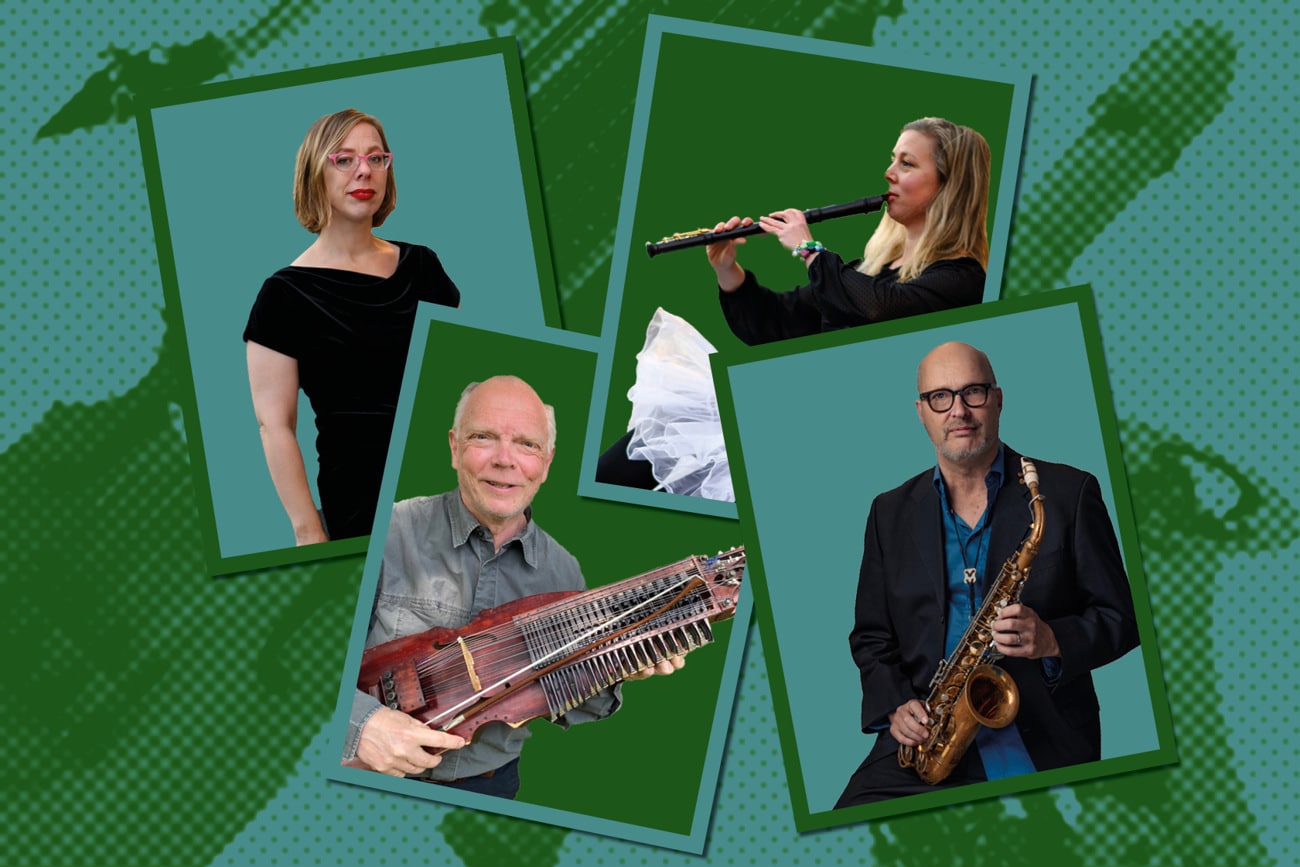
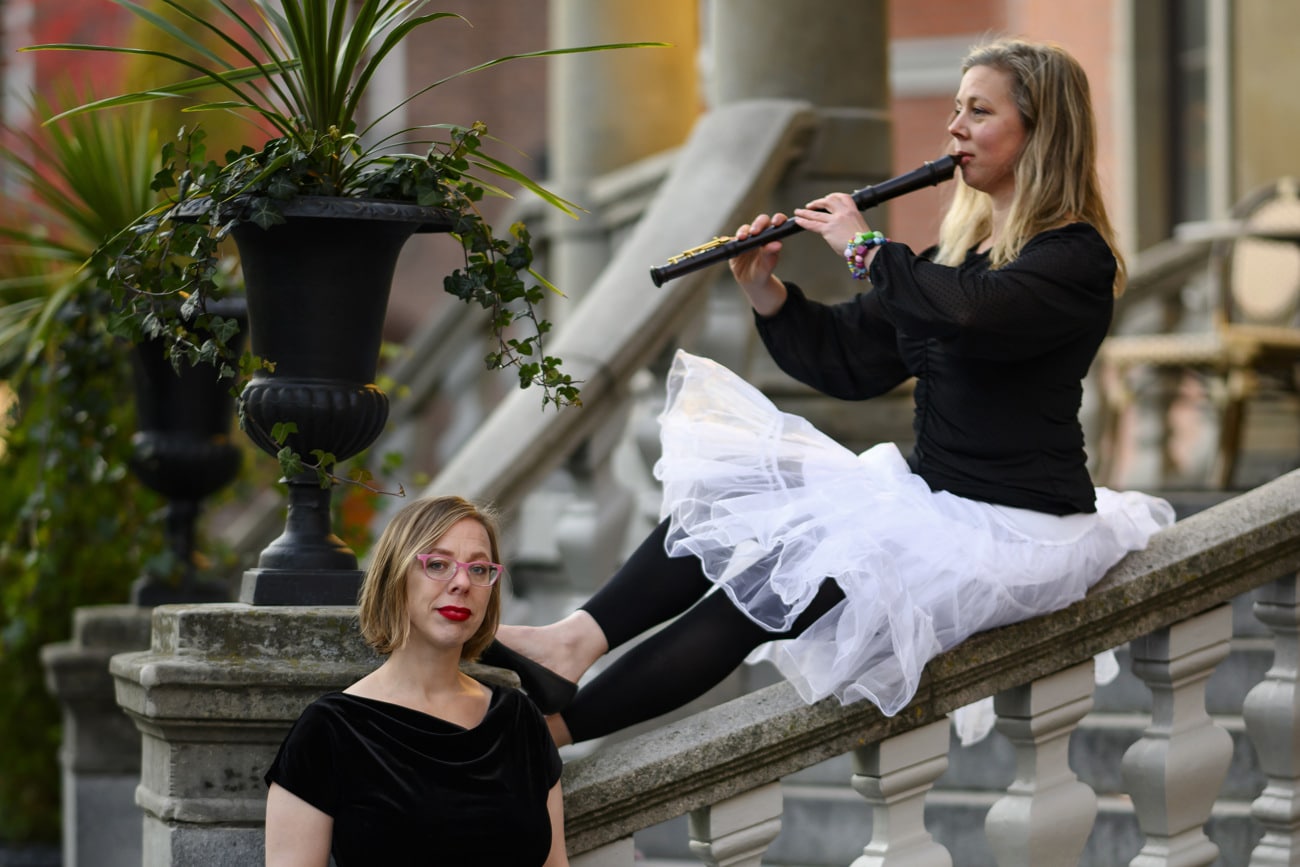
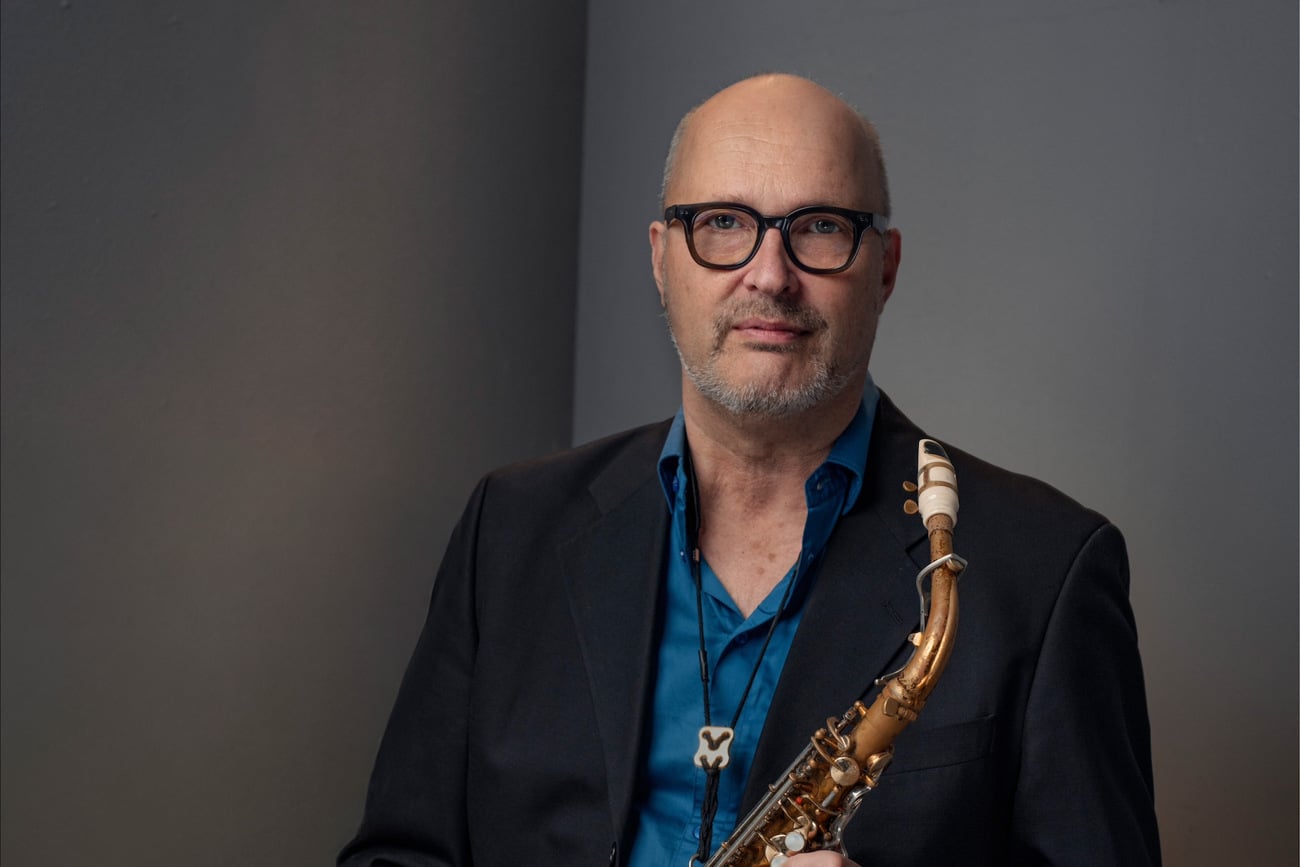
The concert is a collaboration between the Norrlands Opera, the Umeå City Parish, and Duo Kondens. We wanted to create a concert featuring music that, in various ways, is close to our hearts, brought together under the theme “Ars longa, vita brevis,” which translates to “Art is long, life is short.” We received help with the theme from Helle Solberg, CEO of Norrlandsoperan.
Together, we musicians have selected pieces that are close to our hearts, while also inviting the Norrlandsoperan audience to contribute to the selection. Tonight’s concert will feature no fewer than five audience requests.
The concert is supported by the Helge Ax:sson Johnsson Foundation and the Swedish Arts Council.
About the Composers
Per Egland (b. 1980)
A Swedish composer and musical jack-of-all-trades who writes art music as well as music for film, theater, and various art projects. Born in Härnösand and living in Stockholm.
“Three Lost Postcards” is a commissioned work by Duo Kondens for their 2024 U.S. tour and premiered in Denver, Colorado, in an orchestral version with the duo as soloists.
Tonight, a quartet version will be performed for the first time. Per has also arranged the theme from *The Good, the Bad, and the Ugly*, which is one of the audience’s requests for tonight’s concert.
Oskar Lindberg (1887–1955)
Oskar Lindberg was born in 1887 in Gagnef and died in 1955 in Stockholm. He was a composer, organist, and conductor. His extensive body of work spans virtually all genres, with the exception of solo concertos and ballets. Among his best-known works are *Gammal fäbodpsalm* from Dalarna and the choral piece *Pingst*.
Johann Sebastian Bach (1685–1750)
One of the most important composers of the Baroque period. He is a central figure in Protestant church music, due to his extensive compositions for the liturgical year. He has been called “the fifth evangelist.”
During his lifetime, he was better known as a musician than as a composer, but his organ works continue to influence organists to this day, and his orchestral music still leaves no one unmoved.
Jan Sandström (b. 1954)
One of Sweden’s most internationally renowned composers. He has received numerous awards for his compositions and has been a professor of musical interpretation at Luleå University of Technology since 1989. He has been a member of the Royal Swedish Academy of Music since 2003.
Variation No. 21 is a commissioned work by Duo Kondens with support from the Swedish Arts Council and is part of the work *Goldberg 1.5*, in which five Swedish composers each interpreted a Goldberg Variation (Jan Sandström, Daniel Hjorth, Ida Lundén, Lisa Ullén, Mattias Petersson).
J.S. Bach wrote the Goldberg Variations in 1741; they consist of an aria and 30 variations, of which Jan Sandström’s composition is based on No. 21.
Johan August Andersson (1866–1902)
Known as Tok-Andersson or Klockar-Andersson. He was an elementary school teacher, a cantor, and a fiddle player. As a fiddle player, he was truly exceptional; he played almost exclusively as a soloist, but had a number of students.
Both his wife (Sigrid) and his daughter (Augusta) died during childbirth. The tragedy took a very heavy toll on Johan (for obvious reasons). At one point, he had gone into the church and cursed and questioned God. When this became known, he lost his job as an elementary school teacher because he was deemed unfit for the profession. However, he was allowed to keep his job as a cantor because he played so well.
Johan August Andersson never quite recovered from the traumatic experience and “lost his mind.” People gave him the nickname “Crazy Andersson.” He spent the last years of his life living in a small house in the center of Dorotea.
Franz Schubert (1798–1828)
One of the most familiar names in music history. His output during his short life was enormous—over 1,000 works! Much of his music was written for smaller settings, such as musical salons, and does not require concert halls or opera stages to be performed. His chamber music, piano pieces, and songs have been played and sung in homes ever since they were composed.
Schubert was very much a composer of his time, using texts by the great poets of the era, such as Goethe, Friedrich Schiller, Heinrich Heine, Friedrich Rückert, and others.
Ennio Morricone (1928–2020)
He is featured twice in tonight’s concert. Both pieces are audience requests!
Morricone was an Italian composer and conductor who composed a wealth of film scores. “Gabriel’s Oboe” is from the film *The Mission*, and “The Good, the Bad, and the Ugly” is from the iconic film of the same name.
Arne Modén (1940–2014)
He was born and raised in Rätan, located in southern Jämtland. As an adult, Modén lived in Stockholm, where he worked as a dental technician. Starting in 2008, he lived in a special-needs residence at Borgmästaren in Växsjö.
In the folk music scene, he was a strong personality, as beloved as he was frequently sought after. Polskas and other dance tunes play a prominent role in the repertoire he gathered from his native region—melodies passed down from generation to generation.
Arne himself was very much a part of this folk tradition and eagerly shared the songs, generously inviting others to join him in playing.
Antonio Vivaldi (1678–1741)
Italian composer, violinist, and priest. Vivaldi was ordained a priest in 1703 and was hired as “maestro de violino” that same year at the girls’ conservatory Il Pio Ospedale della Pietà, where he worked until 1740, with the exception of brief interruptions for travel. He often performed with his students and presented his own works for Venice’s nobility and bourgeoisie.
Vivaldi established and developed the concerto form for solo instruments (usually 1–4 violins) and orchestra. His best-known work is *Le quattro stagioni* (*The Four Seasons*; Concertos Nos. 1–4, Op. 8) from 1725.
The violin was his primary instrument, but he also composed concertos and sonatas for wind instruments, as well as a large number of operas and vocal music for sacred purposes. His work *L’estro armonico* (published in Amsterdam in 1711) became one of the most significant collections of music of the 18th century, particularly in Central Europe.
Vivaldi was one of the most significant composers of the late Baroque period, popular both during his lifetime and to this day.
Øistein Sommerfeldt (1919–1994)
Norwegian pianist and composer. He is known as a leading composer of contemporary music of his time, yet with roots in traditional Norwegian music. His compositions are characterized by a minimalist, folkloric musical language with religious undertones (Wikipedia).
Eric Sahlström (1912–1986)
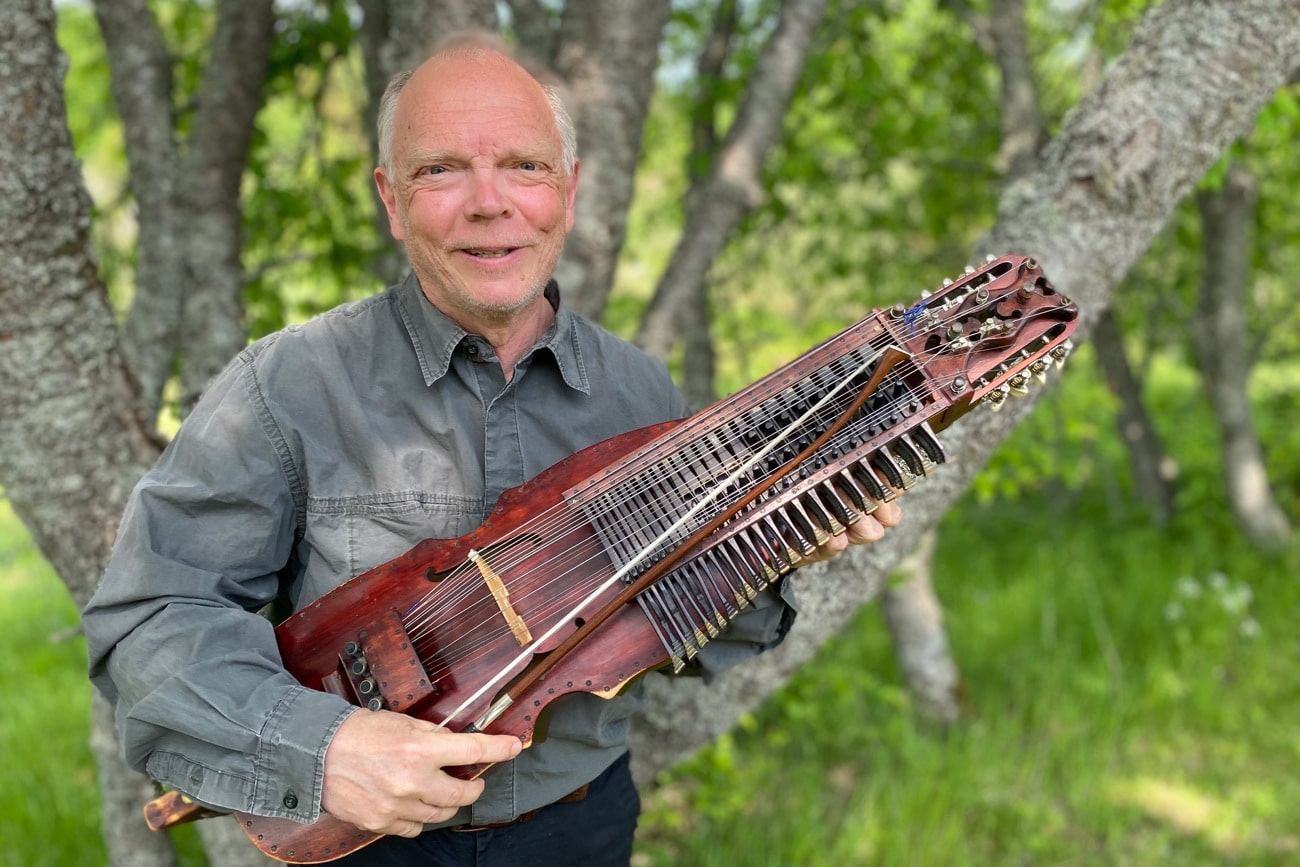
Swedish nyckelharpa player and nationally recognized folk musician from Tobo in northern Uppland. Sahlström came from a long line of folk musicians.
His grandfather, Lars Larsson—who became a dragoon under the name Sahlström—played the nyckelharpa. His father, a crofter, played both the violin and the nyckelharpa. So, as early as age seven, Eric began playing the accordion and dreamed of becoming the next “Jularbo-Kalle,” but soon switched to the violin—only to later switch instruments to the nyckelharpa after hearing Hjort Anders play.
Through his brilliant playing, Sahlström was the one who, more than anyone else, contributed to the modern-day renaissance of the nyckelharpa.
Karl Johan Roger Tallroth (b. 1958)
Swedish folk musician and composer, best known as one of the founders of the band Väsen.
His primary instrument is the guitar, but he also plays other instruments such as the bouzouki, ukulele, mandola, violin, and double bass.
Tallroth works as an arranger and teacher at the Royal Academy of Music and the music school in Örebro.