Opening Remarks
A Ball at the Castle
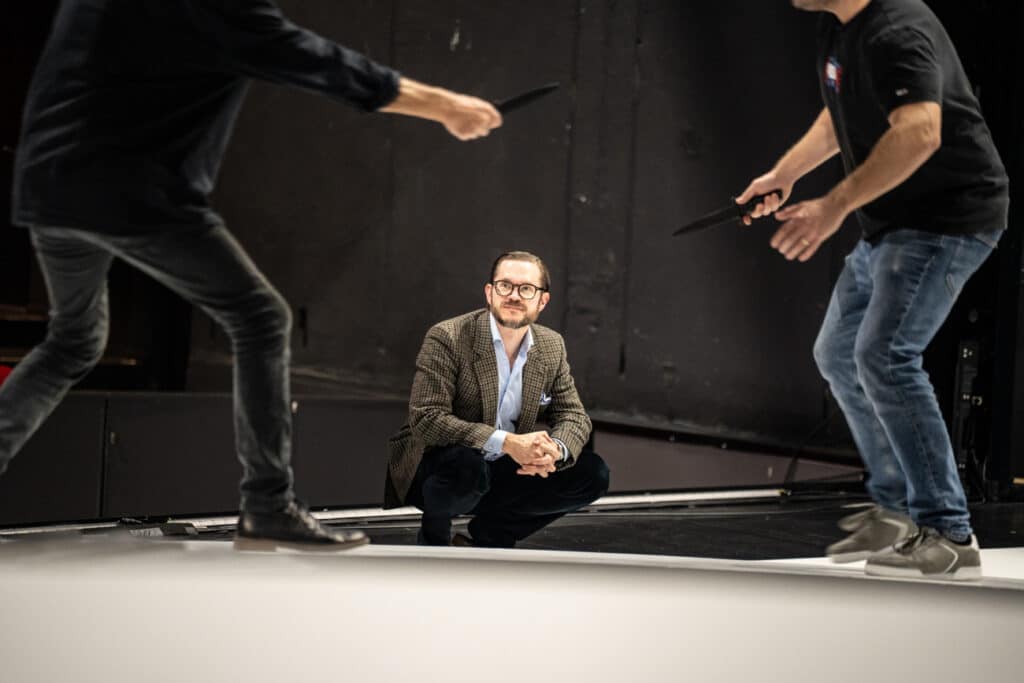
What’s a ball at the castle like? It can be terribly boring and dead dull—and… absolutely… absolutely… wonderful.
Today, many people probably associate the nickname “Cinderella” with little mice singing in falsetto as they sew a dress for a skinny, very beautiful victim of bullying dressed in pastel colors. Disney’s impact on popular culture has been enormous on the public consciousness when it comes to some of the most iconic fairy tales. When someone says “Robin Hood,” I, at least, think of a fox speaking the Stockholm dialect before I think of an English freedom fighter/gang criminal. The folk tale of Cinderella is also much older than the 1950 animated film: its roots can be traced back to written records as early as the first century B.C. This suggests that, like all folk tales, it has existed for much longer in an orally transmitted form. The motif, which has been adapted in countless variations, is that of a girl who is bullied by her stepmother and stepsisters and banished to work in the sooty kitchen—hence the name Cinderella — but who, thanks to her virtue and beauty, and with the help of a spell, wins the heart of the kingdom’s prince. Even more than 2,000 years ago, we loved hearing stories about an underdog who gets her revenge on her oppressors.
Someone who understood the power of the Cinderella story and possessed a great deal of that same power himself—perhaps, in a Swedish context, limited only by Disney—was Gioacchino Rossini. He composed *Cinderella* in 22 days, shortly after his smash hit *The Barber of Seville*—still one of the world’s most frequently performed operas today. The premiere was a fiasco, but Rossini said: Before the season is over, everyone will have fallen in love with my “Cinderella”; before a year has passed, she’ll be sung all over Italy; and within two years, she’ll have conquered both France and England. Impresarios and prima donnas will be fighting over her! His prediction came true, and during his lifetime, the opera was performed just as often as *The Barber of Seville*.
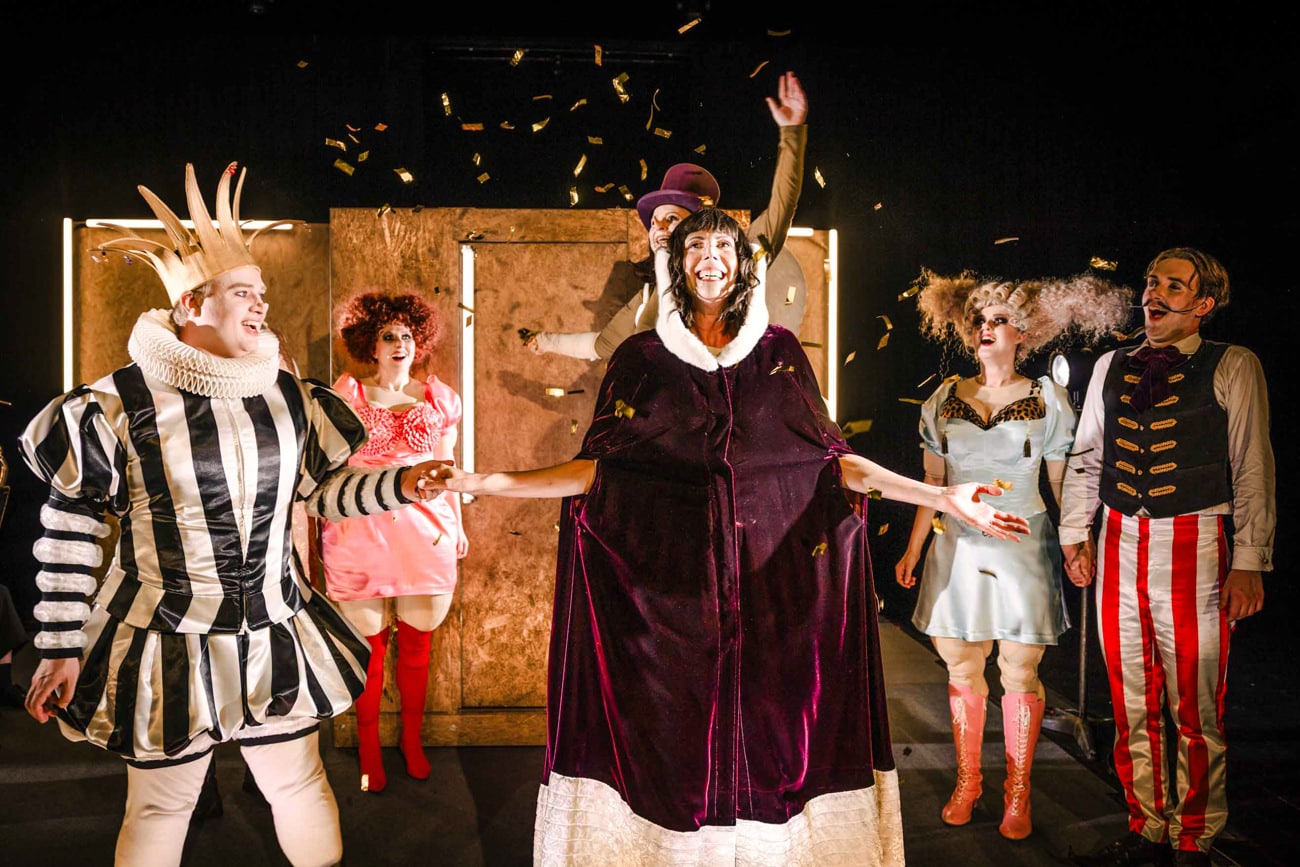
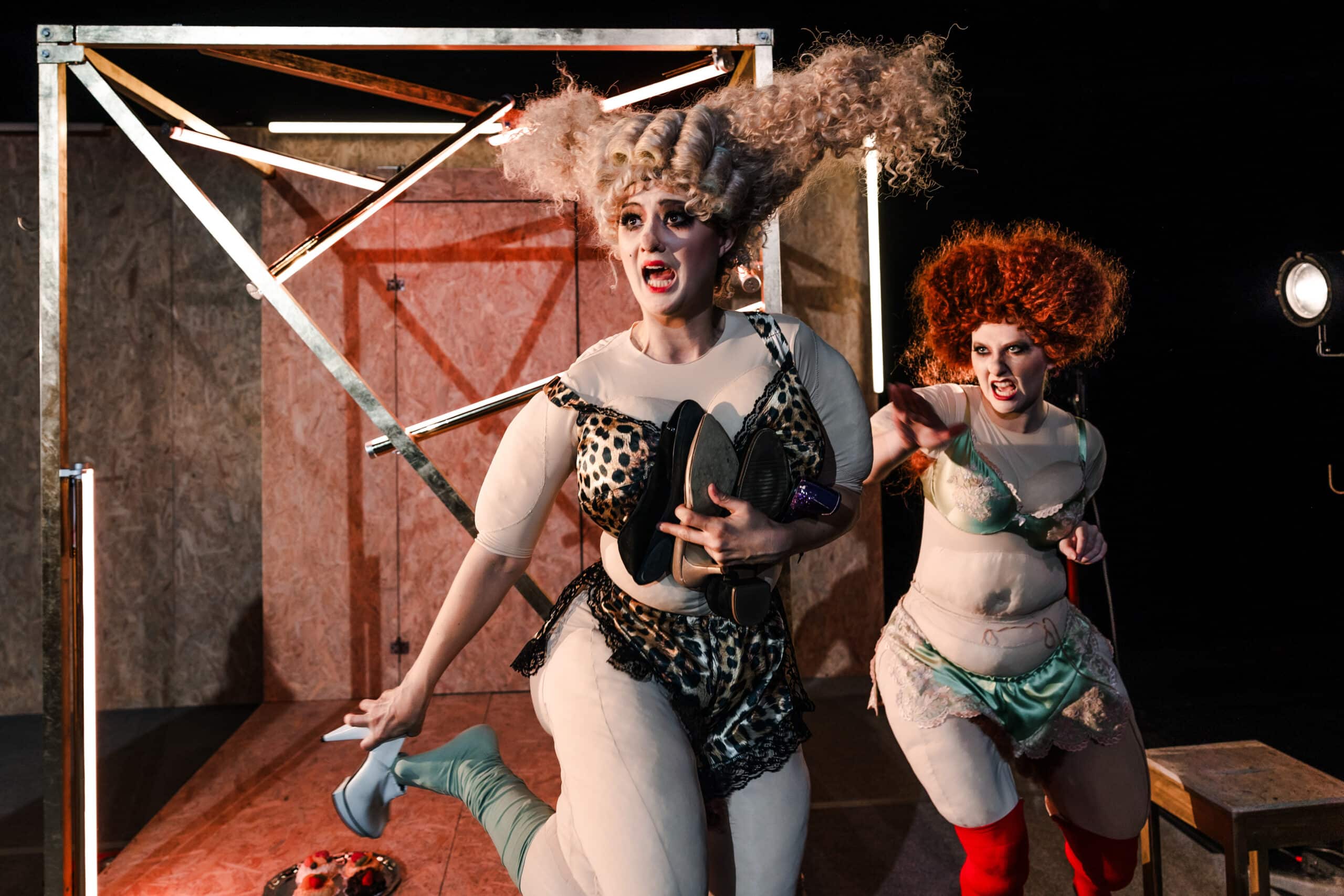
In the version now presented by Norrlandsoperan in collaboration with Malmö Opera, the artistic team adds an absurd and burlesque commedia dell’arte aesthetic that broadens the perspective on the story and becomes yet another growth ring on the fairy tale’s already very aged but vibrant trunk. Perhaps you’ll think of false noses and fat suits the next time you hear the name Cinderella.
I wish you a truly, truly wonderful performance!
Dan Turdén
Libretto
Click the link below to view the complete libretto:
Libretto: CinderellaPlot
An important shoe…
Excerpt from Chapter 12: Jesus, Napoleon & Richard
Pages 238–240
Cinderella has lost both her father and her mother, and lives as a maid with her stepfather, the alcoholic braggart Don Magnifico of Montefiascone. Cinderella’s stepsisters, Clorinda and Thisbe, are obsessed with appearance, clothes, and shoes, and are convinced that their beauty will attract wealthy suitors who can offer them a life of glamour and luxury. They bully and mock Cinderella, who is forced to work hard all day long, dressed in rags.
The king of the country dies, and his will stipulates that his son, Prince Ramiro, may not receive his inheritance until he marries a woman who can provide the royal family with an heir. Prince Ramiro’s cunning valet, Dandini, now sees his chance to gain an advantage. He suggests to the prince that they switch roles, so that Ramiro becomes Dandini’s servant, while Dandini himself plays the prince and woos the beautiful ladies. The prince allows himself to be persuaded and agrees to the plan.
Clorinda and Thisbe learn that Prince Ramiro is traveling around the country in search of a fiancée, and that the prince’s entourage will soon be visiting the Montefiascone family. The sisters are thrilled and order Cinderella to run immediately and fetch their fanciest dresses and prettiest shoes. They want to be the most beautiful in the land, so that the prince will choose one of them.
The prince (that is, Dandini dressed as a prince) and his valet (that is, the prince) arrive and announce that there will be a party and a beauty contest at the castle. The family’s three daughters are invited to participate, but Don Magnifico claims that there are only two daughters in the house. Don Magnifico goes to the party with Clorinda and Thisbe, leaving Cinderella at home.
However, neither Don Montefiascone, his daughters, nor the scheming Dandini had counted on the mysterious Alidoro, who appears in various disguises to set everything right. Alidoro takes Cinderella with him to the castle, and in the process picks up an important shoe…
A Conversation with Director Erik Söderblom
“We’re playing with the game”
*Cinderella* was originally written for a large ensemble, a choir, and a full orchestra. In this version, it is performed by three musicians and seven singers on a relatively small stage. But for director Erik Söderblom, these conditions are nothing but advantages.
– Sure, it’s something of a “mission impossible,” but I don’t see it as a problem—more like a fun challenge. If you stage an unabridged, complete version of *Cinderella* on a big stage, people immediately expect it to be grand and follow a certain tradition, but in this format, the audience has no idea what to expect, which means we can surprise them in a different way. Anything becomes possible.
So what kinds of opportunities have emerged during the process?
– I think we can bring out the humor in this work in a different way. Comic opera rarely turns out to be particularly funny, and that’s often because the format is cumbersome. If the orchestra consists of 70 musicians, there are so many oars that it takes time for the ship to turn. But we only have three instruments: violin, piano, and bass tuba, and with three oars, it’s much faster to splash along.
In practical terms, how do you handle scene changes and other technical aspects of theater?
– There aren’t any stagehands, so the singers have to do that job, too. We have a makeshift revolving stage where it’s not the stage itself that rotates, but the sets. And since we can’t use water to simulate rain, we’ve had to find other ways to do it. It ends up being a kind of theater born of limitations.
Are you making fun of the art of theater itself?
– Yeah, we’re playing with the toy.
Tell us about the humor in Rossini’s music.
– The characters have one thing in common: they suffer from a kind of neurosis that causes them to break into coloratura when they get upset. It’s a very peculiar affliction that makes Rossini Rossini, and transports the story into a surreal, parallel reality. Another symptom is that the characters start sniffling. There’s something about coloratura and sniffling that goes hand in hand. The cast of characters and Rossini’s approach to reworking the classical fairy tale lean toward the Italian commedia dell’arte tradition, even though the singers don’t wear masks.
How is it that this classic form of theater still works so well today?
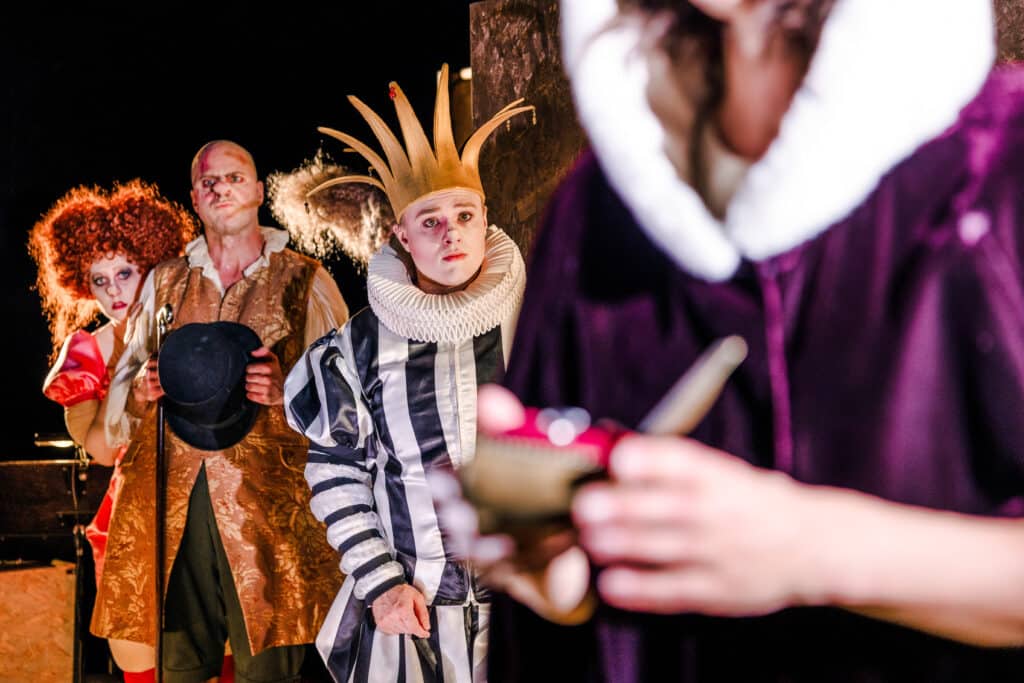
– The characters on stage in commedia dell’arte are a kind of cartoon character, like in The Simpsons or Moomin. Distinctive and recognizable figures who are constantly finding themselves in new adventures. And really, all opera is fundamentally a type of mask theater, since singing is a kind of vocal mask. The singer creates their role with their voice, just as the commedia dell’arte actor creates it with a mask. It’s perfectly natural to have exaggerated characters on an opera stage. Opera is the theater of grand drama, but it’s also theater for those who love to laugh heartily.
By: Tor Billgren
The Music
Artistic Team
Ensemble
Josefine Andersson studied at the Opera Academy in Copenhagen and the Opera Academy in Stockholm. She has sung roles such as Rosina in *The Barber of Seville* at the Royal Danish Theater and Angelina in *Cinderella* with Folkoperan and Malmö Opera. Other roles have taken her to the Trondheim Opera, GuidOpera, Wermland Opera, Skånska Opera, and Läckö Castle Opera. Josefine has toured internationally with romance and lied programs with the Nordic Light Duo and has performed in numerous oratorios with various symphony orchestras. She has been awarded numerous scholarships and prizes, including the Jenny Lind, Aurora Lillieros, and Kristina Nilsson scholarships, as well as the Reumert Talent Award (Denmark).
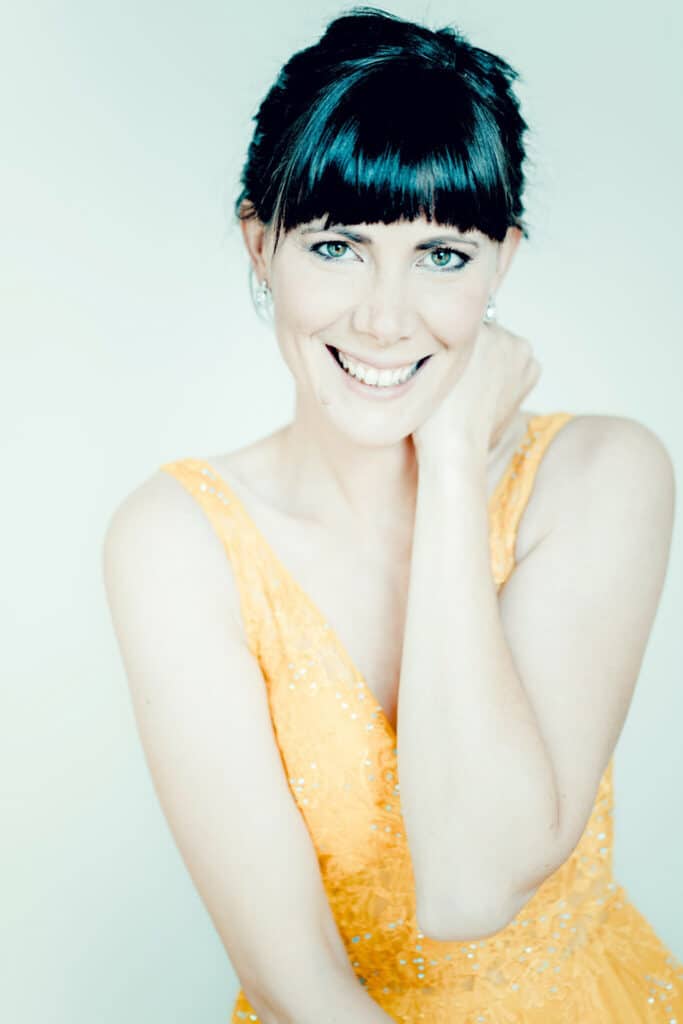
Fredrik Hagerberg is a tenor who trained at the Malmö Academy of Music and the Malmö Opera Academy. Even while still a student, he appeared in several smaller productions and summer operas in southern Sweden. There he sang several leading roles, including Tamino in *The Magic Flute*, The Modern Man in Jonatan Sersam’s *Tinget*, and the Reaper in Josef Zetterberg’s *Vita Bron*. This combination of classical repertoire and newly written opera gave him extensive stage experience early in his career.
After graduating from the Malmö Opera Academy, Fredrik made his Stockholm debut in the spring of 2025 in the lead role of Herman in Kamraterna’s critically acclaimed production of Tchaikovsky’s *The Queen of Spades*.
At Malmö Opera, he has appeared in both solo and ensemble roles in several productions, including *Vinteryra*, *Maskerad*, and *Salome*. In the fall of 2025, he portrayed Don Ramiro in their touring production of Rossini’s Cinderella. Fredrik is the recipient of several scholarships, including the Lasse Lönndahl Vocal Scholarship and the Uno Ebrelius Scholarship.
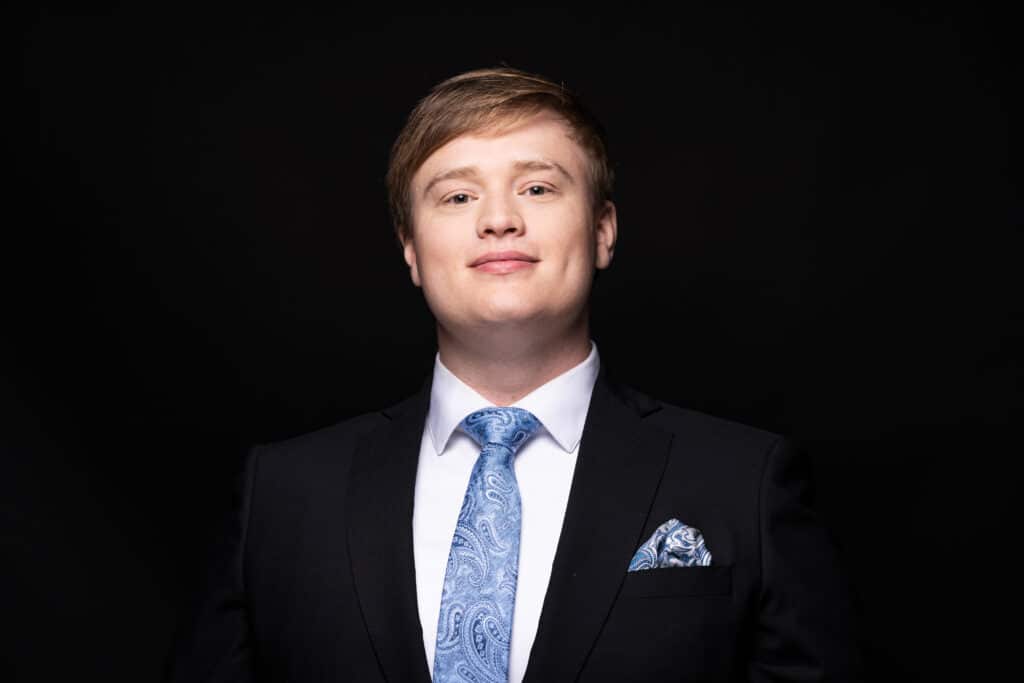
Viktor is a baritone who studied at the University of Music and Performing Arts in Vienna, the Stockholm Opera Studio, and the Royal College of Music in Stockholm.
After completing his studies, he made his international debut in 2023 as Schemariah in the world premiere of Job by Bernhard Lang at the Stadttheater Klagenfurt in Austria. That same year, he took part in the world premiere of Salvatore Sciarrino’s opera Venus and Adonis at the Hamburg State Opera, conducted by Kent Nagano.
During the 2023–24 season, he was part of Folkoperan’s talent program, where he appeared in Norma, Cinderella and The Magic Flute, which was also performed at the Uppsala City Theater.
Other roles include Herman in the world premiere of Anna Einarsson’s opera The Photographer at the Vadstena Academy and Papageno in The Magic Flute and the Count in The Marriage of Figaro at the Skånska Opera.
During the 2025–26 season, he will play the role of Dandini in Malmö Opera’s touring production of *Cinderella*.
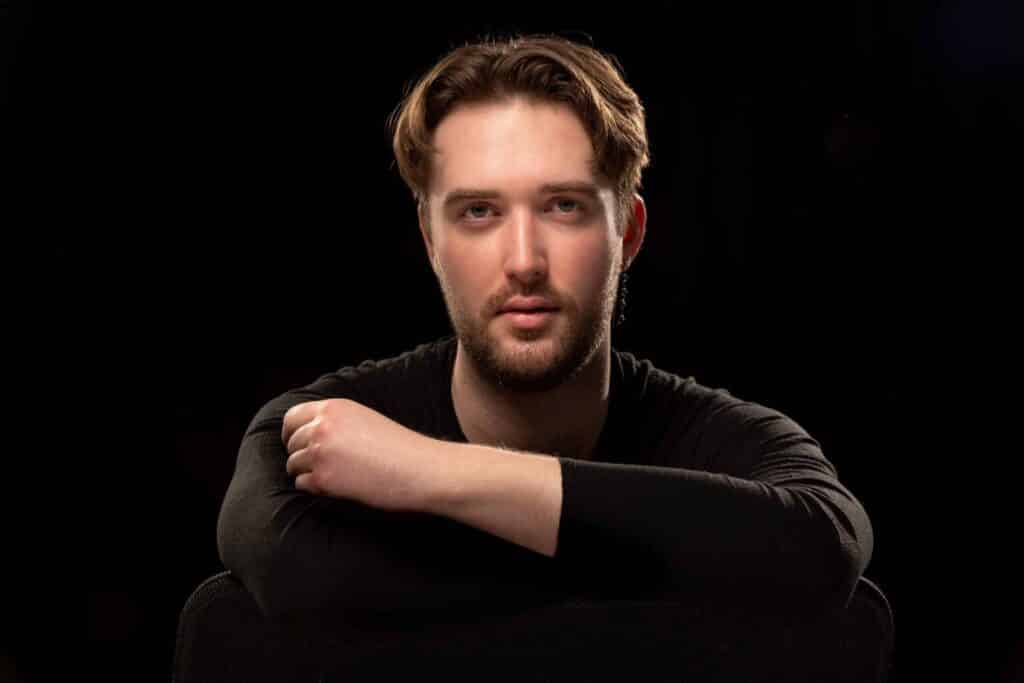
Staffan Liljas is a Swedish bass with a broad repertoire in both opera and the concert hall. In recent years, he has portrayed the Pharaoh in *Aida* at Wermland Opera, appeared in the children’s opera *Where Is the Sandwich?* at the Royal Swedish Opera, sung Timur in *Turandot*at Opera på Skäret, and Gremin in *Eugene Onegin* in the Netherlands. He has a long-standing collaboration with Cappella Mediterreana and Leonardo García Alarcón and has sung the role of Polyphemus in Handel’s *Acis & Galatea*. with them on various stages in France, Switzerland, and Belgium in performances that have been broadcast on both radio and television. On the concert stage, he performs all the major oratorios in our concert halls and churches, and he has presented a number of successful solo programs with various pianists and ensembles. This fall, Staffan released his second solo album, which features newly composed romances by composer Oliver Gruhn and was recorded with the Hamburg Symphony Orchestra. Staffan is delighted to be back at the Norrlands Opera, where he appeared in *The Cunning Little Vixen* in 2016 and sang Bach’s *Christmas Oratorio* in 2022.
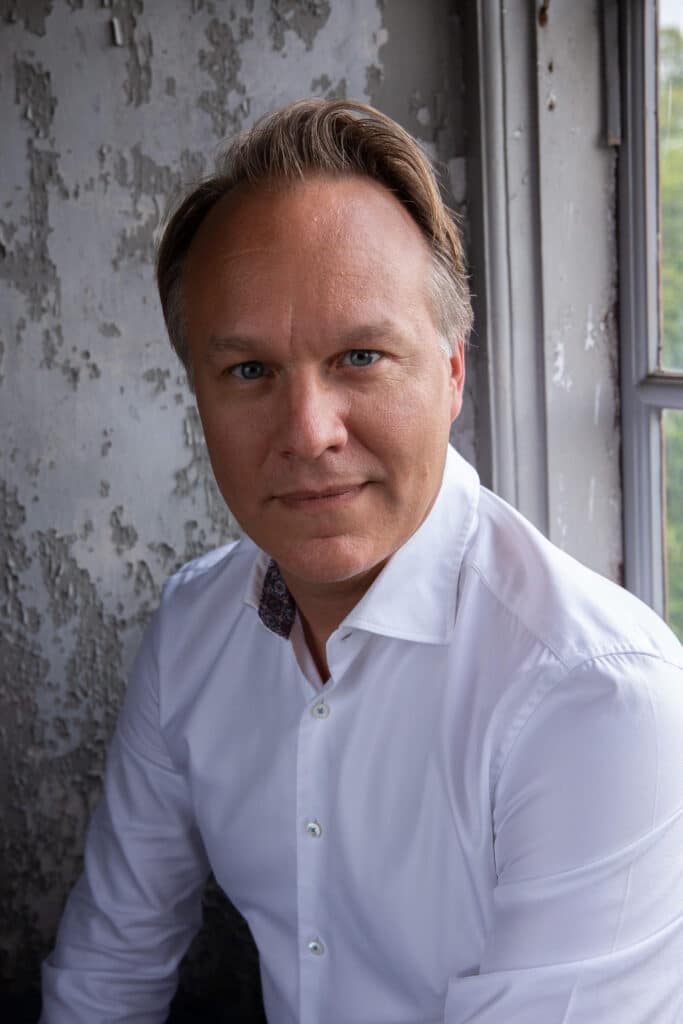
Barbro Cítron is a Swedish soprano who recently graduated from the Opera Academy at the Royal Danish Theater in Copenhagen. Last summer, she performed in Ride!Sing!Repeat at the Copenhagen Opera Festival. In the 25/26 season, she is a member of the Norrlands Opera Opera Studio, where she performs the role of Clorinda (Cinderella). She has performed at the Royal Danish Theater as Flora (The Turn of the Screw) and Tebaldo (Don Carlos), and served as an understudy for the role of Barbarina (The Marriage of Figaro). At the Malmö Opera, she was an understudy for the role of Augusta (The Snow Sister) during the 24/25 season. At the Opera Academy, she has sung roles such as Atalanta (Serse), Maria Bertram (Mansfield Park), Yniold (Pelléas et Mélisande), Sandmann and Taumänchen (Hänsel und Gretel), as well as scenes from roles such as Despina (Così fan tutte), Sophie (Werther), Gretel (Hänsel und Gretel), Cendrillon, Ilia (Idomeneo), and Zdenka (Arabella). She has also appeared at Søholm Opera as Zerlina (Don Giovanni) and in productions of *Pagliacci* and *Amahl and the Night Visitors*.
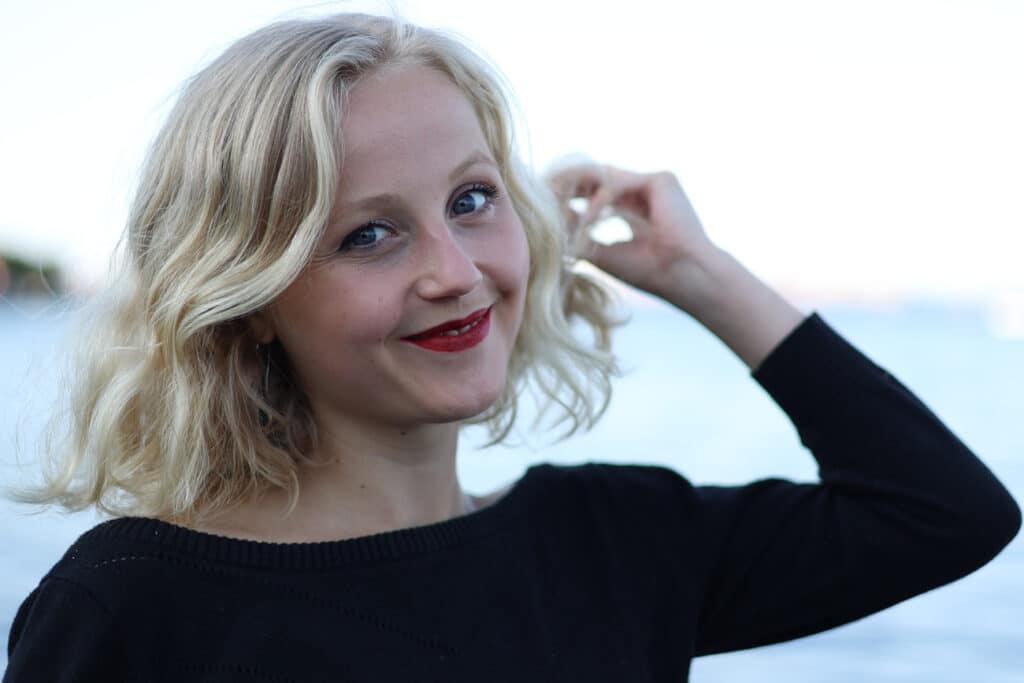
Karin Torbjörnsdóttir, a native of Lund, is a mezzo-soprano who trained at the Mozarteum in Salzburg and the Reykjavík Academy of Music. After completing her master’s degree in opera, she was affiliated with the Luzerner Theater in Switzerland and the opera studio at the Staatsoper Stuttgart in Germany before beginning her freelance career.
At the Icelandic Opera, Karin has performed roles such as Cherubino in *The Marriage of Figaro*—for which she was awarded the Icelandic Gríman Prize for “Singer of the Year 2020”—and Kate Pinkerton in *Madame Butterfly*, directed by Michiel Dijkema.
With Opera Incognita, she sang Nerone in *The Coronation of Poppea* at the Müller’sches Volksbad in Munich.
In Lucerne, she sang, among other roles, Amando in *Le Grand Macabre*—a role she has also performed at the Staatstheater Meiningen—Flora in *La traviata*, the Second Lady in *The Magic Flute*, Zulma in *The Italian Girl in Algiers*, and Alto 2 in Luigi Nono’s *Prometeo*.
In Stuttgart, she sang Berta in *The Barber of Seville*, Tisbe in *Cinderella*, Countess Ceprano in *Rigoletto*, Annina in *La traviata*, Barena in *Jenůfa*, and more.
Karin has performed in numerous concerts across Europe, the United States, and Asia, and has appeared at international festivals such as Anima Mundi in Pisa, the Macau Music Festival, the Lucerne Festival, Songfest in Hafnarborg, as well as “Barocknacht” and “Nacht der Komponisten” in Salzburg.
In the Nordic region, she has performed with the Gothenburg Symphony Orchestra, the Lund Chamber Music Society, and KammaroperaSyd, as well as at Science Village Hall The Loop in Lund and the Harpa Concert Hall in Reykjavík. She has performed in the Icelandic Opera’s concert series, as well as in Salurinn’s Tíbrá concert series and the Year of Icelandic Song, and in church settings including Lund Cathedral and Uppsala Cathedral.
In 2023, the CD *From Earth to Ether* was released, on which Karin sings three pieces by and with composer/conductor Daníel Bjarnason and the Aarhus Symphony Orchestra.
In addition to her singing career, Karin studied acting at the Film School in Prague. She has appeared in several international short films, a feature film, and a TV series, and has also worked as a production designer and art director.
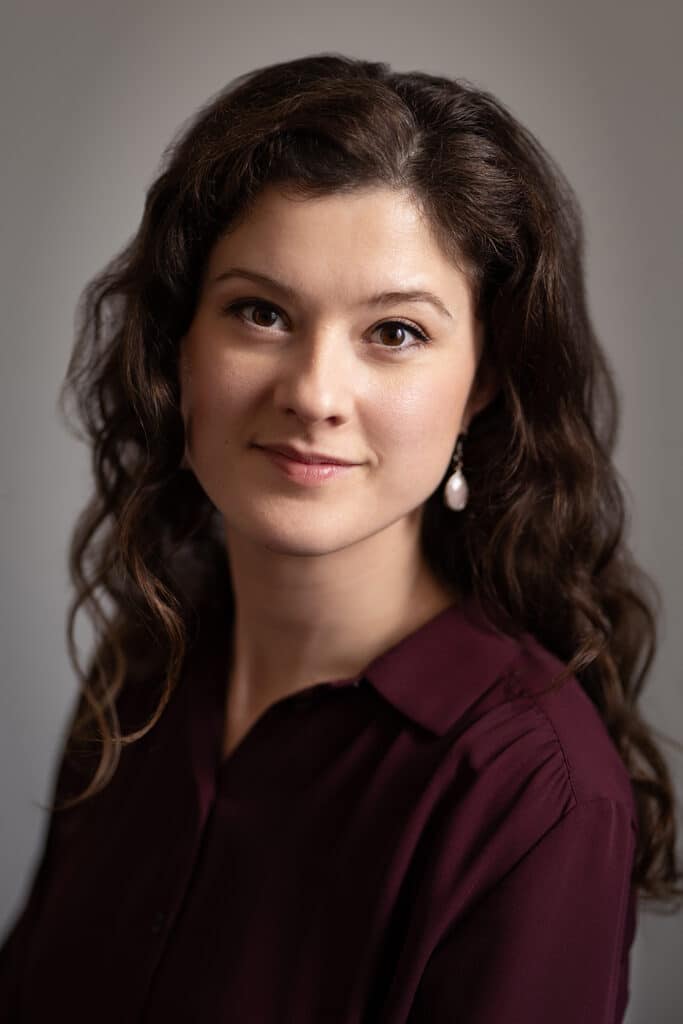
Johan Ulfsparre is a countertenor who has been based in London for the past five years. There, he studied at the Royal Academy of Music and earned both a bachelor’s and a master’s degree from the institution.
During his time at the RAM, Johan was a Josephine Baker Trust Artist, a member of the RAM’s Song Circle, and a soloist in the RAM’s Resounding Shores series. In 2024, he was both a finalist and the winner of the Vocal Prize in the prestigious Richard Lewis Award.
As part of the Royal Academy’s opera productions, Johan has performed roles such as Idamante in Mozart’s *Idomeneo*, Oberon in Britten’s *A Midsummer Night’s Dream*, Arsamene in Handel’s *Serse*, and the Refugee in Dove’s *Flight*. He has also appeared in Royal Academy Opera productions as a flower girl in The Marriage of Figaro and as an extra in the prologue to Ariadne auf Naxos.
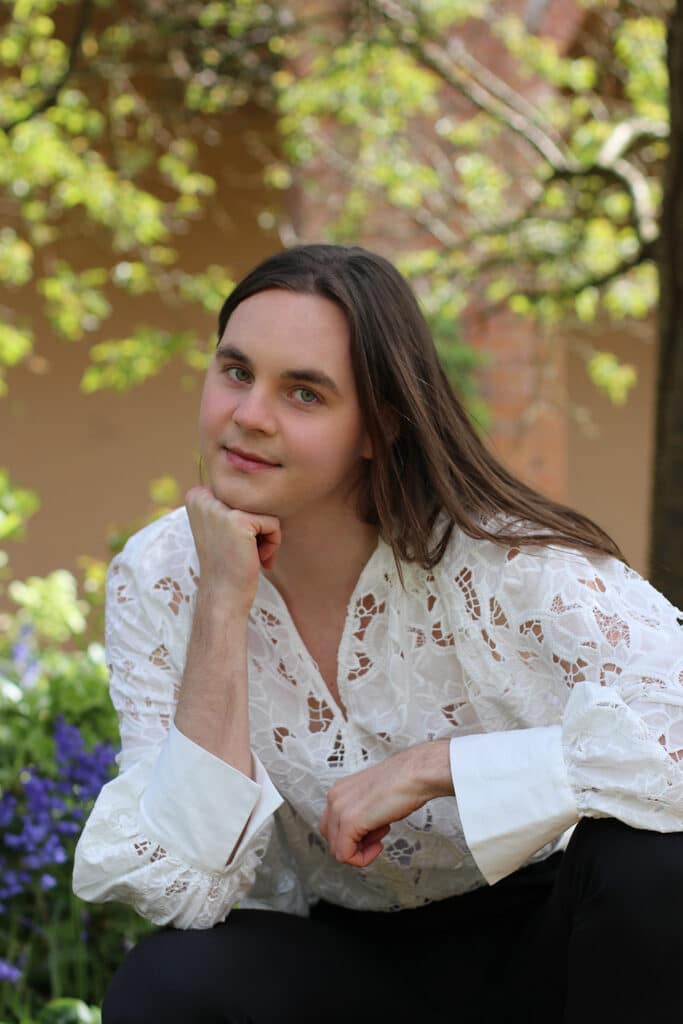
Piano
Jonas Olsson
Violin
Lucy Baker
Sauna
Nicole Bouchikas
Pursuant to
Norrlandsoperan is 60% owned by Region Västerbotten and 40% by the City of Umeå. We receive grants from the Swedish Arts Council.
“Cinderella” is a co-production between Norrlandsoperan and Malmö Opera. Photo: Jenny Baumgartner.
Many thanks to all our donors and partners.