The Musicians
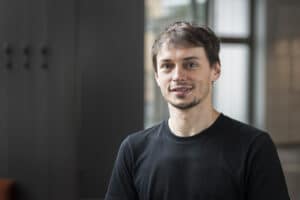
Eduardo Strausser, Chief Conductor of the Norrlands Opera was born in 1985 in São Paulo, Brazil, and has been living in Berlin for the past few years. He is a frequently engaged conductor and has worked with orchestras in South America, Europe, the United States, Australia, and New Zealand. He is also an experienced opera conductor, a skill he developed during his tenure as Resident Conductor at the Teatro São Paulo from 2014 to 2016. Even during his studies at the Zurich University of the Arts, Eduardo developed an interest in works by contemporary composers, a passion he brings with him to the Norrlandsoperan. He was appointed Chief Conductor and Artistic Director at the Norrlands Opera, a position he assumed in the fall of 2024 with a term running through the spring of 2027.
Eduardo Strausser also collaborates regularly with the Kansas City Symphony and the City of Birmingham Symphony Orchestra, and has conducted the Bamberger Symphoniker, the Utah Symphony Orchestra, the Royal Northern Sinfonia, the Orchestre de Montpellier, and the Argovia Philharmonic. Previous collaborations include orchestras in Europe such as the Antwerp Symphony Orchestra and the Royal Philharmonic Orchestra. In the United States, he has worked with the symphony orchestras of North Carolina, Detroit, and Indianapolis. He has also worked with the Sydney and Queensland Symphony Orchestras, as well as the New Zealand and West Australian Symphony Orchestras.
Learn more: eduardostrausser.com
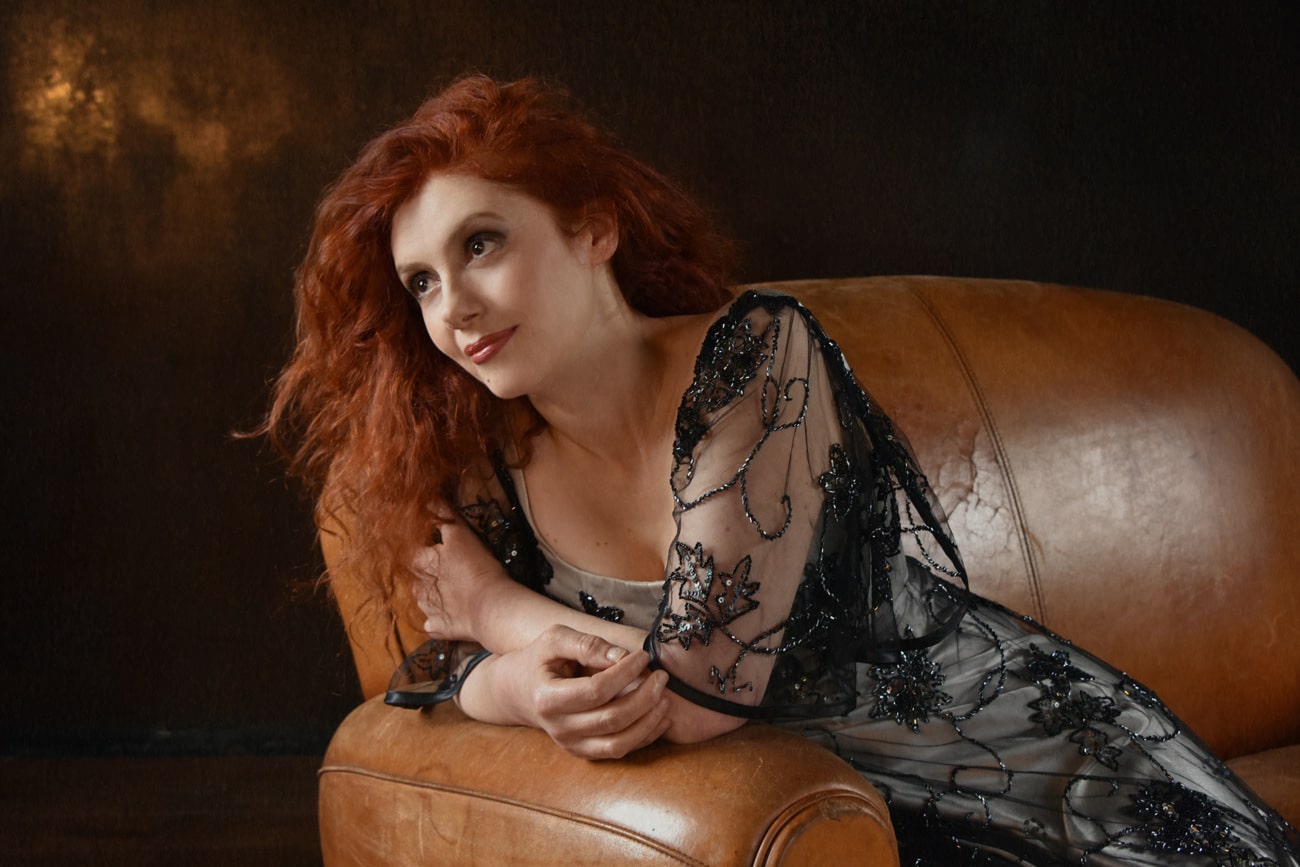
Coloratura soprano Patricia Petibon was discovered by William Christie after completing her studies at the Paris Conservatoire under Rachel Yakar. She has since established herself as one of the most versatile singers in her field, with a repertoire ranging from French Baroque to contemporary music. Key milestones in her career to date include Olympia at the Vienna State Opera, Blondchen at the Zurich Opera House, Giunia in Mozart’s *Lucio Silla* in Barcelona and Madrid, Morgana in Handel’s *Alcina* at La Scala in Milan, Aspasia in Mozart’s *Mitridate* at the Theater an der Wien and in Munich, and Despina in Mozart’s *Così fan tutte* at the Salzburg Festival.
The artist enjoyed great success as Giunia (Lucio Silla) at the Theater an der Wien under Nikolaus Harnoncourt, with whom she shared a strong musical connection and collaborated regularly. Her interpretation of Berg’s Lulu earned international acclaim in Geneva, at the Salzburg Festival, and at the Liceu in Barcelona, while other highlights have included Manon at the Vienna State Opera and the Grand Théâtre de Genève; the role of Mélisande at the Théâtre des Champs-Élysées; and Blanche (Dialogues of the Carmelites), including at the Théâtre des Champs-Elysées in Paris. Patricia Petibon has performed all three female roles in Offenbach’s The Tales of Hoffmann at La Monnaie in Brussels, and the spring of 2021 marked a magnificent role debut in Poulenc’s La Voix Humaine and Thierry Escaich’s Point d’Orgue directed by Olivier Py at the Théâtre des Champs-Elysées.
Her most recent projects include a new production of La Voix humaine at the Opéra national du Rhin, directed by Katie Mitchell, as well as Pelléas and Mélisande with the Budapest Festival Orchestra, conducted by Iván Fischer, and Così fan tutte at the Théâtre du Châtelet and in a concert version with the Orchestre national de Lyon. In the fall of 2024, she will make her debut in the role of Mère Marie in Olivier Py’s production of Dialogues of the Carmelites at the Théâtre des Champs-Élysées. In addition to numerous recitals, including performances in Vienna, Strasbourg, Bordeaux, and Madrid, Patricia Petibon will perform two programs during the 2024–2025 season: “Destins de Reines” and “Flammes des Magiciennes,” alongside the French Baroque ensemble Amarillis.
Patricia Petibon maintains close musical ties with Alain Altinoglu, Giovanni Antonini and Il Giardino Armonico, Bertrand de Billy, Ivor Bolton, Frédéric Chaslin, Myung Whun Chung, Héloïse Gaillard and Amarillis, Emmanuelle Haïm and Le Concert d’Astrée, Daniel Harding, Bernard Haitink, Kristjan Järvi, Louis Langré, Andrea Marcon and La Cetra as well as Venice Baroque, Josep Pons, François-Xavier Roth and Les Siècles, Christophe Rousset, Jérémie Rohrer, Paavo Järvi, and many others.
Patricia Petibon is equally at home on the Lieder stage and performs regularly in Paris, Lyon, Lille, Strasbourg, Aix-en-Provence, at Vienna’s Musikverein and Konzerthaus, at the Salzburg Festival, in Graz, Geneva, Dortmund, Hamburg, Berlin, London’s Wigmore Hall, Edinburgh, Luxembourg, Amsterdam, Copenhagen, Barcelona, Madrid, Granada, and Bilbao.
As a growing advocate for young singers, she founded the academy “Les Chants d’Ulysse” at the Royal Abbey of Fontevraud and Théâtre Le Dôme in Saumur, together with flutist and oboist Héloïse Gaillard, artistic director of Ensemble Amarillis. The academy is aimed at students, singers, and musicians—future professionals and emerging artists.
From 2008 to 2016, Patricia Petibon was an exclusive artist with Deutsche Grammophon. During this time, she released arias by Gluck, Mozart, and Haydn with Concerto Köln and Daniel Harding; the album “Rosso,” featuring Italian Baroque arias with La Cetra and Andrea Marcon; and “Melancolia,” a collection of Spanish repertoire that she recorded with the Orquesta Nacional de España under the direction of Josep Pons. In 2012, her solo album titled “Nouveau Monde,” featuring Baroque arias and songs, was released; she recorded it with La Cetra and Andrea Marcon. This was followed in 2014 by “La Belle Excentrique,” a recording of French mélodies that won several awards. Her albums titled “L’amour, la mort, la mer,” followed by “La Traversée,” with La Cetra and Andrea Marcon, were released by Sony Music.
Photographer: LiliRoze

Violin I
Anders Hjortvall, Nidhal Jebali, Miguel Chamorro, Kersti Wilhelmsson, Amandus Lind, Kitiara Braune, Matias Malmqvist, Per-Erik Andersson
Violin II
Pontus Björk, Andreas Olsson, Mikhail Zatin, Karin Molander, Lina Samuelsson, EvaBritt Molander, Lisa Erpelding
Viola
Ivan Zecevic, Ester Forsberg, Åsa Hjelm, Pablo Munoz Salido, Karolina Bednarz
Cello
Florian Erpelding, Bekhbat Tsagaanchuluun, Kerstin Isaksson, Karin Bjurman, Kristina Tereschatov
Double bass
Jan-Emil Kuisma, Charlotte Petersson, Josefin Landmér
Flute
Ebba Wallén, Pepita del Rio
Oboe
Fredrik Söhngen, Johannes Ögren
Clarinet
Tania Villasuso Couceiro, Alberto Álvarez, Jonas Olsson Hakelind
Bassoon
Emily Hultmark, Maria Kindell
Horn
Orvar Johansson, Yerang Ko, Edna Fernandes, Anders Kjellberg
Trumpet
Malin Silbo-Ohlsson, Andreas Carlsson Walleng
Trombone
Peter Nygren, Daniel Bjerhag Hedin, Mathias Petersson
Tuba
Linus Mattsson
Timpani
Ian Piniés
Percussion
Maximiliano Polo, Aleksander Ulriksen, Per Mikaelsson
Harpa
Claire Moncharmont
Learn more about the Norrlandsoperan Symphony Orchestra here: norrlandsoperan.se/norrlandsoperans-symfoniorkester
Pursuant to
Norrlandsoperan is 60% owned by Region Västerbotten and 40% by the City of Umeå. We receive grants from the Swedish Arts Council.
Many thanks to all our donors, sponsors, and partners.