
The Musicians
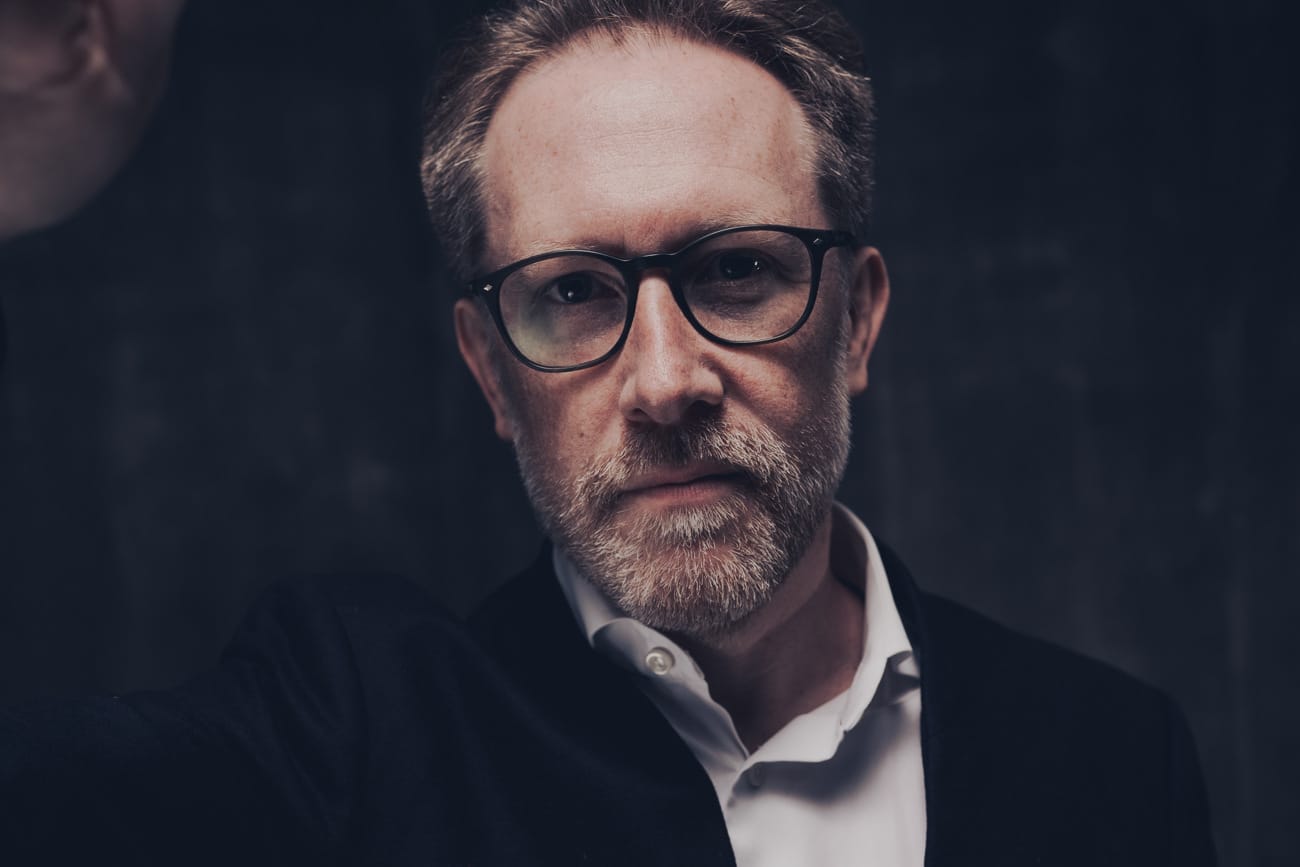
Simon Crawford-Phillips has built a unique career as a conductor, pianist, and creative programmer.
He has served as chief conductor of the Västerås Sinfonietta (2016–2028) and, in 2023, made a critically acclaimed debut at the Royal Swedish Opera in Stockholm with Britten’s *A Midsummer Night’s Dream*. In 2025, Simon was appointed artistic director of the Swedish National Orchestral Academy (SNOA) at the University of Gothenburg. Simon’s innovative and eclectic programming is reflected in an unusually varied career and a passion for promoting contemporary and undiscovered repertoire.
Simon’s chamber ensembles include The Nash Ensemble (where he serves as artistic director alongside Adrian Brendel), the Kungsbacka Piano Trio, and the Stockholm Syndrome Ensemble. He is the artistic director of the Change Music Festival in Sweden, co-artistic director of the Wye Valley Chamber Music Festival, and has led his own series, “Musikalisk Möten,” at the unique Musikaliska Kvarteret —Stockholm’s oldest concert hall!
With a particular focus on Italian opera, he frequently collaborates with renowned institutions such as the Teatro Regio di Torino, the Teatro Filarmonico di Verona, the Teatro del Maggio Musicale Fiorentino, Teatro Comunale di Bologna, and the Rossini Opera Festival in Pesaro, where he is recognized as a skilled interpreter of the bel canto repertoire.
World premieres have included Börtz’s violin concerto *Concerto for One* with Malin Broman and the Norrköping Symphony Orchestra, Djuro Zivkovic’s violin concerto with Pekka Kuusisto and the Swedish Chamber Orchestra, as well as the world premiere of a new double concerto with the Tapiola Sinfonietta by Finnish composer Sauli Zinovjev, written for Simon and Hugo Ticciati. Simon values every opportunity to collaborate directly with composers and has had the privilege of working with Britta Byström, Sofia Gubaidulina, Simon Holt, Colin Matthews, Steve Reich, Mark-Anthony Turnage, and Huw Watkins.
Violin I
Justyna Jara, Lina Samuelsson, Miguel Chamorro, Isaac Bachs Viñuela, Matias Malmqvist, Kitiara Braune, Per-Erik Andersson, Amandus Lind
Violin II
Pontus Björk, Andreas Olsson, Lars Warnstad, Mikhail Zatin, Kersti Wilhelmsson, Felicia Möller, EvaBritt Molander
Viola
Riika Repo, Ester Forsberg, Åsa Hjelm, Johanne Skaansar, Dusica Cvijanovic
Cello
Josef Alin, Bekhbat Tsagaanchuluun, Karin Bjurman, Kerstin Isaksson, Kristina Tereschatov
Double bass
Jan-Emil Kuisma, Charlotte Petersson, Josefin Landmér
Flute
Annica de Val
Clarinet
Tania Villasuso Couceiro, Jonas Olsson Hakelind
Bassoon
Peter Bolton, Maria Kindell
Horn
Orvar Johansson, Anders Kjellberg
Trumpet
Malin Silbo-Ohlsson, Andreas Carlsson Walleng
Timpani
Ian Piniés
Learn more about the Norrlandsoperan Symphony Orchestra here: norrlandsoperan.se/norrlandsoperans-symfoniorkester
Pursuant to
Norrlandsoperan is 60% owned by Region Västerbotten and 40% by the City of Umeå. We receive grants from the Swedish Arts Council.
Many thanks to all our donors, sponsors, and partners.