Program
Lisa Streich: Händeküssen, 13 min
Igor Stravinsky: Jeu de Cartes, 23 min
I. Première donne
II. Deuxième donne
III. Troisième donne
30-minute break
Sergei Rachmaninoff: Piano Concerto No. 2, 33 min
I. Moderato
II. Adagio sostenuto
III. Allegro scherzando
More about the concert
PEAK ROMANCE
The acclaimed international artist Boris Giltburg is coming to Umeå to welcome spring with one of the world’s most beloved piano concertos: Rachmaninoff’s Second Piano Concerto from 1901, the sweeping, grandly romantic magnum opus of piano art. The evening also features a newly composed work by the German-Swedish composer Lisa Streich, as well as playful, card-game-inspired classicism by Igor Stravinsky.
Just as the spring light begins to shine, Greek conductor Zoe Zeniodi arrives at the Norrlands Opera with a truly world-class program. The evening begins with The Kiss on the Hand by the Swedish-German composer Lisa Streich from 2019. Streich is among the new generation of composers with a keen ear for the possibilities of sound to take on different “textures.” Although she has not yet turned 40, she has already written commissioned works for the Berlin Philharmonic. Her use of what she herself calls “moldy chords” offers a glimpse into her unique and elusive musical world. In The Kiss on the Hand It was the deaf Beethoven who served as the inspiration. Streich got the idea from one of the old titan’s conversation notebooks, where she found the statement: “Kissing hands is not good.” From this sentence, she constructs a fictional ballroom filled with many hand-kissing suitors, where the orchestra imitates the deaf Beethoven’s dancing feet. The listener, she imagines, finds themselves inside Beethoven’s ear canal.
And hands are an equally important element in the next piece, Igor Stravinsky’s poker game: *Jeu de Cartes*. A short ballet piece divided into three “deals,” just like in a game of poker, in which the dancers represent jokers, queens, and kings of various suits. The ballet, written in the 1930s during the composer’s neoclassical period, is characterized—as so often—by mischievous nods to classical form, but above all reflects its composer’s fiery and rhythm-driven temperament. Perhaps Stravinsky was inspired by Walt Disney’s imaginative, dancing cards in the iconic Mickey Mouse card-themed shorts from the same period. Who knows?
After the intermission, it will be time for the evening’s main event: Rachmaninoff’s Second Piano Concerto. This music, with its melodic drive and romantic passion, stands in stark contrast to the concert’s two more intellectually oriented opening pieces. The Second Piano Concerto was composed toward the end of a long period of depression; for the composer, it became a way out of the darkness and self-doubt triggered, among other things, by the lukewarm reception of his First Symphony in the late 1890s. With the new piano concerto, he was back on the concert stage—and with a vengeance. The premiere in late fall 1901 was met with acclaim from both the audience and critics. And it still has the same immediate, almost hypnotic effect on its listeners today. Most who have heard it experience an almost immediate melodic rapture when the strings break in after the evocative chord changes of the opening measures in the piano’s lower register. The Second Piano Concerto is an unmistakable hit, and Rachmaninoff’s, in addition to “Vocliasen,” by far his best-known work. The breathtakingly beautiful adagio, with its lyrical melody, has served as a leitmotif in both Hollywood and pop ballads (such as “All by Myself ” by Eric Carmen, 1975).
To tackle this masterpiece, star pianist Boris Giltburg has come to the Norrlandsoperan—a first for the opera house. The Israeli pianist has become one of the most sought-after interpreters of Rachmaninoff of our time. He says he absorbed the music from an early age during his childhood in the Soviet Union. Giltburg’s ability to combine technical brilliance with passionate sincerity is considered the reason why he has become such a beloved interpreter of the Russian titan’s piano music. Tonight, the Umeå audience will finally have the chance to experience his musical magic.
The Musicians
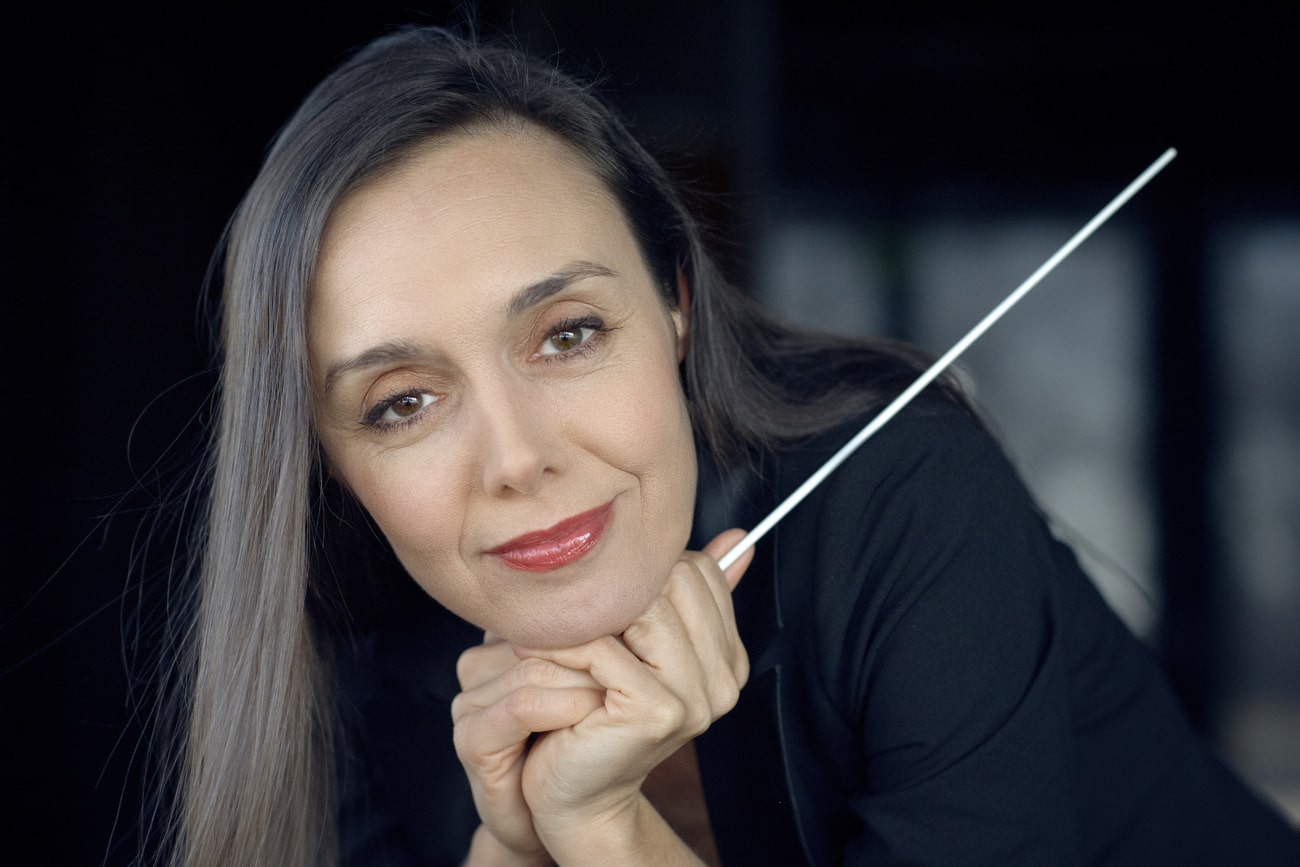
Greek conductor Zoe Zeniodi has worked with a wide range of international orchestras, including the Real Orquesta Sinfónica de Sevilla, the Bremen Philharmonic, the Paris Mozart Orchestra, the Brno Philharmonic, and the Palm Beach Symphony. She has performed at venues such as the Philharmonie de Paris, the Teatro Colón, and Carnegie Hall, and has collaborated with artists such as Sir Stephen Hough, Vadim Gluzman, and Lise de la Salle.
As an associate conductor, she has been affiliated with the Los Angeles Opera, the Lyric Opera of Chicago, the Orchestre de Paris, and the Gürzenich Orchestra Cologne, among others, and she is deeply involved in education through collaborations with several international youth orchestras.
Zeniodi is a former participant in the Taki Alsop Conducting Fellowship, the Hart Institute for Women Conductors, and the La Maestra Academy in Paris. The documentary film *Maestra*, which chronicles her life and work, premiered at the Tribeca Film Festival and is available on Netflix.
She has held several leadership positions in the arts, including artistic director of the Thessaloniki Concert Hall, principal conductor of the Greek-Turkish Youth Orchestra and MOYSA, and music and artistic director of the Broward Symphony Orchestra and the Alhambra Orchestra.
Zeniodi has recorded music for Greek radio and released several albums of American contemporary music. She holds a Doctor of Musical Arts degree in conducting from the University of Miami and has studied piano at the Royal College of Music in London and the Mozarteum in Salzburg. As a pianist, she has performed on stages throughout Europe, the United States, Latin America, and Africa.
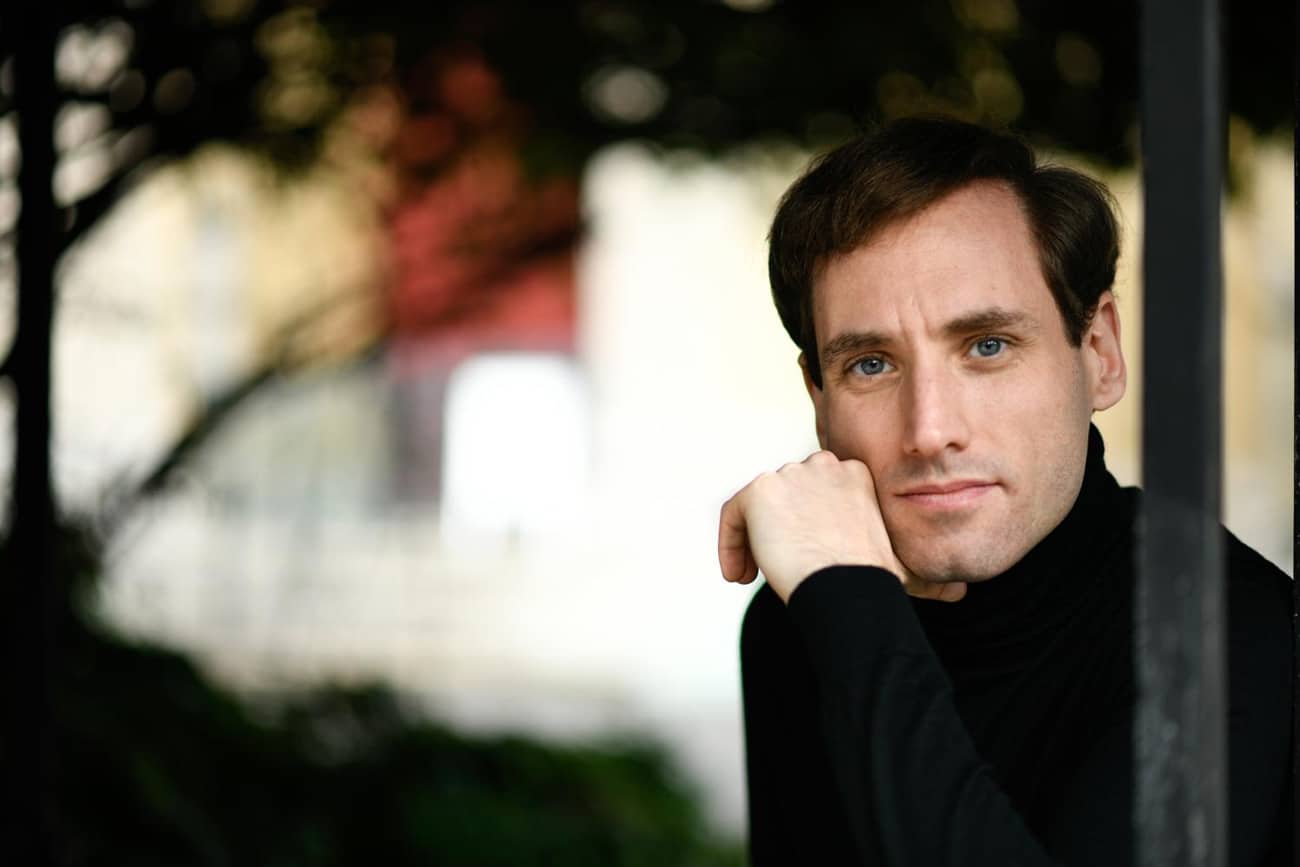
The internationally acclaimed pianist Boris Giltburg is known for his profound expression, poetic insight, and technical brilliance. During the 2025–26 season, he will perform with several leading orchestras, including the Leipzig Gewandhaus Orchestra, the Frankfurt Radio Symphony, the Philharmonia Orchestra, the Helsinki Philharmonic, and the Salzburg Mozarteum. He is also Artist-in-Residence at the Dresdner Philharmonie.
Giltburg has collaborated with leading conductors such as Jukka-Pekka Saraste, Dima Slobodeniouk, and Dalia Stasevska, and has given a long series of prestigious recitals at venues such as the Concertgebouw, Wigmore Hall, the Elbphilharmonie, Carnegie Hall, and the Vienna Konzerthaus.
He is particularly noted for his interpretations of Rachmaninoff, in which critics highlight his combination of intellect, sensitivity, and technical perfection. His recordings have been honored with several major awards, including the Opus Klassik, the Diapason d’Or, and the Gramophone Award.
Giltburg is also actively working to make classical music more accessible through his blog, Classical Music for All, and articles in international music publications.
borisgiltburg.com
Violin I
Øyvor Volle, Kanerva Mannermaa, Miguel Chamorro, Isaac Bachs Viñuela, Andreas Olsson, Per-Erik Andersson, Matias Malmqvist, Kitiara Braune
Violin II
Pontus Björk, Clara Bjerhag, Amandus Lind, Mikhail Zatin, Kersti Wilhelmsson, Felicia Möller, EvaBritt Molander
Viola
Ester Forsberg, Pablo Muñoz Salido, Heather Storer, Åsa Hjelm, Anfisa Troitskaia
Cello
Björn Risberg, Bekhbat Tsagaanchuluun, Karin Bjurman, Kerstin Isaksson, Kristina Tereschatov
Double bass
Jan-Emil Kuisma, Charlotte Petersson, Josefin Landmér
Flute
Ebba Wallén, Björg Bjarnsdottir
Oboe
Emmanuel Rolland-Bezem, Sara Zuchelli
Clarinet
Tania Villasuso Couceiro, Jonas Olsson Hakelind
Bassoon
Maria Kindell, Charlotte Naden
Horn
Orvar Johansson, Yerang Ko, Edna Fernandes, Anders Kjellberg
Trumpet
Malin Silbo-Ohlsson, Viktor Lindholm
Trombone
Peter Nygren, Lina Nyström, Mathias Petersson
Tuba
Linus Mattsson
Timpani
Ian Piniés
Percussion
Maximiliano Polo
Learn more about the Norrlandsoperan Symphony Orchestra here: norrlandsoperan.se/norrlandsoperans-symfoniorkester
Pursuant to
Norrlandsoperan is 60% owned by Region Västerbotten and 40% by the City of Umeå. We receive grants from the Swedish Arts Council.
Many thanks to all our donors, sponsors, and partners.