Program
And Birds Are Still…
Takashi Yoshimatsu
8 min
Dollagaccat
Hildá Länsman (orchestral arrangement Christopher Kandelin)
5 min
Dállie
Katarina Barruk & Arnljot Nordvik (orchestral arrangement Marzi Nyman)
3 min
Nuages from Nocturnes
Claude Debussy
8 min
Such Jahttá, Part 4 Máddaráhkká
Katarina Barruk (original arr. Arnljot Nordvik, orchestral arrangement Bjarni Frímann)
7 min
Čuojahat mu
Hildá Länsman (orchestral arrangement Christopher Kandelin)
5 min
Fêtes from Nocturnes
Claude Debussy
6 min
30-minute break
Duodjemagiija
Hildá Länsman (orchestral arrangement Christopher Kandelin)
3 min
Cantus Arcticus, The Book
Einojuhani Rautavaara
6 min
Dárbasjub Duv
Katarina Barruk, Arnljot Nordvik, Helle Larsen, Patrick Jaklin (orchestral arrangement Isak Lundberg)
3 min
Muittut
Hildá Länsman (orchestral arrangement by Isak Lundberg)
6 min
Berceuse from The Firebird
Igor Stravinsky
4 min
Sådna Jahttá pt. 2 Maadter-aahka
Katarina Barruk (orchestral arrangement Marzi Nyman)
4 min
Symphony No. 5, movement 3
Jean Sibelius
11 min
More about the concert
BARRUK AND LÄNSMAN TAKE THE STAGE
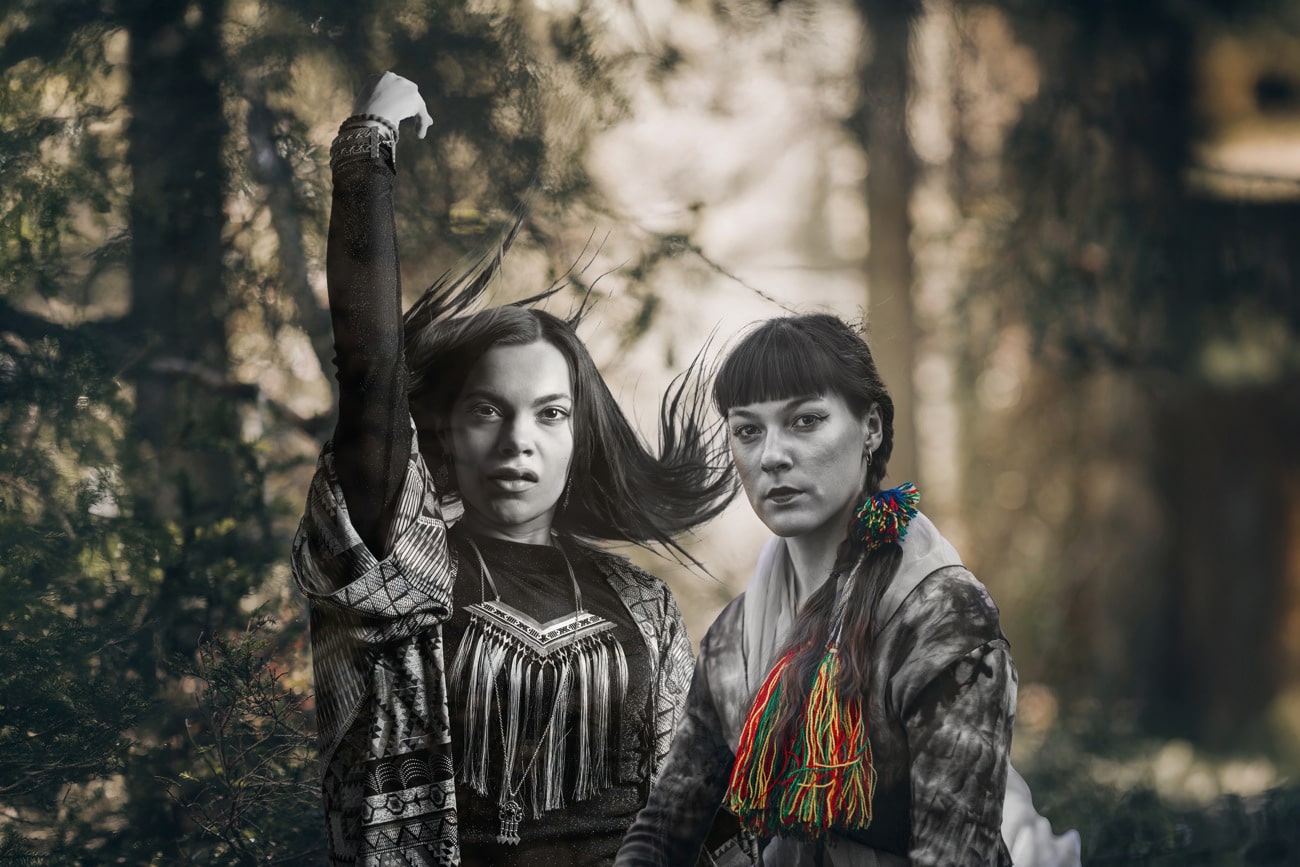
Get ready for an unforgettable experience. In February, singer, joik singer, and artist Katarina Barruk will take the stage alongside Hildá Länsman—who has a new album out and is also an artist, joik singer, songwriter, and duojár. Two of the brightest stars in the Sámi music scene right now. Both stand out for their artistic uncompromising spirit—at once deeply rooted in Sámi musical tradition, yet forward-looking with a desire to transcend genre boundaries. It will be a meeting between the symphony orchestra’s grand soundscape and the traditional Sámi singing tradition.
Katarina Barruk writes music for both the charts and major musical institutions. With her majestic stage presence, her melancholic vocals, and her artistic charisma, she has quickly become popular among both young audiences and in the classical music scene. Despite her relatively short career, she has already amassed a number of symphonic collaborations —most recently, in August, she gave an acclaimed performance at the Proms alongside violinist and conductor Pekka Kuusisto and the Norwegian Chamber Orchestra, becoming the first Sámi artist ever to do so. She herself has described the experience as deeply moving.
Katarina Barruk is unique in another respect as well. She sings in Ume Sami, an indigenous language that once dominated the region but is now on UNESCO’s list of critically endangered languages—a language that more and more Ume Sami people are fighting to revive.
In her music, Katarina Barruk writes about what it means to be human. About life and death, but also about our relationship to the earth we stand on—the earth that nourishes us with its gifts, and which we so easily take for granted. The wordless melody comes first, she explains in an interview, followed by the lyrics. By consistently expressing herself in her native language, Katarina Barruk shines a light in the darkness; she not only takes on the role of ambassador for this once-vibrant Sámi idiom but also shows the way for others. With her unwavering commitment to Sámi culture, she demonstrates to the outside world that art can offer both comfort and a path forward. History can be turned around.
Katarina Barruk has previously given two acclaimed performances at the Norrlandsoperan. This time, the format is somewhat different, as the artist shares the stage with Hildá Länsman. A collaboration that lends the concert an even greater sense of uniqueness.
Hildá Länsman is an artist, joik singer, songwriter, and duojár from Utsjoki (Ohcejohka) who has recently launched a solo career. The Sámi cultural heritage forms the foundation of her creative work. Growing up in northern Finland, her daily life was shaped by reindeer herding, Sámi crafts, and music. However, she knew early on that music was her calling. There is a touch of melancholy in her, as she herself has described it. While her younger brother joiked in honor of the sun, Hildá Länsman joiked in honor of the moon. She began singing with her mother at an early age in the award-winning duo Solju. She has also been the frontwoman for Sámi music groups such as VILDÁ and Gájanas. But it is only recently that she has chosen to blaze her own trail. Her newly released album is a collaboration with the Finnish artist and producer Tuomas Norvio. In it, as she herself describes it, “electronic music meets Sámi storytelling.” The songs are poetic, multi-layered, and move seamlessly between everyday life, the trials of love, and larger questions of heritage and identity. The concert with the Norrlandsoperan Symphony Orchestra marks Hildá Länsman’s debut at the Norrlandsoperan.
At the podium, we find the Icelandic conductor, composer, and musician Bjarni Frímann, who has already made a significant mark on the music world throughout his career. In 2018, Bjarni Frímann was appointed music director and conductor of the Icelandic National Opera, where he led productions of, among others, *Tosca*, *La Traviata*, *The Marriage of Figaro*, and *Hansel and Gretel*, as well as world premieres of works by Anna Thorvaldsdóttir and Daníel Bjarnason. That same year, he also took up the position of resident conductor with the Iceland Symphony Orchestra and has since guest-conducted orchestras such as the Hallé Orchestra, the Rundfunk-Sinfonieorchester Berlin, and the Orchestra Teatro Colón in Buenos Aires.
The Musicians
Bjarni Frímann is a conductor and musical visionary who combines a deep grounding in the classical tradition with a bold exploration of new forms of expression. As artistic director of the contemporary ensemble BIT20 in Bergen and recipient of Léonie Sonning Talent Prize 2025 He has established himself as a major force on the international stage.
Originally trained as a violinist at The Hanns Eisler Conservatory in Berlin, Frímann developed a broad artistic practice spanning several instruments before finding his natural place at the conductor’s podium. His musical philosophy is characterized by a desire to break with convention and bring classical music into new contexts—from improvisations in unusual settings to the founding of ensembles and festivals for contemporary music.
The 2025–26 season will feature a strong Nordic presence, with productions at Malmö Opera and appearances conducting the Danish Radio Symphony Orchestra. He has previously guest-conducted leading orchestras such as The Hallé, the Rundfunk-Sinfonieorchester Berlin, the Orchestra Teatro Colón, and the Hollywood Bowl Orchestra.
Frímann’s international career is rooted in his home country of Iceland, where, as music director of the Iceland National Opera, he conducted both classical operas and world premieres of works by composers such as Anna Thorvaldsdóttir and Daníel Bjarnason. His collaborations with artists such as Björk and Ólafur Arnalds reflect his belief in the boundless language of music.

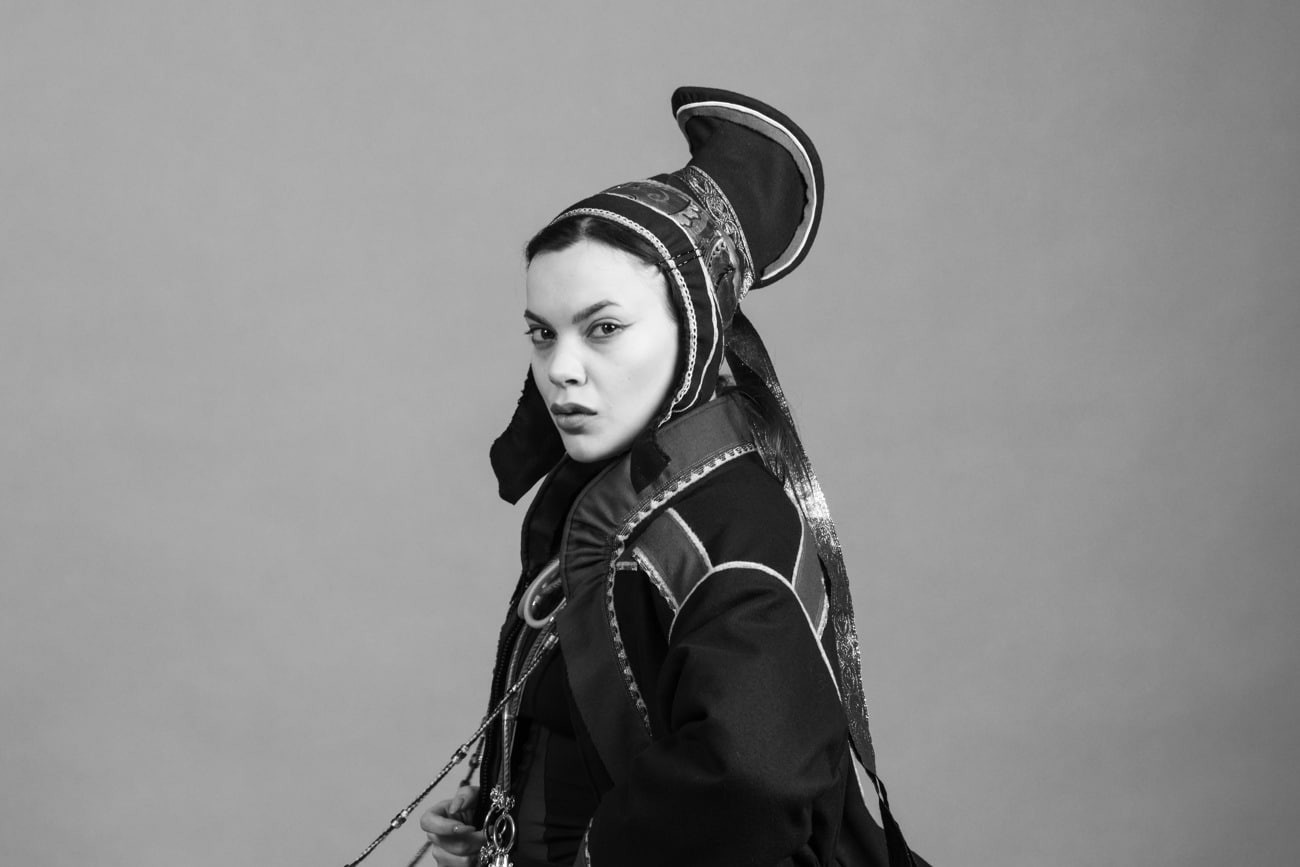
Katarina Barruk is known as one of Sápmi’s most acclaimed artists. She grew up in Lusspie (Storuman) and Gajhrege (Gardfjäll). Over the past decade, Katarina has toured throughout Europe, giving highly acclaimed concerts. Her performance at the Øya Festival was hailed by The Line of Best Fit as “Øya’s greatest discovery.”
She delivers a powerful yet down-to-earth mix of pop music, traditional joik, and improvisational elements. Over the years, Barruk’s strong and unmistakably clear voice has built a loyal following. It’s no coincidence that in recent years she has performed at groundbreaking festivals such as Iceland Airwaves, Reeperbahn, and WOMEX. In 2023 and 2024, Katarina also performed her music alongside the Norwegian Chamber Orchestra and the Helsinki Philharmonic Orchestra.
Her second album, *Ruhttuo* (2022), produced by Arnljot Nordvik and Christo Stangness, cemented the singer’s reputation as an artist who doesn’t follow well-trodden paths but forges her own way.
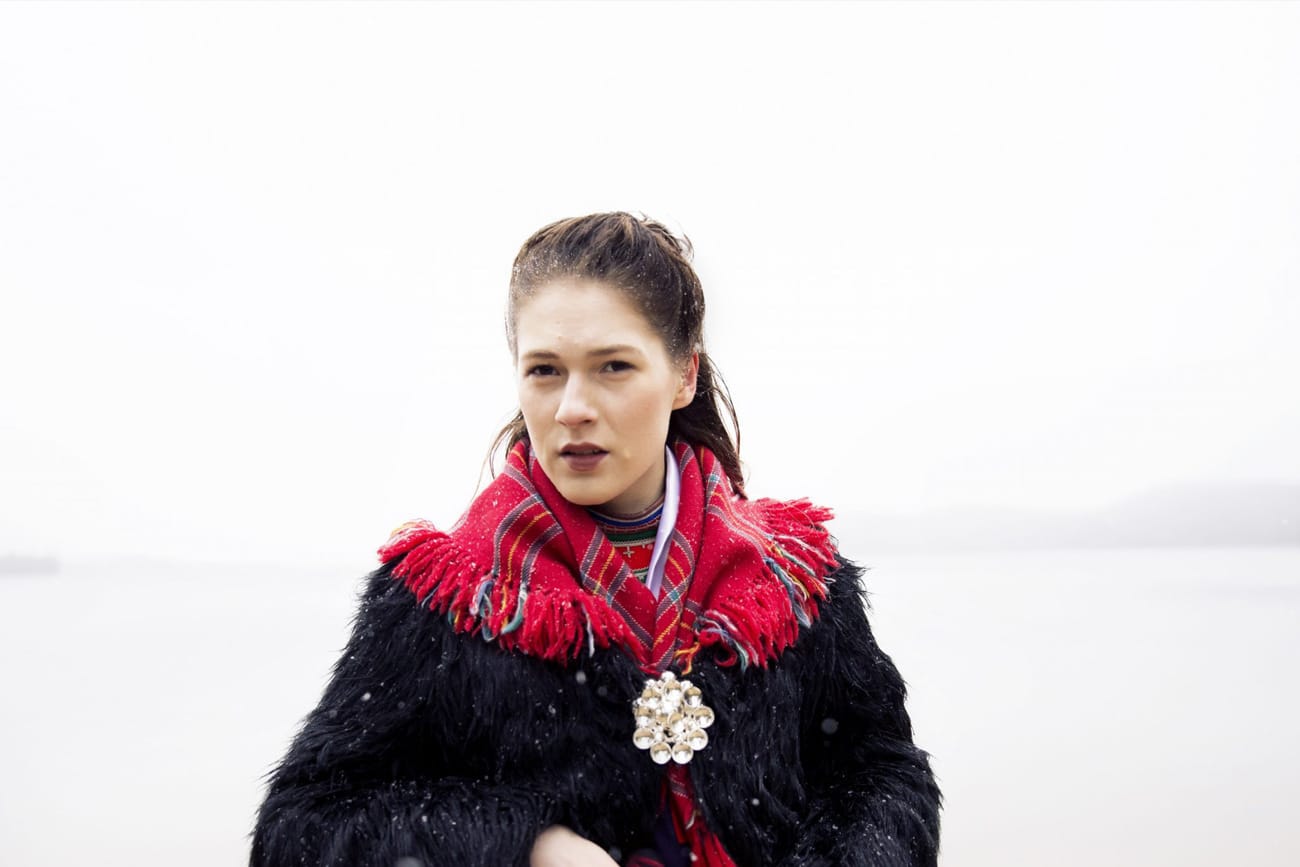
Hildá Länsman is a joik singer and songwriter from Utsjoki in northern Finland. With roots in Sámi reindeer herding, handicrafts (duodji), and joik (luohti), she combines her cultural heritage with modern world music and her studies in the Global Music program at the Sibelius Academy. Hildá is known for her uniquely ethereal and powerful voice and is a proud bearer of the joik tradition.
She is the frontwoman for several critically acclaimed groups— Solju, VILDÁ, and Gájanas —as well as a project with Tuomas Norvio.
Solju has received international acclaim, including the 2023 International Indigenous Recording of the Year award, and their previous album has won both the Indigenous Music Awards and the Folk Music Artist of the Year award.
VILDÁ’s debut album was named one of the best of the year by Songlines Magazine, and the duo was honored with the MME Talent Award in 2021.
Gájana’s debut album won the 2021 International Indigenous Artist-Group-Recording of the Year award.
Hildá has recently released a new, innovative album in collaboration with Tuomas Norvio, where electronic joik, poetry, and dance music come together in a style all its own.
Violin I
Pedro Rodríguez, Martin Granström, Miguel Chamorro, Isaac Bachs Viñuela, Amandus Lind, Arly Rivero, Kitiara Braune, Lars Warnstad
Violin II
Pontus Björk, Andreas Olsson, Kersti Wilhelmsson, Per-Erik Andersson, Matias Malmqvist, Mikhail Zatin, EvaBritt Molander
Viola
Lars Mårtensson, Ester Forsberg, Åsa Hjelm, Pablo Muños Salido, Johanne Skaansar
Cello
Joakim Munkner, Bekhbat Tsagaanchuluun, Karin Bjurman, Kristina Tereschatov, Kerstin Isaksson
Double bass
Jan-Emil Kuisma, Josefin Landmér, Pontus Grans
Flute
Ebba Wallén, Johanna Zetterqvist
Oboe
Emmanuel Rolland-Bezem, Victor Sjögren
Clarinet
Tania Villasuso Couceiro, Jonas Olsson Hakelind
Bassoon
Peter Bolton, Alan Davidsson
Horn
Orvar Johansson, Yerang Ko, Edna Fernandes, Anders Kjellberg
Trumpet
Malin Silbo-Ohlsson, Andreas Carlsson Walleng, Thomas Petit
Trombone
Peter Nygren, Daniel Bjerhag Hedin, Mathias Petersson
Tuba
Linus Mattsson
Timpani
Ian Piniés
Percussion
Maximiliano Polo
Per Mikaelsson
Harpa
Ivanna Fridh
Learn more about the Norrlandsoperan Symphony Orchestra here: norrlandsoperan.se/norrlandsoperans-symfoniorkester
Pursuant to
Norrlandsoperan is 60% owned by Region Västerbotten and 40% by the City of Umeå. We receive grants from the Swedish Arts Council.
Many thanks to all our donors, sponsors, and partners.
