Program
Missy Mazzoli: Sinfonia (for Orbiting Spheres), 9 min
Thea Musgrave: Helios, 17 min
Intermission: 30 min
Robert Schumann: Symphony No. 1, 30 min
I. Andante un poco maestoso; Allegro molto vivace
II. Larghetto
III. Scherzo: Molto vivace
IV. Allegro animato e grazioso
More about the concert
A JOURNEY THROUGH THE SOLAR SYSTEM
Science fiction meets Rococo in Missy Mazzoli’s mind-bending tone poem *Sinfonia (for Orbiting Spheres)*. Scottish composer Thea Musgrave’s oboe concerto *Helios* continues the journey across the heavens, performed by German oboist Juri Vallentin. Robert Schumann’s more earthbound, jubilant First Symphony—also known as the “Spring Symphony”—finally brings us back down to earth.
Music is movement, no matter how you choose to look at it. And at the Norrlandsoperan this season, the inner journey —the one that so often manifests itself during a great musical experience—has been made a central theme in the programming. Perhaps this intention is never more evident than in this very concert program. It features two of today’s great female composers, who, through their intricate and mind-expanding musical worlds, challenge our conception of what music is and can be.
New York composer Missy Mazzoli can be said to represent a younger generation of composers whose artistic focus often lies in exploring the various textures and sonic possibilities of the orchestral palette. Mazzoli’s global success is rooted in her unique ability to combine these sensually intimate soundscapes with a dramatic forward momentum. It is a kind of fusion of classical composition and newer, more sound art-inspired approaches. The result is music that feels immediate, that is easy to engage with in its expressiveness, yet still bears a distinct artistic signature. Sinfonia (for Orbiting Spheres) The piece that opens tonight’s program is an exciting work, just under ten minutes long, which, according to the composer, takes place in the various orbits of the solar system. Here, Baroque stylistic elements meet the future in a whimsical soundscape with breathtaking, imaginary sci-fi effects. At the podium is the Norrlandsoperan’s own Eduardo Strausser.
Following *Orbiting Spheres*, we follow the sun’s journey across the sky in 96-year-old Thea Musgrave’s oboe concerto *Helios*. The Scottish composer Musgrave is one of the great female composers of our time; she studied under the legendary Nadia Boulanger in Paris and made her debut as an orchestral composer as early as the late 1960s. Just like Mazzoli, Musgrave has a penchant for telling stories through music. Her musical language, however, is different—less landscape-like, with a more austere and restrained orchestral color. A cooler, more modernist musical language, which serves as the perfect contrast to Mazzoli’s contemporary-sounding maximalism.
In Greek mythology, Helios travels across the sky in his fiery chariot before sinking into the realm of evening, only to return during the night, carried by the ocean currents, to his golden palace in the east. The orchestra, in collaboration with the eminent German oboe soloist Juri Vallentin in the “role” of Helios, artfully brings this sequence to life. The piece was composed as early as 1994 and has become one of the composer’s most frequently performed works.
After the intermission, the orchestra will perform Schumann’s life-affirming and blossoming “Spring Symphony.” A perfect way to return to earth and the earthly realm. Schumann wrote his first symphony during the cold months of 1841, inspired by his wife Clara, who felt that the piano was too small a medium for his lyrical talent. Or rather, a few weeks—that’s probably a more accurate description. As always with Schumann, his compositional work was marked by a kind of manic energy. The premiere took place in Leipzig as early as March, and at the podium stood none other than Schumann’s close colleague Felix Mendelssohn. Anyone who has ever listened to Schumann’s song cycle “Dichterliebe,” “In the Wonderful Month of May” recalls the feelings of spring it evokes. As mentioned, spring was an inspiration here as well; each movement originally had spring-themed titles, which were removed shortly before the symphony’s completion. To call it program music, like the pieces by Mazzoli and Musgrave described above, might be a stretch. But there are definitely points of contact here, in the way Schumann nevertheless intends to—and succeeds in—depicting something that all people have experienced: the joy of spring, the dawning day, and the indescribably melancholic beauty of a May evening.
The Musicians
Eduardo Strausser, Chief Conductor of the Norrlands Opera was born in 1985 in São Paulo, Brazil, and has been living in Berlin for the past few years. He is a frequently engaged conductor and has worked with orchestras in South America, Europe, the United States, Australia, and New Zealand. He is also an experienced opera conductor, a skill he developed during his tenure as Resident Conductor at the Teatro São Paulo from 2014 to 2016. Even during his studies at the Zurich University of the Arts, Eduardo developed an interest in works by contemporary composers, a passion he brings with him to the Norrlandsoperan. He was appointed Chief Conductor and Artistic Director at the Norrlands Opera, a position he assumed in the fall of 2024 with a term running through the spring of 2027.
Eduardo Strausser also collaborates regularly with the Kansas City Symphony and the City of Birmingham Symphony Orchestra, and has conducted the Bamberger Symphoniker, the Utah Symphony Orchestra, the Royal Northern Sinfonia, the Orchestre de Montpellier, and the Argovia Philharmonic. Previous collaborations include orchestras in Europe such as the Antwerp Symphony Orchestra and the Royal Philharmonic Orchestra. In the United States, he has worked with the symphony orchestras of North Carolina, Detroit, and Indianapolis. He has also worked with the Sydney and Queensland Symphony Orchestras, as well as the New Zealand and West Australian Symphony Orchestras.
Learn more: eduardostrausser.com
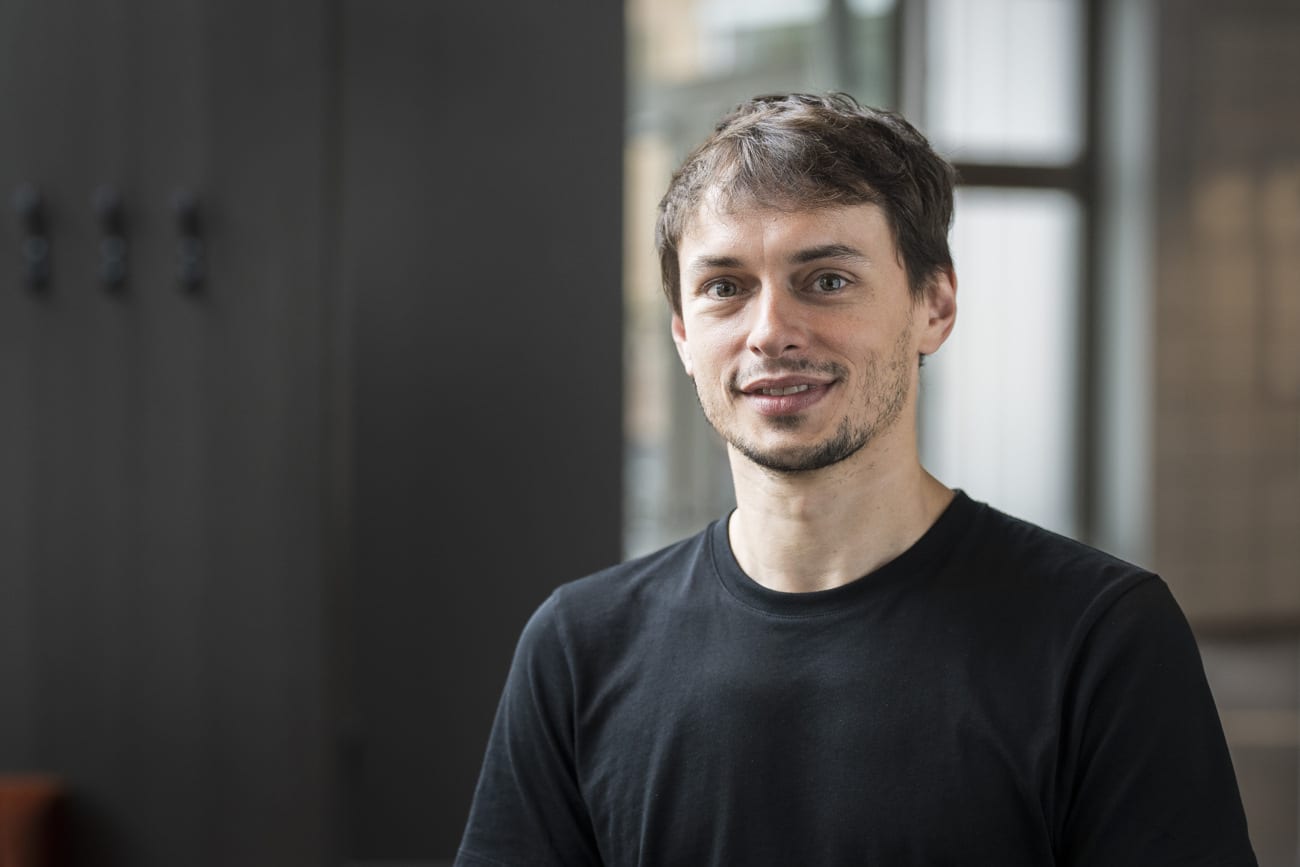
Oboist Juri Vallentin is constantly seeking new forms of expression and ways to tell stories through his instrument—a pursuit that has earned him a place among the most prominent young musicians of our time. His goal is to continually develop modern contexts for classical music, from the Baroque era to the present day.
He has won awards at several international competitions, including becoming the first oboist ever to win the Tchaikovsky Competition in St. Petersburg. As a soloist, he has performed with orchestras such as the Mariinsky Orchestra, the MDR Leipzig Radio Symphony Orchestra, and the Munich Chamber Orchestra.
His artistic work is documented on the albums *BRIDGES*, *EBENBILD*, and his latest, *RUSH* (Berlin Classics), in which he combines the classical repertoire with contemporary music and literature. Vallentin enjoys collaborating with contemporary composers and has premiered works by Toshio Hosokawa and Gilles Silvestrini, among others.
Born in Mainz, educated in Nuremberg and at the Conservatoire de Paris, he has been a professor of oboe at the Karlsruhe University of Music since 2021.

Violin I
Johannes Lörstad, Alexander Robson, Miguel Chamorro, Amandus Lind, Isaac Bachs Viñuela, Kitiara Braune, Arly Rivero, Per-Erik Andersson
Violin II
Andreas Olsson, Pontus Björk, Felicia Möller, EvaBritt Molander, Mikhail Zatin, Håkan Svedell, Kersti Wilhelmsson
Viola
Hanne Skjelbred, Ester Forsberg, Pablo Muñoz Salido, Dusica Cvijanović, Åsa Hjelm
Cello
Anna Garde, Bekhbat Tsagaanchuluun, Kristina Tereschatov, Karin Bjurman, Kerstin Isaksson
Double bass
Jan-Emil Kuisma, Charlotte Petersson, Josefin Landmér
Flute
Annica de Val, Lovisa Stenberg
Oboe
Emmanuel Rolland-Bezem, Johannes Ögren
Clarinet
Tania Villasuso Couceiro, Jonas Olsson Hakelind
Bassoon
Peter Bolton, Jonathan Sandqvist
Horn
Orvar Johansson, Yerang Ko, Edna Fernandes, Anders Kjellberg
Trumpet
Malin Silbo-Ohlsson, Andreas Carlsson Walleng, Martin Lood
Trombone
Peter Nygren, Daniel Bjerhag Hedin, Mathias Petersson
Tuba
Linus Mattsson
Timpani
Maximiliano Polo
Percussion
Maximiliano Polo
Per Mikaelsson
Piano
Gonçalo Vasquez
Learn more about the Norrlandsoperan Symphony Orchestra here: norrlandsoperan.se/norrlandsoperans-symfoniorkester
Pursuant to
Norrlandsoperan is 60% owned by Region Västerbotten and 40% by the City of Umeå. We receive grants from the Swedish Arts Council.
Many thanks to all our donors, sponsors, and partners.