Program
Jessie Montgomery: Records from a Vanishing City, 13 min
Ricardo Lorenz: Pataruco: Concert for Venezuelan Maracas and Orchestra, 17 min
30-minute break
Andrea Tarrodi: Camelopardalis, 9 min
Dimitri Shostakovich: Symphony No. 9, 27 min
I. Allegro
II. Moderato
III. Presto
IV. Largo
V. Allegretto
More about the concert
CELEBRATION AND FINALE
Norrlandsoperan concludes its spring season with a spectacular celebration program, looking toward New York, South Africa, and Caracas. Don’t miss tonight’s maracas solo concert featuring the orchestra’s own percussionist, Maximilliano Polo, in the lead role. The evening’s classical and closing piece is Shostakovich’s Ninth Symphony, a short but hauntingly well-written masterpiece composed toward the end of the war in 1945.
The spring season at the Norrlands Opera concludes with a true musical celebration, where a variety of musical styles from around the world share the spotlight. Conducting the concert—in honor of the occasion and as expected—is the company’s own Eduardo Strausser.
The evening begins with a dreamlike excursion to the city of cities: the Big Apple, New York City. No other place can so effortlessly put people in a festive mood. There’s something about the urban energy that seems to permeate every street corner. But it’s also a city that, like all giant metropolises, is constantly reinventing itself, constantly changing its form. Jessie Montgomery captures some of that in her Records from a Vanishing City, a tribute to the eclectic soundscape that surrounded her in the bohemian neighborhoods East Village in New York as a child in the ’80s and ’90s. She believes this soundscape no longer exists, as Manhattan’s once less affluent but vibrant neighborhoods have increasingly become a place for the super-rich.
Montgomery’s wistful tribute to his hometown is followed by a 17-minute solo concerto for maracas and orchestra by the Venezuelan composer Ricardo Lorenz. Lorenz is known for his ability to draw upon the Latin American musical tradition to create art music that is both timeless and uniquely his own. He grew up and trained as a musician in Caracas, but later moved to the United States, where, among other things, he established and directed a music center for Latin American music. For many years, he was affiliated with the Chicago Symphony Orchestra, for which he has written several significant works. His roots in both of these musical traditions lend his compositions a thrilling unpredictability. He often challenges clichés about what is typically Latin American, while at the same time giving well-established, classical compositional traditions their fair share of attention. The orchestra’s own percussionist, Maximilliano Polo, will perform as the maracas soloist.
After the intermission, we’ll hear a popular short piece by Andrea Tarrodi, *Camelopardalis*, inspired by the zodiac sign of the giraffe—a constellation of celestial bodies visible from the southern part of the African continent. Resonant, dreamlike, with a cinematic quality so often found in Tarrodi’s compositions.
The celebration continues with Dmitri Shostakovich’s Ninth Symphony, known as his “Classical.”
To some extent, it is indeed a “party symphony.” It is said that, from the outset, Shostakovich planned something grand and magnificent to celebrate the Soviet Union’s victory over the Nazis. Speaking to his students, he spoke enthusiastically of a massive orchestra with an accompanying choir in the style of Beethoven. But during the spring and summer of 1945, when he finally set to work, he seems to have abandoned this vision—if it ever existed at all. The Ninth Symphony is light-hearted, playful, but not jubilant, not grandiose. Anyone who has listened to Shostakovich’s brilliantly intelligent and sober music knows that pomposity was never his style. There is therefore reason to believe that he was teasing his students. “The musicians will enjoy playing it, and the critics will tear it apart,” he is said to have remarked later. That’s not quite how it turned out; many critics appreciated his technically masterful, though brief, Ninth Symphony. The premiere in St. Petersburg was broadcast live on the radio, and the work was well received. A few years later, in 1948, when Stalin’s reign of terror truly took hold, it ended up on a list of banned works.
The Ninth Symphony is, first and foremost, short—just 27 minutes—and distinctly chamber-like. As always, spending time with Shostakovich is a special treat. Whatever the form, it is musical art that never ceases to surprise. The only thing you can expect is that you don’t know what to expect.
More About Pataruco by Ricardo Lorenz
A concert featuring maracas and an orchestra might sound like an unexpected idea—almost provocative, which is also reflected in the title *Pataruco* (Venezuelan slang for something cocky or defiant). But in Venezuela, maracas are far more than just a simple percussion instrument: they represent a highly developed and virtuosic tradition.
The piece was written for percussionist Ed Harrison, who learned to play maracas in the Venezuelan style during his time in Caracas, where the technique is passed down orally in folk settings. His artistry inspired Lorenz to compose this unique concert piece.
The music does not aim to sound like pure folk music. Instead, the orchestra weaves a sonic world around the rhythmic patterns of the maracas—sometimes in harmony, sometimes in playful contrast.
The solo part is based on authentic playing techniques and is intended for percussionists with experience in this tradition.
The Musicians
Eduardo Strausser, chief conductor of the Norrlandsoperan, was born in 1985 in São Paulo, Brazil, and has been living in Berlin for several years. He is a frequently engaged conductor and has worked with orchestras in South America, Europe, the United States, Australia, and New Zealand. He is also an experienced opera conductor, a skill he developed during his tenure as Resident Conductor at Teatro São Paulo from 2014 to 2016. Even during his studies at the Zurich University of the Arts, Eduardo developed an interest in works by contemporary composers, a passion he brings with him to the Norrlands Opera. He was appointed Chief Conductor and Artistic Director at the Norrlands Opera, a position he assumed in the fall of 2024 with a term running through the spring of 2027.
Eduardo Strausser also collaborates regularly with the Kansas City Symphony and the City of Birmingham Symphony Orchestra, and has conducted the Bamberger Symphoniker, the Utah Symphony Orchestra, the Royal Northern Sinfonia, the Orchestre de Montpellier, and the Argovia Philharmonic. Previous collaborations include orchestras in Europe such as the Antwerp Symphony Orchestra and the Royal Philharmonic Orchestra. In the United States, he has worked with the symphony orchestras of North Carolina, Detroit, and Indianapolis. He has also worked with the Sydney and Queensland Symphony Orchestras, as well as the New Zealand and West Australian Symphony Orchestras.
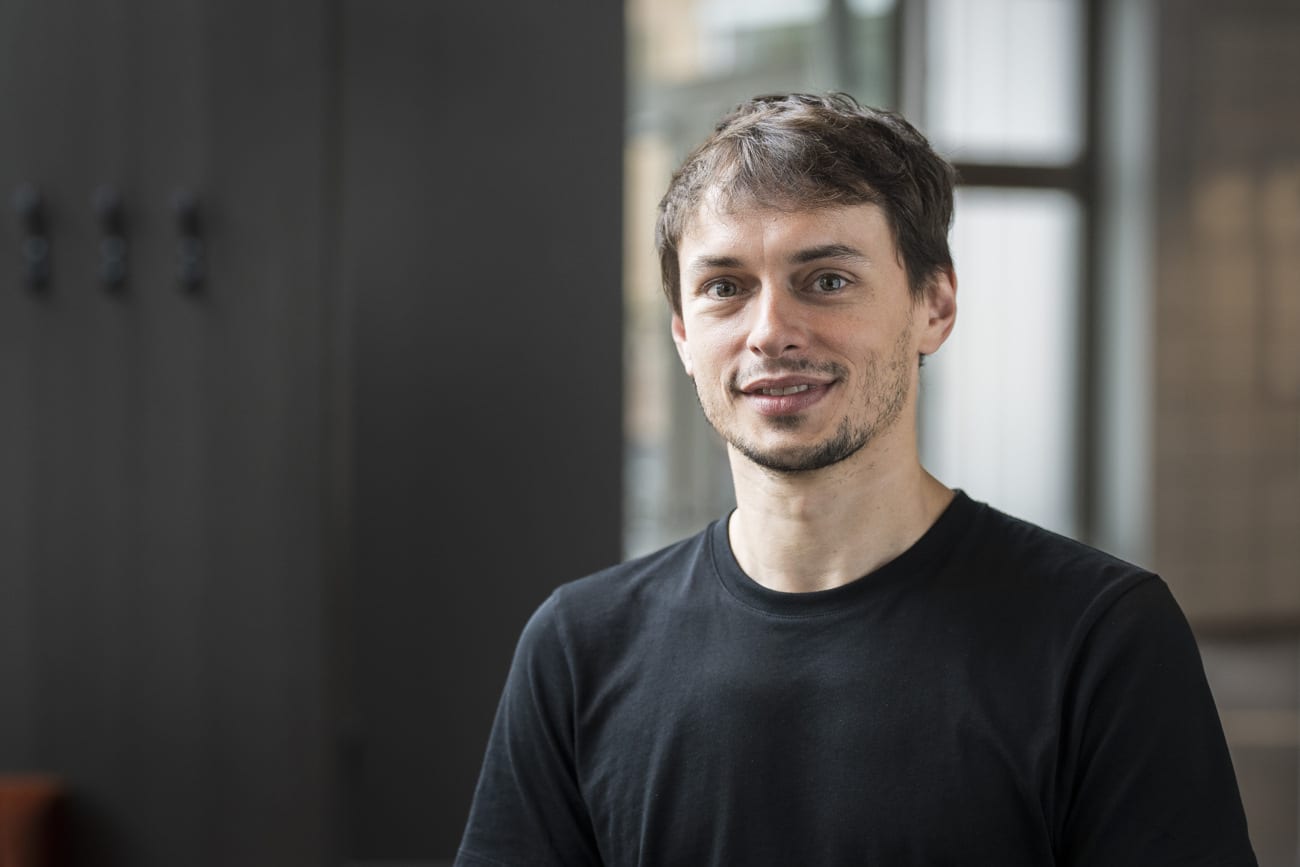
Maximilliano Polo is a Venezuelan percussionist with roots in Valencia.
He began his musical studies in percussion at the Carabobo Conservatory and later continued at the Simón Bolívar Conservatory and the National University of the Arts in Caracas.
Maximiliano has performed with the Orchestra of the Americas during the 2011, 2017, and 2018 seasons.
He has been a member of orchestras such as the Caracas Municipal Symphony Orchestra and the Simón Bolívar Symphony Orchestra of Venezuela, and since 2024 he has been the principal percussionist with the Norrlandsoperan Symphony Orchestra.
At the same time, he has devoted himself to researching Venezuelan maracas and how they are played. This close connection to Venezuelan music has led him to perform as a maracas player with various Venezuelan music ensembles, which has further strengthened his desire and motivation to bring his music and identity to new stages —with the maracas as a symbol of his homeland and a bearer of its cultural and human values.

Violin I
Pedro Rodriguez, Lina Samuelsson, Miguel Chamorro, Matias Malmqvist, Isaac Bachs Viñuela, Andreas Olsson, Kitiara Braune, Per-Erik Andersson
Violin II
Clara Bjerhag, Pontus Björk, Amandus Lind, Kersti Wilhelmsson, EvaBritt Molander, Miriam Liljefors, Mikhail Zatin
Viola
Lars Mårtensson, Pablo Muñoz Salido, Dusica Cvijanovic, Doris Mägi, Petter Axelsson
Cello
Josef Alin, Bekhbat Tsagaanchuluun, Kerstin Isaksson, Kristina Tereschatov, Karin Bjurman
Double bass
Jan-Emil Kuisma, Charlotte Petersson, Josefin Landmér
Flute
Ebba Wallén, Tove Edqvist, Georgiana Hughes
Oboe
Emmanuel Rolland-Bezem, Johannes Ögren
Clarinet
Tania Villasuso Couceiro, Jonas Olsson Hakelind
Bassoon
Peter Bolton, Maria Kindell
Horn
Kristoffer Öberg, Yerang Ko, Edna Fernandes, Anders Kjellberg
Trumpet
Malin Silbo-Ohlsson, Thomas Petit
Trombone
Peter Nygren, John Lundén-Welden, Mathias Petersson
Tuba
Linus Mattsson
Timpani
Ian Piniés
Percussion
Maximiliano Polo, Roger Carlsson
Harpa
Tanne Harder
Learn more about the Norrlandsoperan Symphony Orchestra here: norrlandsoperan.se/norrlandsoperans-symfoniorkester
Pursuant to
Norrlandsoperan is 60% owned by Region Västerbotten and 40% by the City of Umeå. We receive grants from the Swedish Arts Council.
Many thanks to all our donors, sponsors, and partners.
