Program
Anton Webern: Symphony, Op. 21, 10 min
Felix Mendelssohn: Violin Concerto in E-flat minor, 26 min
I. Allegro molto appassionato
II. Andante
III. Allegretto non troppo – Allegro molto vivace
30-minute break
Franz Schubert: Symphony No. 9, 48 min
I. Andante; Allegro ma non troppo
II. Andante con moto
III. Scherzo: Allegro vivace
IV. Allegro vivace
More about the concert
Grand symphonic landscapes take center stage as the Norrlandsoperan Symphony Orchestra performs works by Mendelssohn and Schubert. These two works, in different ways, demonstrate Romantic music’s belief in the power of melody and music’s ability to encompass both the grand and the intimate.
First up is a shorter orchestral work that serves as a prelude to the evening’s two main works. Anton Webern’s Symphony, Op. 21, from 1928, is a short but intense work that lasts only about ten minutes. Despite this, the music is dense and meticulously crafted, with small motifs and timbres that are interwoven with the whole.
The Austrian Webern was born in Vienna in 1883 and was an innovator. To break with the 19th-century approach to composing music, he and other composers began experimenting with new systems in the early 20th century. The most radical of these was the twelve-tone technique, in which all notes were considered equal and no note could be repeated until all the others had been played. Symphony, Op. 21, is an example of the twelve-tone technique.
The symphony is written for a small orchestra and consists of two movements. In the first movement, Webern employs canon-like patterns, in which the instruments take up and mirror each other’s music in various ways. The music is serene and clear. The silences and the small details become just as important as the notes themselves.
The second movement is structured as variations on a short theme. Here, musical ideas recur in new forms. Webern was fascinated by symmetry and by how a large-scale work could emerge from something very small. The result is a dense symphony in which small motifs constantly reappear in new forms.
The German composer Felix Mendelssohn lived from 1809 to 1847 and is considered one of the most prominent and highly regarded composers of the Early Romantic period. His Violin Concerto in E minor is one of the most frequently performed works for violin and orchestra. The concerto premiered in 1845 in Leipzig and was written for Mendelssohn’s close friend, the violinist Ferdinand David. Even today, it is considered one of the showpieces of the violin repertoire.
The concerto consists of three movements: the passionate “Allegro molto appassionato,” the delicate “Andante – Allegretto non troppo,” and the lively “Allegro molto vivace.” Together, they form a journey through longing, peace, joy, and sorrow.
Mendelssohn innovated the concerto form in several ways. The soloist enters almost immediately, without the long orchestral introduction that had previously been the tradition, and the three movements flow together without a pause.
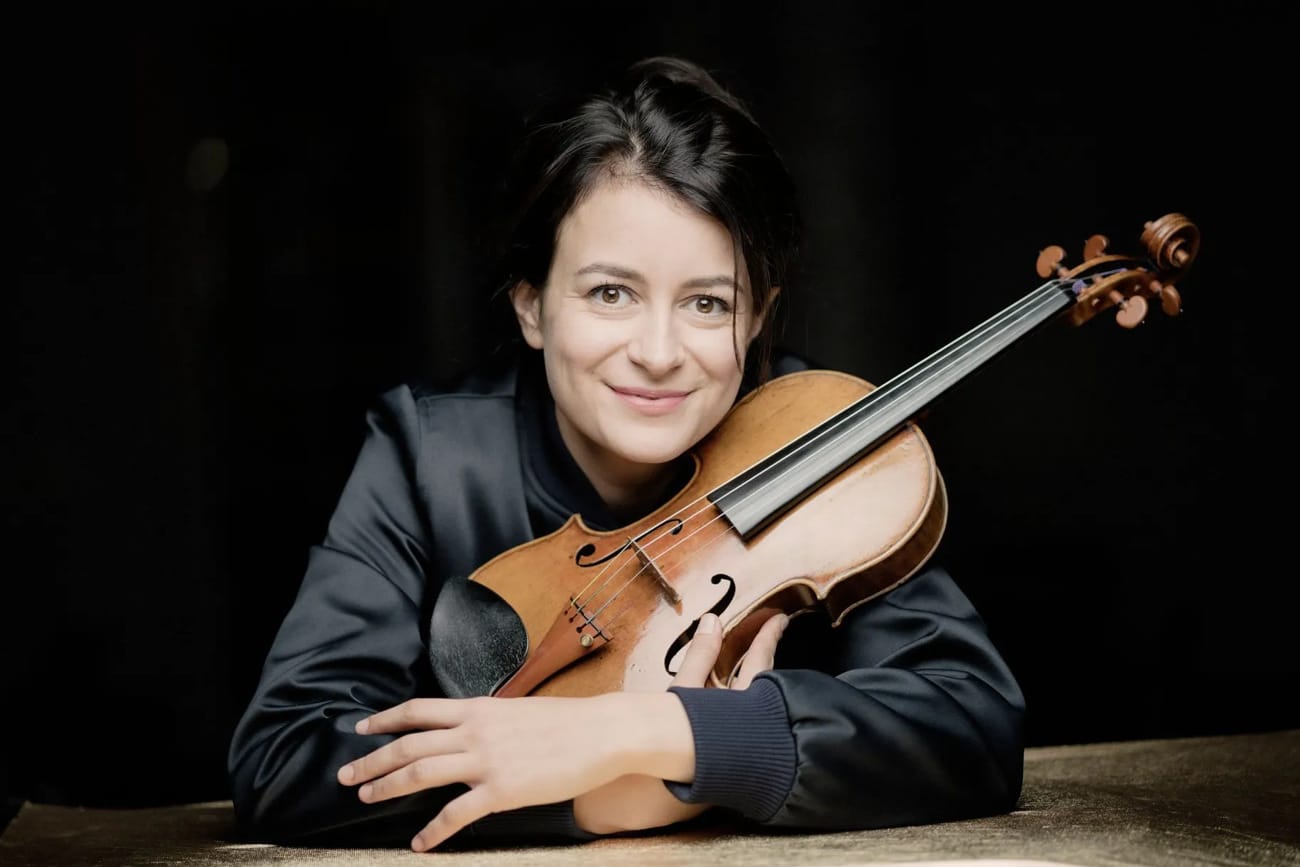
The conductor is Eduardo Strausser, artistic director of the Norrlandsoperan. The soloist is violinist Liya Petrova, who grew up in Bulgaria and is now based in Paris.
After the intermission, Franz Schubert’s Symphony No. 9 in C major, often called “The Great,” awaits. Schubert lived from 1797 to 1828 and was an Austrian composer and one of the most important composers of the early Romantic period. Although he died at the age of 31, his body of work was both extensive and significant.
Symphony No. 9 was composed during the final year of Schubert’s life. The composer himself never lived to see the symphony’s success; it was not discovered and performed until several years after his death. When Robert Schumann visited Vienna in 1838, he came across the score, and in 1839 his friend Felix Mendelssohn conducted the work’s premiere in Leipzig.
The symphony opens with a solitary horn motif that grows into something grand and powerful. From there, the music is filled with contrasts: both tranquility and drama, explosiveness and fragility. Schubert’s Ninth is a work that demands endurance and precision from the orchestra. For us in the audience, all we have to do is enjoy it.
The Musicians
Eduardo Strausser is the principal conductor and music director of the Norrlandsoperan Symphony Orchestra. Internationally acclaimed for his versatility as a conductor in both symphonic music and opera, he has made a name for himself with his energetic and dynamic interpretations. In June 2026, his contract with the Norrlands Opera was extended through the 2028–29 season.
During the 2026–27 season, Strausser will conduct the Norrlandsoperan’s production of *La Bohème*, following the critically acclaimed production of *Tristan und Isolde* during the 2025–26 season. He will also return to the Queensland Symphony Orchestra and the Bilbao Orkestra Sinfonika, two orchestras with which he has a close and ongoing collaboration. Other engagements this season include performances with the Opéra Orchestre National de Montpellier, the Residentie Orkest, the Orquesta y Coro de la Comunidad de Madrid, and the BBC National Orchestra of Wales.
In addition to the classical core repertoire, Strausser is a passionate advocate for contemporary music. During the season, he will conduct works by composers such as Anna Clyne, Missy Mazzoli, Thea Musgrave, Nina Shekhar, Jessie Montgomery, and Andrea Tarrodi.
In addition to his musical talent, Strausser is also something of a linguistic prodigy. He speaks eight languages fluently, including German, Italian, French, Spanish, and Hebrew.
https://www.harrisonparrott.com/artists/eduardo-strausser

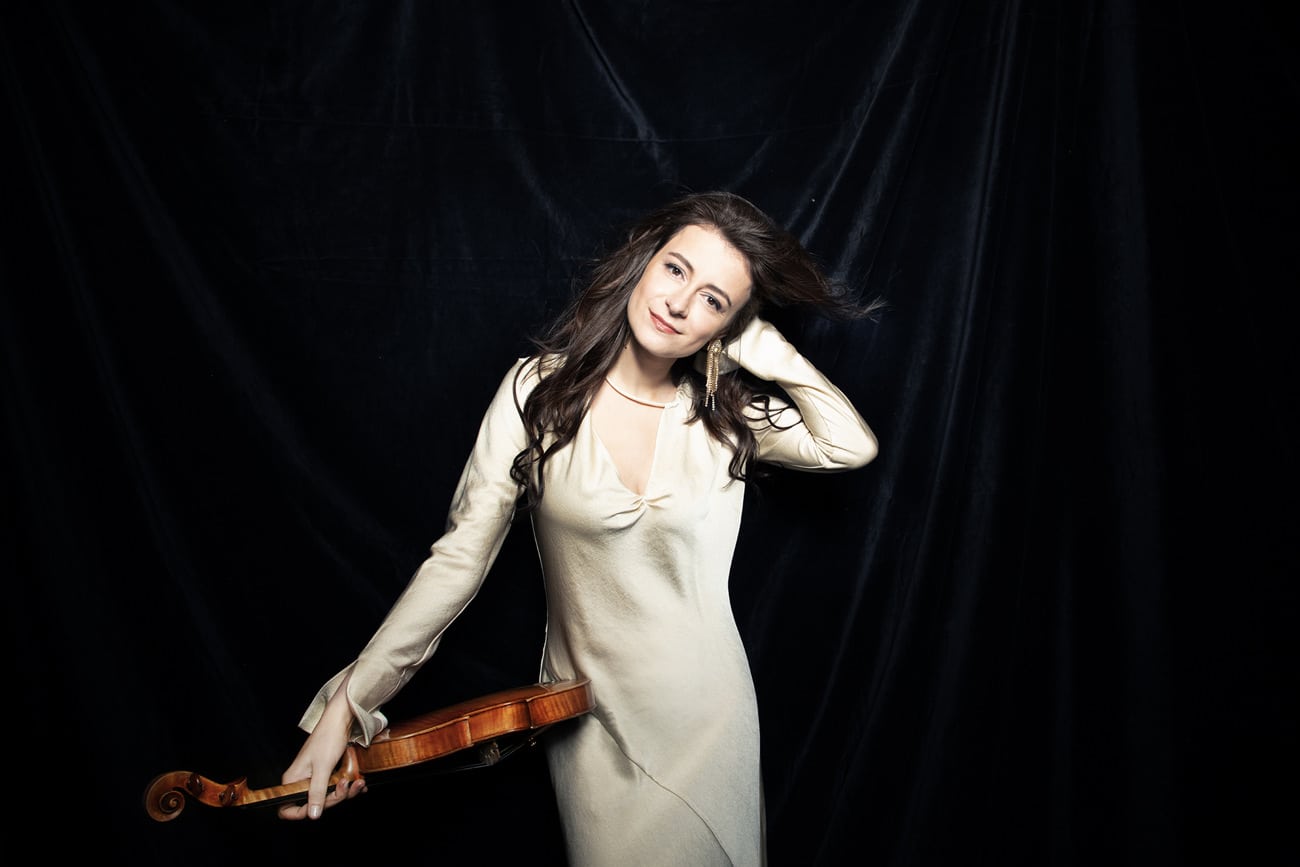
Liya Petrova is one of the most outstanding violinists of her generation and has been acclaimed for her expressiveness, rich tone, and technical brilliance. Her international breakthrough came in 2016 when she won first prize at the Carl Nielsen International Competition, and since then she has performed with leading orchestras and at some of the world’s premier concert venues.
As a soloist, she has collaborated with orchestras such as the Orchestre de Paris, the Royal Philharmonic Orchestra, and Sinfonia Varsovia, and has worked with conductors including Philippe Herreweghe, Tan Dun, and Elim Chan. Her repertoire ranges from Baroque to contemporary music, with a particular interest in lesser-known works and contemporary composers.
Petrova is also a highly regarded chamber musician and a frequent guest at concert halls such as the Philharmonie de Paris, the Concertgebouw in Amsterdam, and the Royal Albert Hall in London. Her award-winning recordings have received international acclaim. Born in Bulgaria and based in Paris, she plays a Stradivarius from 1721 and a Guarneri del Gesù from 1733.
https://www.liyapetrova.com/
Violin I
Jonna Simonsson, Miguel Chamorro, Andreas Olsson, Isaac Bachs Viñuela, Kitiara Braune, Per-Erik Andersson, Mikhail Zatin, Amandus Lind
Violin II
Pontus Björk, Clara Bjerhag, Kersti Wilhelmsson, Arly Rivero, Matias Malmqvist, Håkan Svedell, EvaBritt Molander
Viola
Ester Forsberg, Pablo Muñoz Salido, Åsa Hjelm, Johanne Skaansar, Doris Mägi
Cello
Erik Elvkull, Bekhbat Tsagaanchuluun, Karin Bjurman, Kristina Tereschatov, Kerstin Isaksson
Double bass
Jan-Emil Kuisma, Charlotte Petersson, Josefin Landmér
Flute
Ebba Wallén, Panak Hashemian
Oboe
Johannes Ögren, Emmanuel Rolland-Bezem
Clarinet
Tania Villasuso Couceiro, Jonas Olsson Hakelind
Bassoon
Peter Bolton, Maria Kindell
Horn
Orvar Johansson, Yerang Ko, Edna Fernandes, Anders Kjellberg
Trumpet
Malin Silbo-Ohlsson, Benjamin Mortensen
Trombone
Peter Nygren, Daniel Bjerhag Hedin, Mathias Petersson
Timpani
Ian Piniés
Harpa
Ivanna Fridh
Learn more about the Norrlandsoperan Symphony Orchestra here: norrlandsoperan.se/norrlandsoperans-symfoniorkester
Pursuant to
Norrlandsoperan is 60% owned by Region Västerbotten and 40% by the City of Umeå. We receive grants from the Swedish Arts Council.
Many thanks to all our donors, sponsors, and partners.
