For those of you who don’t already know Göran, we can tell you that he is a highly regarded former French horn player, with an impressive hedgehog haircut and a curious twinkle in his eye. Apart from a few trips to Stockholm and London, he has worked at the Norrlands Opera throughout his entire musical career.
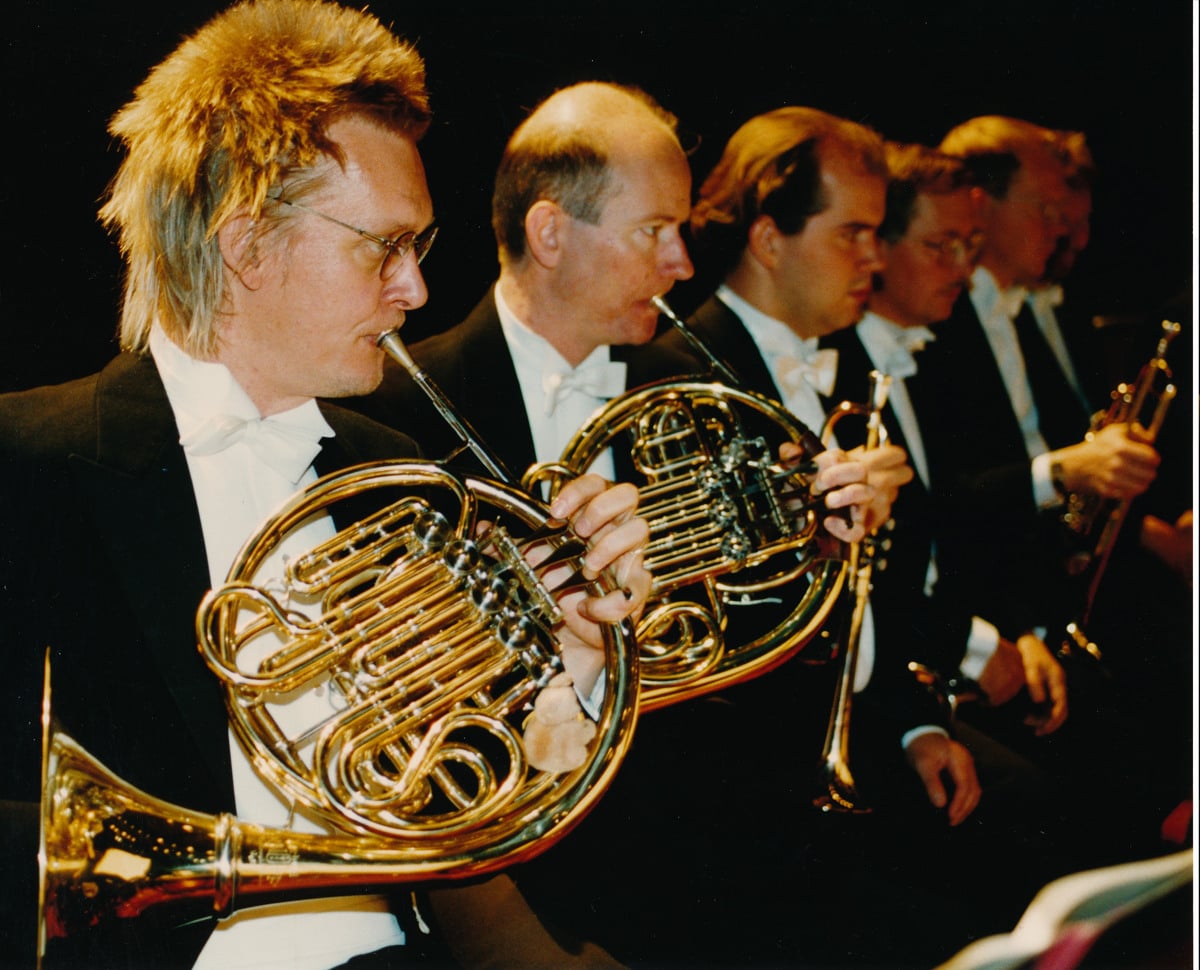
Umeå Symphony Orchestra. Göran Jarmar, Per-Olof Winberg, Alf Burstedt.
In his sixties, he had to put his horn away due to inflammation in his shoulder. He was then tasked with digitizing all the recordings from the 1970s onward—so that they would be accessible to future generations.
But when Göran began taking inventory of the audio archive, he made a troubling discovery. The reel-to-reel tapes from the early years were missing.
The mystery eventually had a surprising solution. But we’ll get to that.
First, let’s rewind to 1974 and the Norrlandsoperan’s first cultural controversy.
In the early 1970s, a government cultural reform was introduced in Sweden. The word on everyone’s lips was “decentralization.” Culture was a democratic right, and therefore there should be institutions offering professional performing arts everywhere, not just in the major cities.
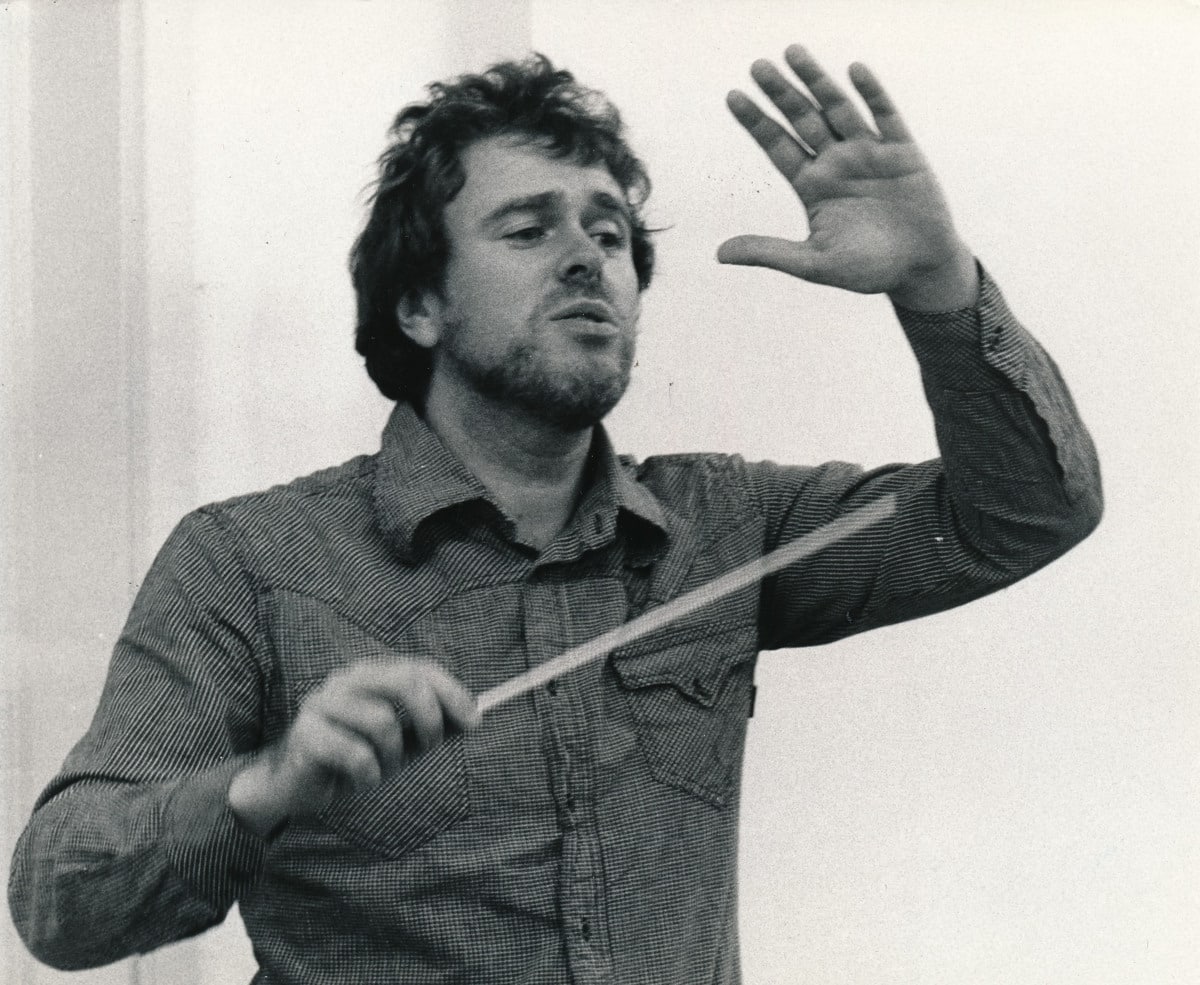
Arnold Östman, conductor and artistic director of the Norrlands Opera from 1974 to 1978.
The word “opera,” on the other hand, wasn’t trendy in the least. Both investigators and politicians thought it sounded elitist. But the first director—Arnold Östman—stood his ground.
“He said that we’re performing opera, and that’s why we should be called the Norrland Opera,” Göran recalls.
The compromise was to initially use “Musikteatern i Umeå” as a subtitle. (We could also list all the names the orchestra has had over the years here, but we’ll skip that for space reasons.)
Göran liked his first boss—who, unfortunately, passed away in 2023. He was a supportive and tenacious leader, as well as an unparalleled conductor.
– In his right hand he held the baton, and with his left he shaped the music. We understood exactly what he wanted to convey. If a note was off once in a while, it was secondary to the feeling.
– Once he asked me to play really softly. I objected, saying it might sound a bit off, and he replied, “If you mess it up, the sun will still rise tomorrow, but if you get it right, it’ll be world-class.”
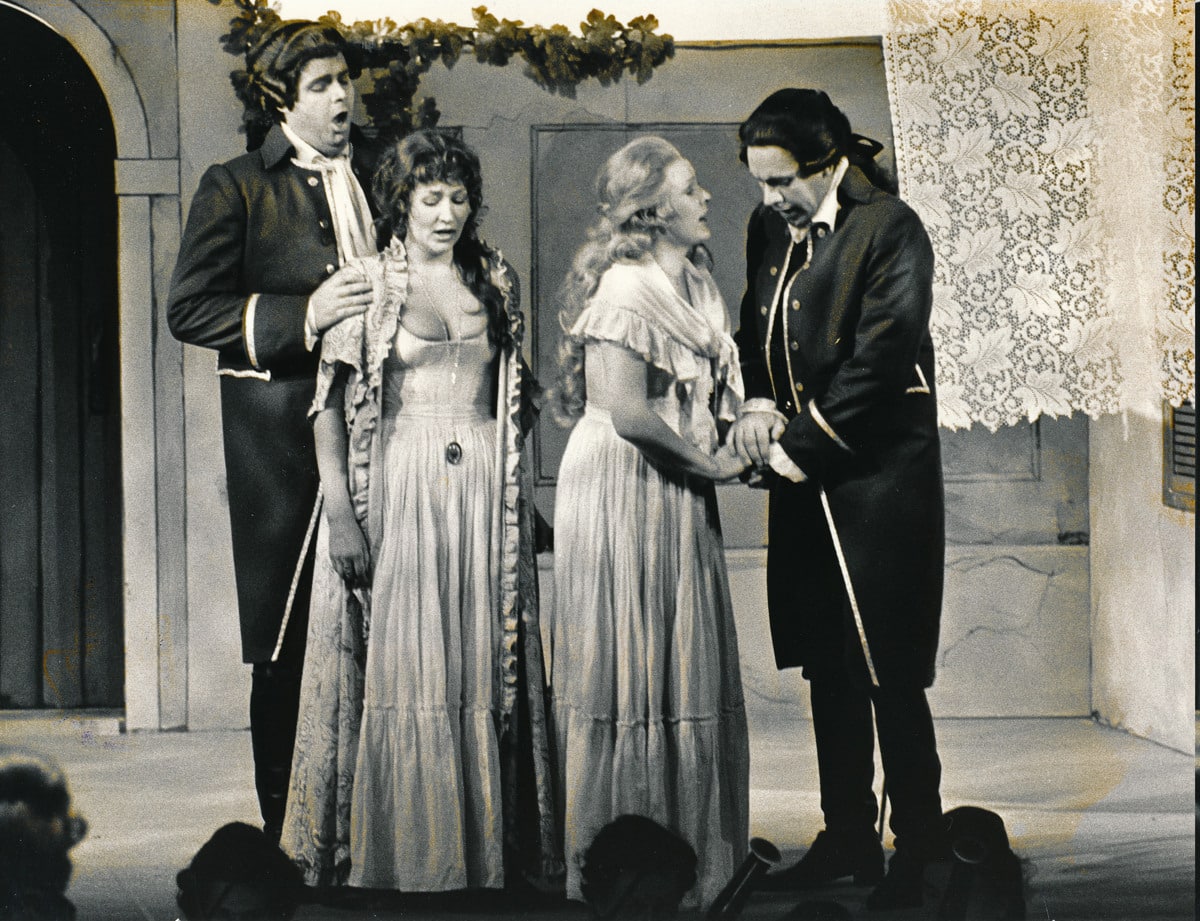
Photo from a 1979 performance of *Così fan tutte*. Pictured, from left to right: Lars Tibell, Carina Strandberg, Louise Werner, Helge Lannerbäck.
Göran fast-forwards a few years, and many entertaining productions flash by. The Mozart operas were his favorites. He recalls, for example, the premiere of *Così fan tutte* in Vilhelmina in 1979, on the mobile opera stage they used to tour with back then. The ensemble was still small, and it was customary to have a beer with the technicians after the performances.
“It was a wonderful time,” he says.
Until 1984, the opera did not have its own building; its operations were spread across seven different properties, including what was then known as Folkets hus (which later became Galaxen, where hardcore music history was made in the 1990s).
Just in time for its tenth anniversary, the organization moved into the Old Fire Station—where it remains to this day. It was a major step forward, according to Göran, since stages, workshops, studios, offices, and rehearsal spaces for the musicians were finally all brought together under one roof.
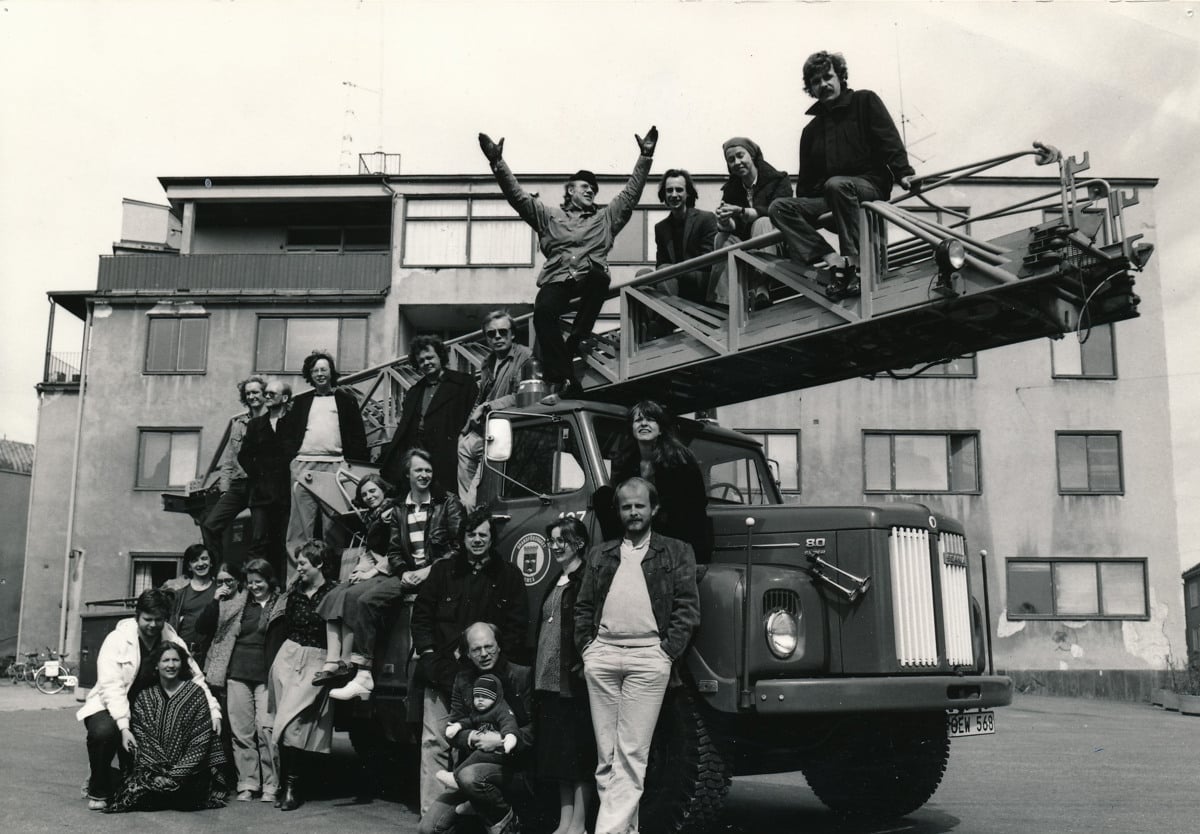
Norrlandsoperan staff in front of the old fire station.
Back to the Future
We’ll leave Göran behind and fast-forward through a wealth of fascinating cultural history* until the summer of 2024.
While the Norrlands Opera is enjoying great success with *Adriana Mater* at the Savonlinna Opera Festival, Helle Solberg is hauling her belongings into a new apartment in the western part of Umeå.
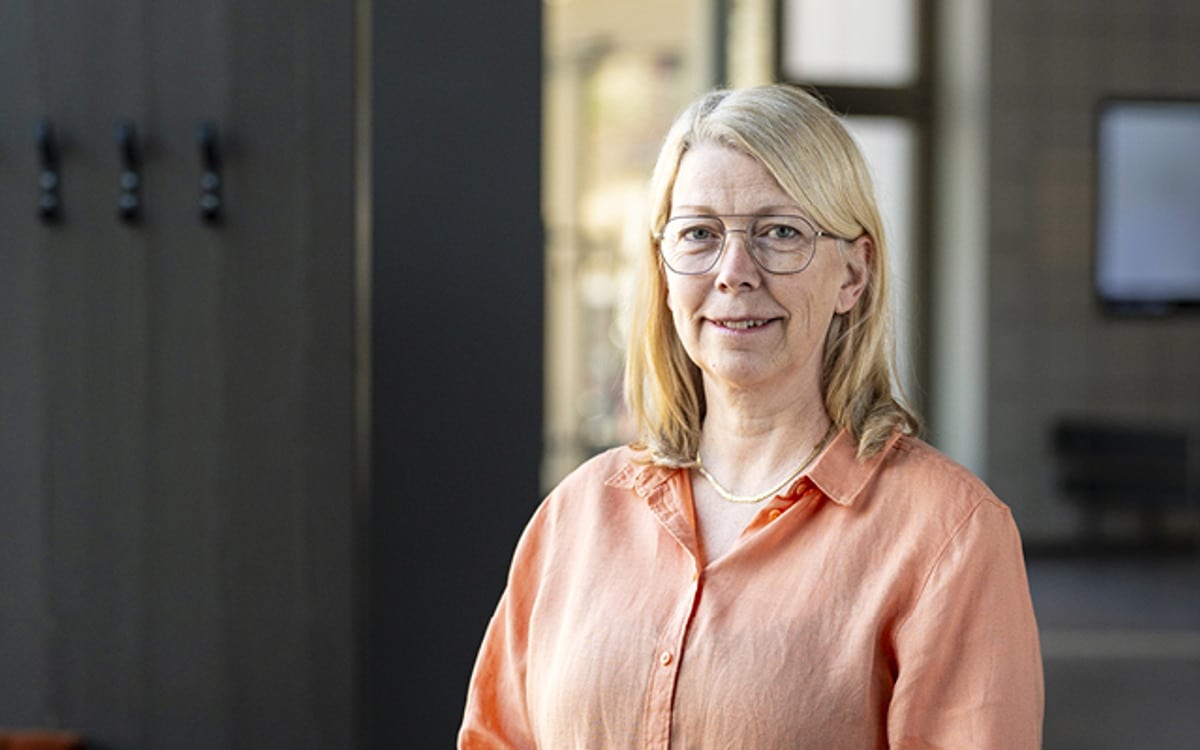
Helle Solberg, CEO of the Norrlands Opera
For many years, she has served as orchestra director of the Royal Court Orchestra in Stockholm, and this past spring she took office as CEO and artistic director of the Norrlands Opera. Now she can’t wait to really get started.
Solberg, who grew up in Denmark, has long admired the Swedish tradition of building cultural centers in small and medium-sized towns. But right now, major investments in culture seem like a distant prospect.
One way to address the difficult economic situation is to collaborate more—especially with other cultural organizations around the Kvarken region—and to take a long-term perspective
– The most important task that we, as cultural institutions, have—and one that we share with all adults—is to provide cultural experiences for our children. We never forget our early experiences. Even at a very young age, we can understand how important the performing arts and music are in our lives.
Great closing quote. But there’s still one thing left!
What happened to the missing tapes?
“I thought it was all over,” says Göran. But one evening, when we had invited some friends over for dinner, I told them about the recordings that had gone up in smoke. Then one of our guests—who worked at what was then the Folkminnesarkivet—said that they had several meters of shelf space filled with Norrlandsoperan’s reel-to-reel tapes in the basement.
It turned out that the opera’s former music librarian had asked to store them there so they wouldn’t get lost.
With a complete collection of reel-to-reel tapes and DAT cassettes (another classic audio format), Göran was now able to continue digitizing the history of the Norrlands Opera, which in practice also meant that he was summarizing his own career.
He felt nervous, but what he heard put him at ease.
– That actually sounded really good.
Text: Hanna Kangassalo. Photo: Norrlandsoperan archives
* Yes, it would take a lot more space to describe everything that has happened at the Norrlands Opera over the decades. Here are a few examples of memorable events we haven’t mentioned: the outdoor opera *Elektra*, the “raggar” wedding at the MADE Festival, the singers from the Cape Town Opera, hip-hop battles in the Black Box, dancing Shaolin monks, seniors in silver tights, PO Enquist’s opening toast, surprise monologues in the White Cube, TV game show concerts, and facial choreography. What’s your fondest memory?