Opening Remarks
The most perfect opera in the history of opera?
*Tosca* must be one of the most perfect operas in the operatic canon. It features a clear conflict between idealism and personal desires, portrayed through a love triangle with well-defined characters. The plot moves forward at a brisk pace and has no dragging sections—it never becomes boring. The dramaturgy is flawless. For an opera, it is short and to the point. The music is fully integrated into the drama and conveys both what is happening on stage and what remains unsaid.
Given that Puccini was also a brilliant composer of melodies, the opera is, moreover, a veritable hit parade of immortal arias. All of this likely explains why it is so beloved and holds a clear position as one of the world’s most frequently performed operas—No. 5, to be exact. This means that *Tosca* has been presented in thousands of different productions. It also means there’s a preconceived notion of what *Tosca* is and how it should be staged—conventions that many directors have tried to break free from, with one idea more contrived than the next. Every possible interpretation and shift in time and space has already been tried, so what new perspective is there to offer? To avoid getting stuck in performance conventions and a lame, formulaic repetition of tired tropes, we need a director who dares to look beyond the perfect and preconceived ideas.
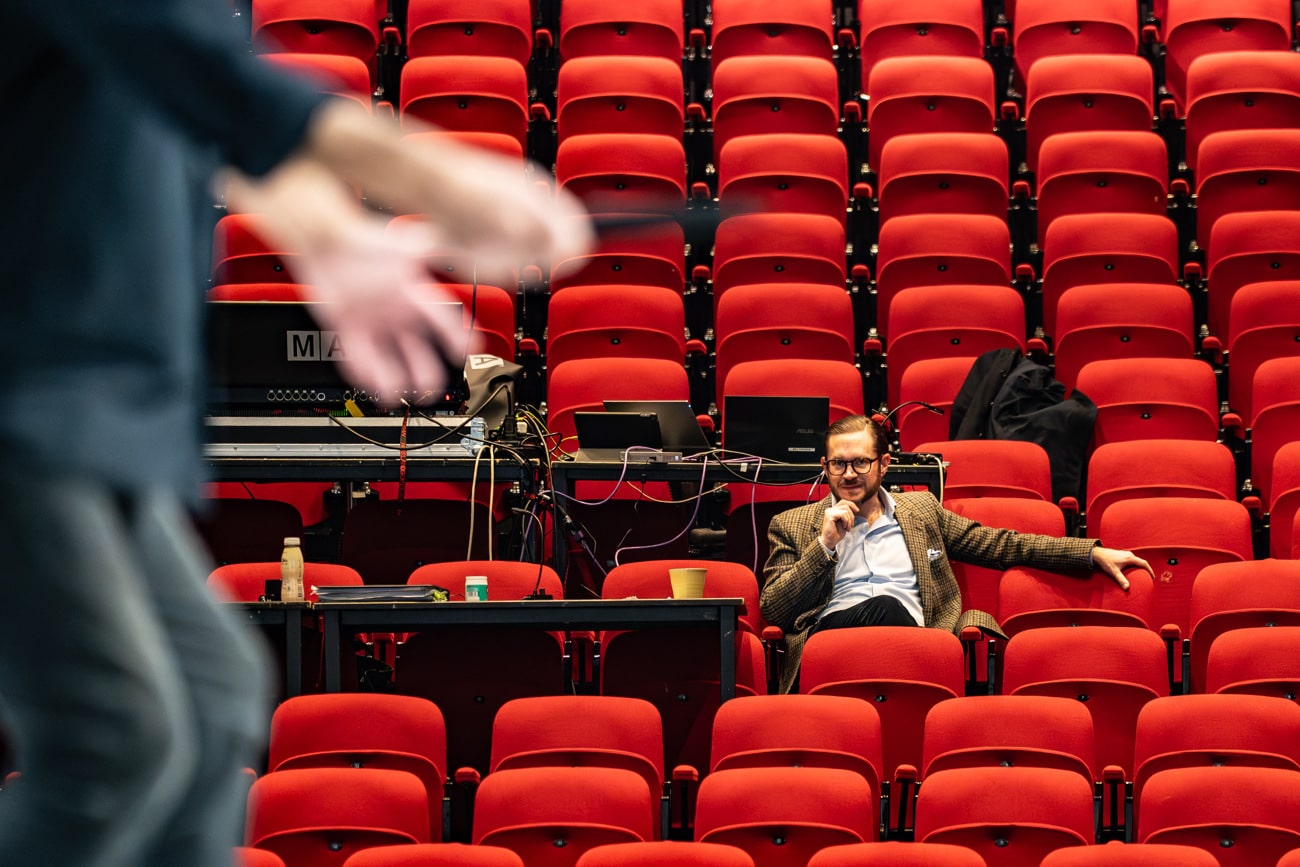
Now that Eirik Stubø, together with set and costume designer Magdalena Åberg and lighting designer Ellen Ruge, has taken on *Tosca*, he’s approaching it the same way he approaches other plays—namely, as if it were the first time they were being staged. Eirik is a theater director who always cuts right to the bone in the texts he tackles to see what’s actually there. It’s not so much a method as it is an approach. In a conversation many years ago, he said that the most magical moment for him is meeting the actors at the first reading—the first day of rehearsals—when everyone sits around a table and reads the play. That moment when all doors are still open and anything can happen. He tries to hold on to that stripped-down experience and removes elements rather than adding them. There is no directorial concept in the sense of applying a interpretive framework that deals with something other than what is actually described in the text and music.
This approach creates a distilled and clear version of the timeless classic *Tosca*. Does it say anything new? Not necessarily, but the plot is presented in a stark light that strikes the audience with all its brutality and relentlessness. As an audience, we not only understand that this is about us as human beings—we are given the opportunity to experience it through more channels than just the purely intellectual ones. From that perspective, the search for something new turns out to be a banal and shallow ambition in relation to what already exists within the work itself.
It’s so wonderful that the Norrlandsoperan and the Folkoperan have co-produced this particular production, and I’m so happy that it will now be presented to audiences in Umeå.
Dan Turdén
Plot
The story is set in Rome in June of the year 1800. The short-lived free republic has been overthrown, and conservative forces loyal to the king have regained power. Queen Maria-Carolina rules Rome with the support of Austria. Meanwhile, French forces led by Napoleon Bonaparte have advanced into northern Italy, and supporters of the ideals of the Revolution are quietly welcoming him.
At the Church of Sant’Andrea della Valle
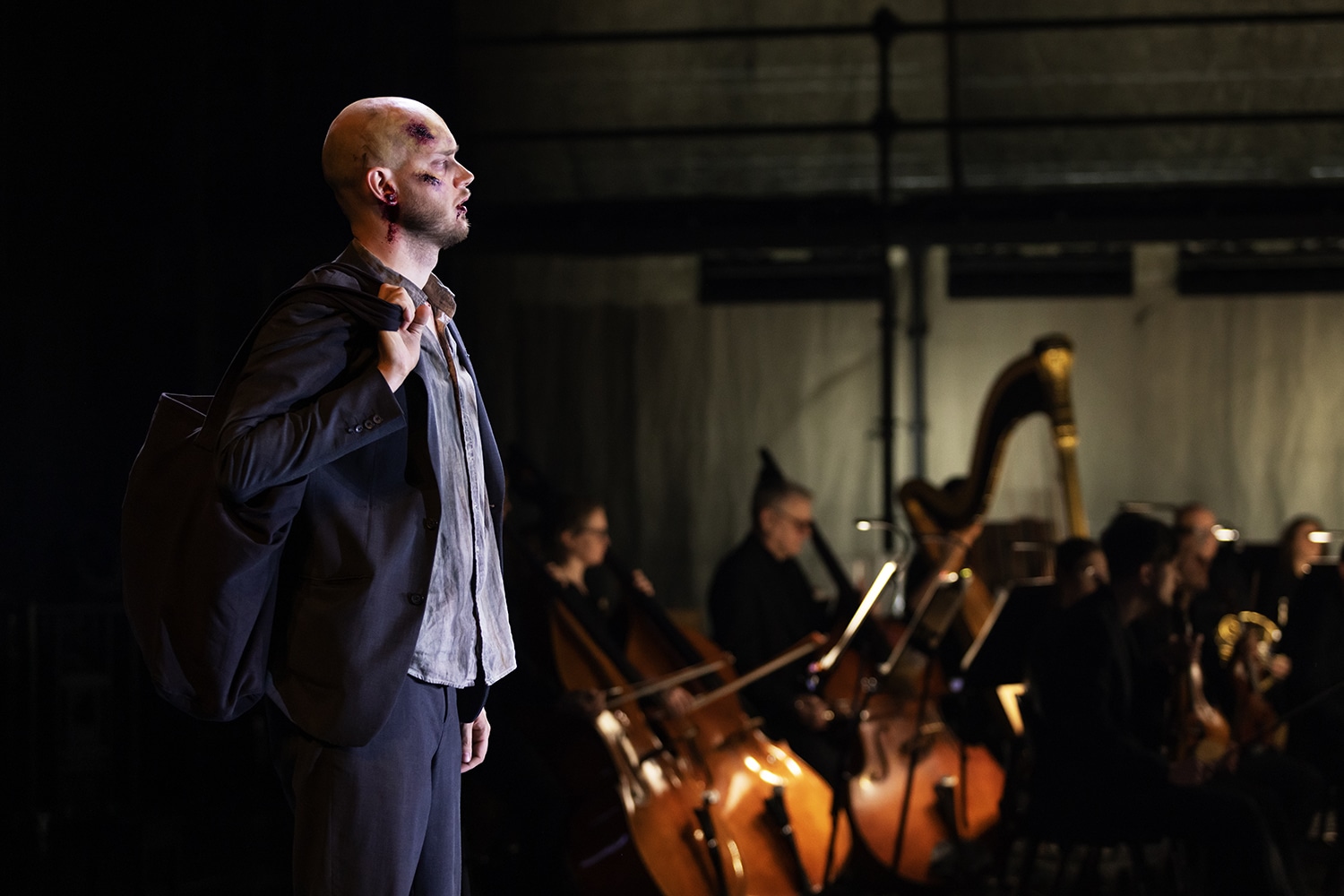
Cesare Angelotti, the former consul of the now-overthrown Roman Republic, has escaped from prison. He seeks refuge in the church of Sant’Andrea della Valle, where his sister, the Marquise Attavanti, has hidden a disguise for his escape in the family chapel.
Inside the church, the artist Mario Cavaradossi is working on a painting depicting Mary Magdalene. He tells the sacristan that the portrait was inspired by a woman he saw praying in the church.
Angelotti recognizes his friend Cavaradossi, who is also a like-minded Republican. Just then, Cavaradossi’s lover, the singer Floria Tosca, arrives, and Angelotti hides. Tosca is jealous. She recognizes the woman in the painting as the Marquise Attavanti. Cavaradossi calms Tosca down, and they agree to meet later that evening.
Warned by a cannon shot from the castle, Cavaradossi and Angelotti flee the church just before Police Chief Baron Scarpia arrives. He finds the fan that Attavanti had left behind as part of his brother’s disguise. Scarpia also recognizes the Marquise in Cavaradossi’s painting and suspects that the artist is involved in the escape.
Tosca returns to the church to tell Cavaradossi that she has been asked to sing at the royal ball. Scarpia uses the evidence—the sunburst feather that was found—to fan the flames of her jealousy. She sets out to confront Cavaradossi. Scarpia triumphs over the dual opportunity to hang the escaped rebel and, at the same time, drive Tosca into his own arms. At the same time, the news of the royalists’ alleged victory over Napoleon’s army at Marengo is celebrated with a Te Deum.
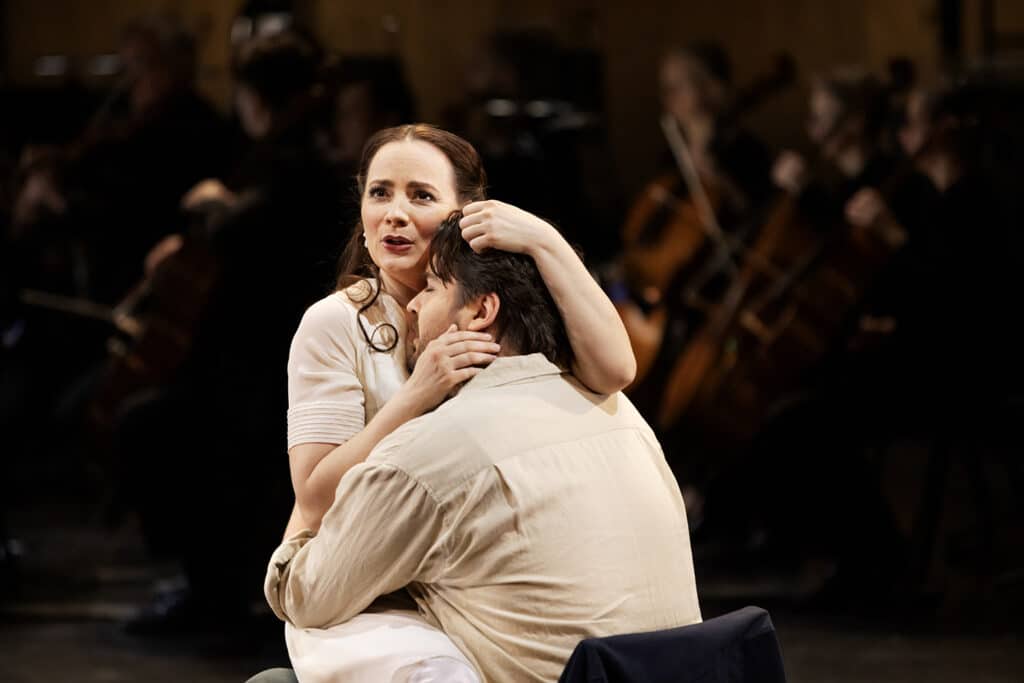
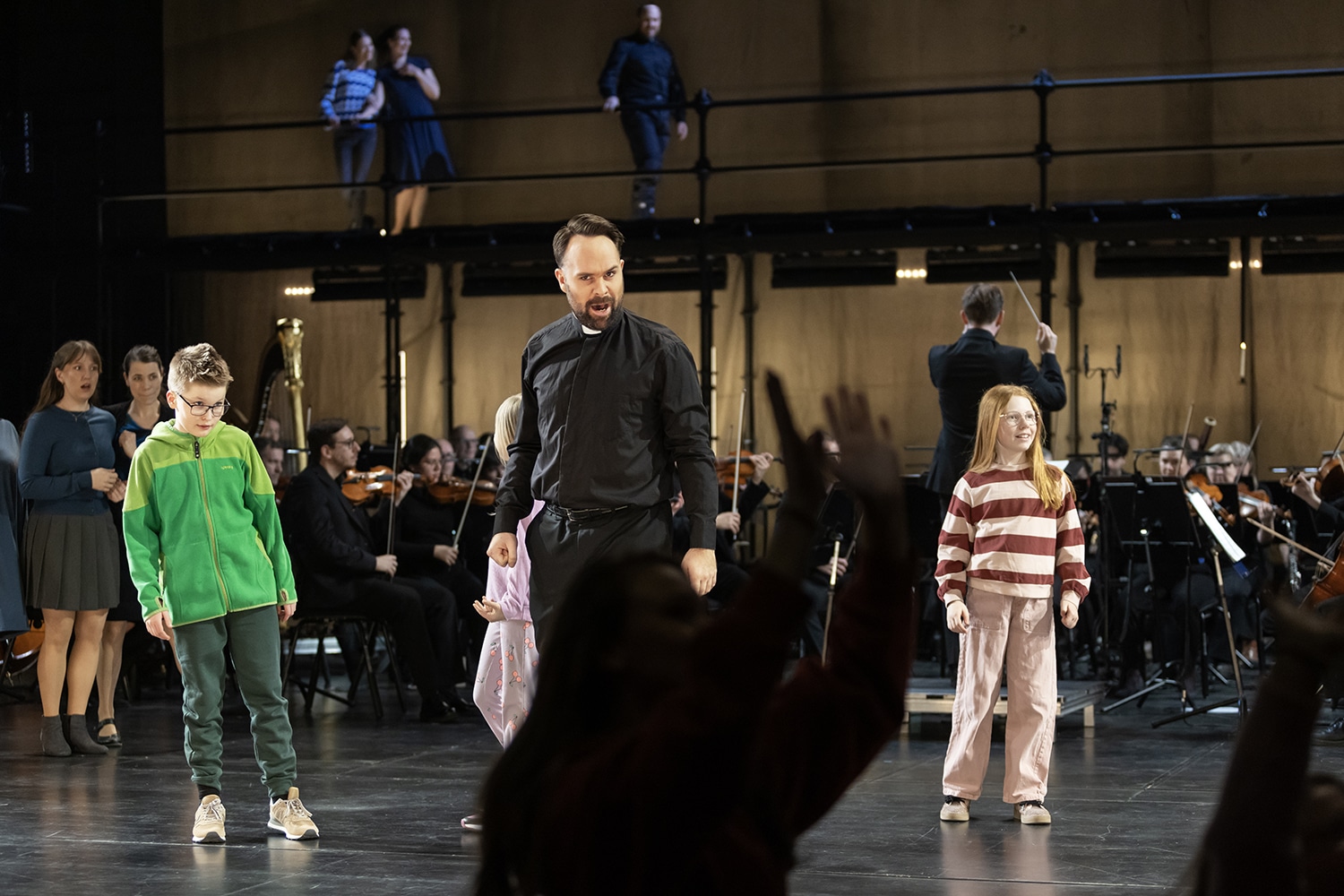
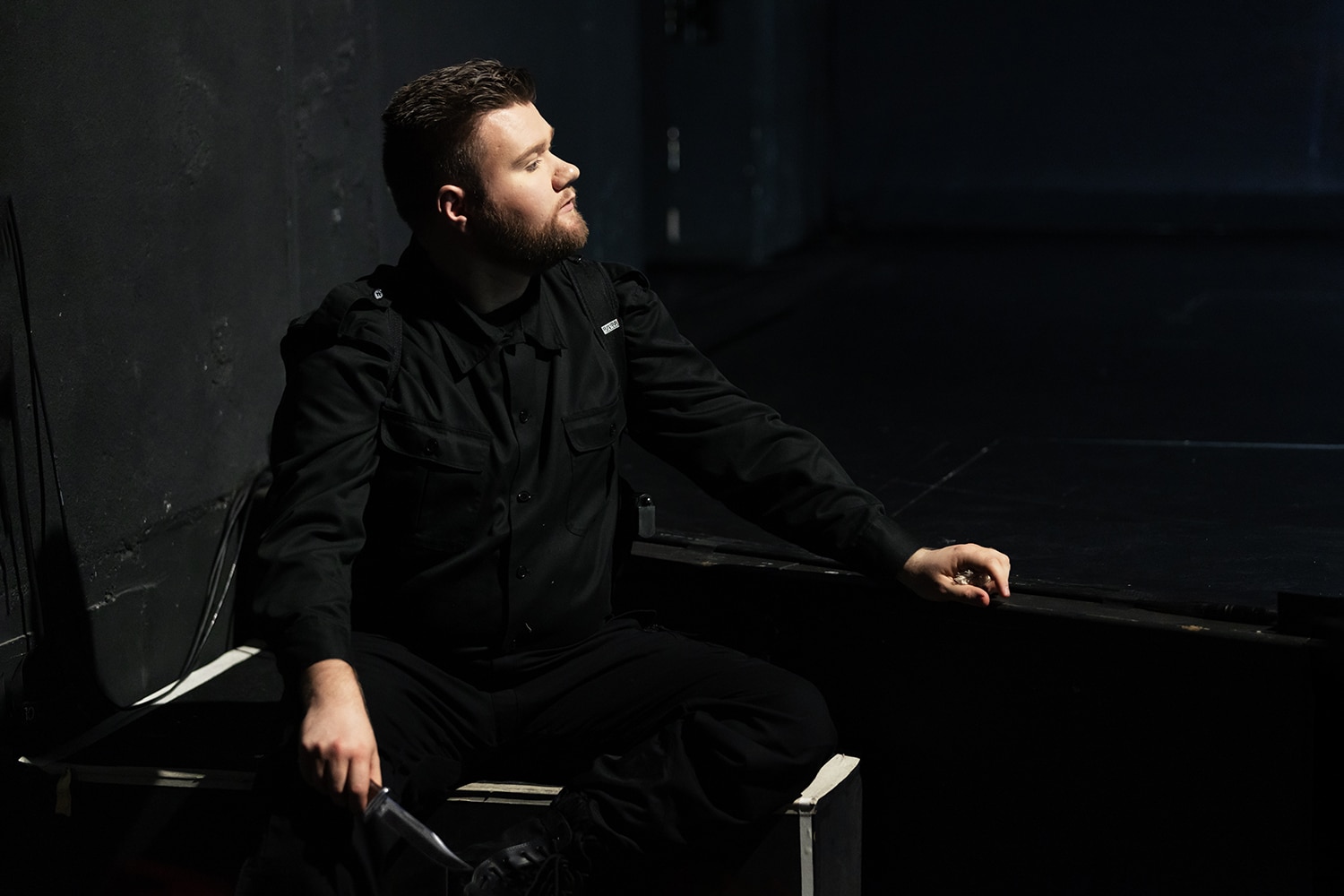
Photo: Elin Berge
At Palazzo Farnese
Scarpia is waiting for news about the escaped prisoner. He is also awaiting Tosca, who is to arrive at the palace to sing at the celebration held to mark the victory over Napoleon. Cavaradossi is brought in but refuses to reveal where Angelotti is hiding. Tosca arrives at the palace, and Cavaradossi is taken for questioning.
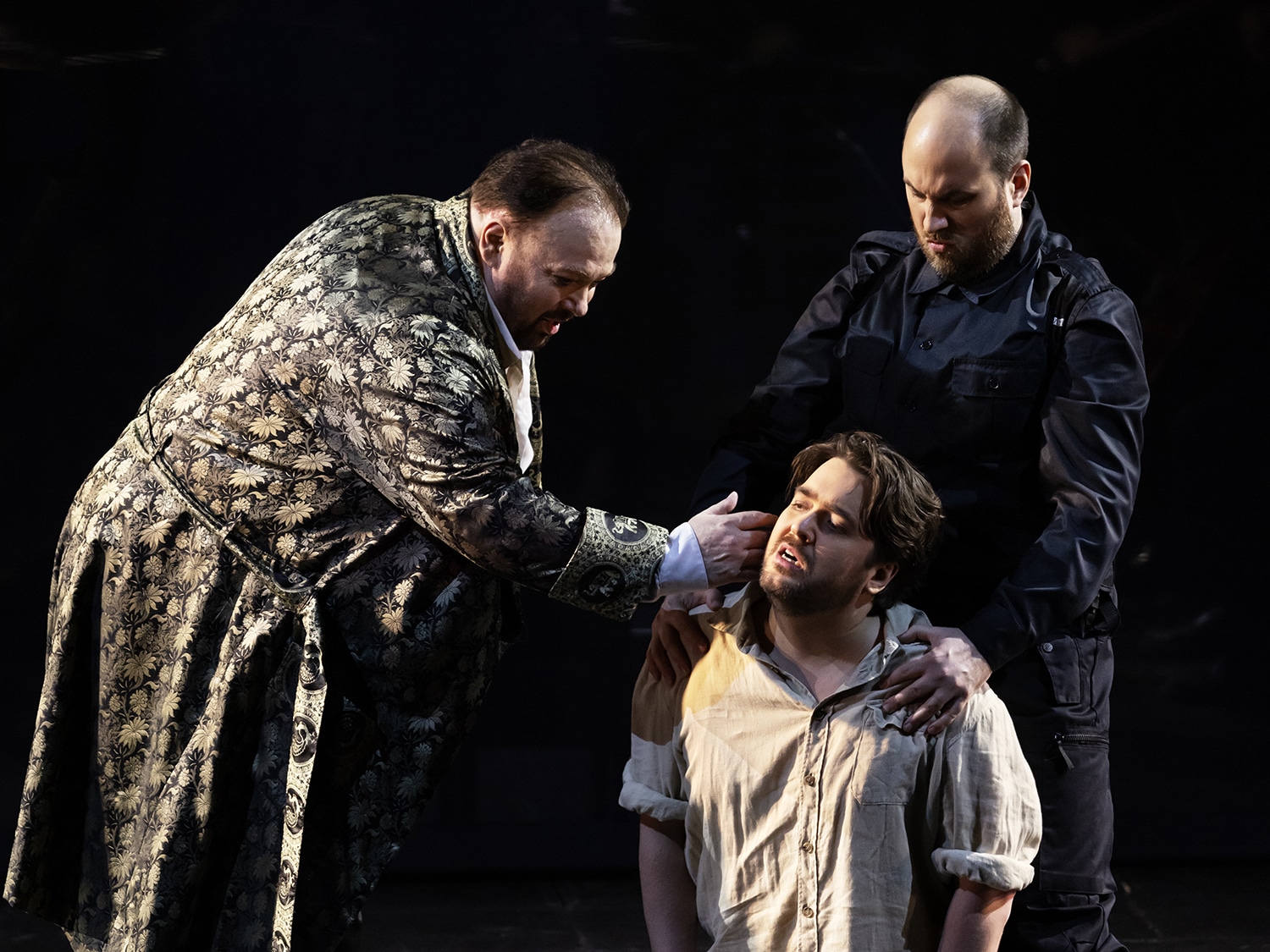
Scarpia tries to force Tosca to reveal where Angelotti is hiding while Cavaradossi is being tortured in the next room. Tosca can’t bear it any longer and reveals Angelotti’s hiding place. They are interrupted by the news that the reports of victory are false. It is Napoleon who has won at Marengo. Cavaradossi rejoices, and Scarpia orders that he be executed.
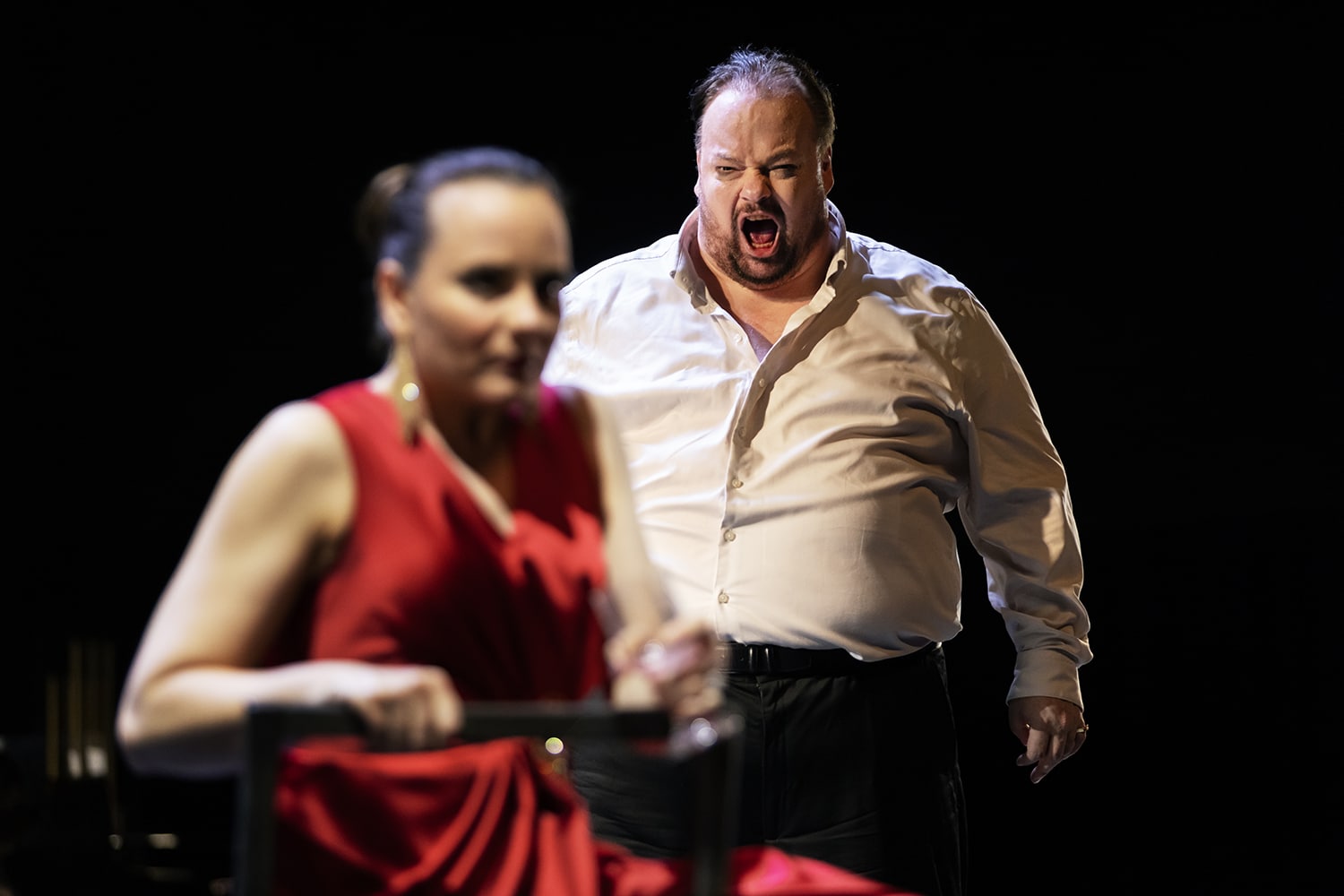
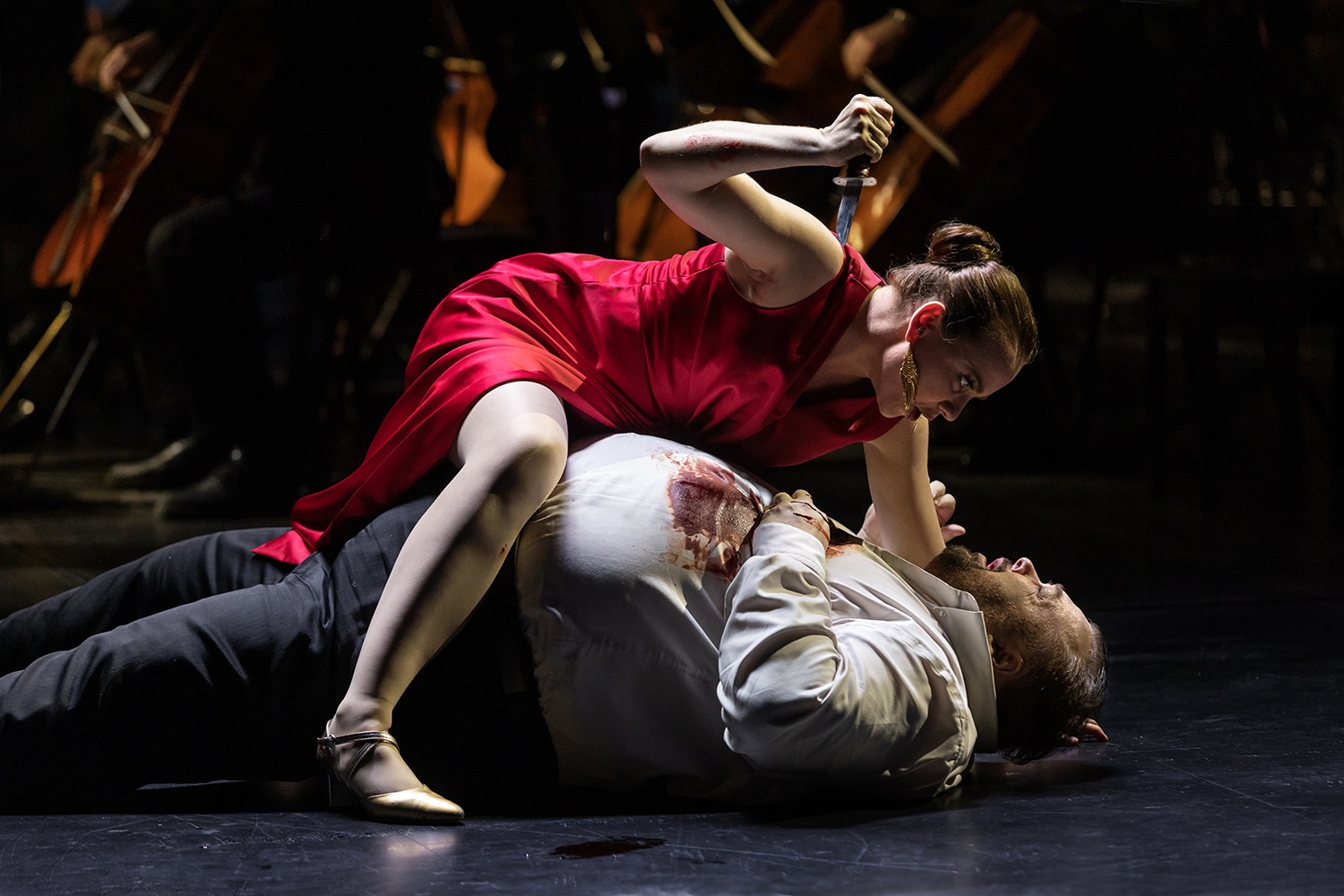
Tosca pleads for her lover’s life. Scarpia tells her she can save Cavaradossi if she gives herself to him. Tosca accepts the terms. Scarpia orders a mock execution of Cavaradossi and signs a pass granting them safe passage out of Rome. When Scarpia embraces Tosca, she stabs him in the chest with a knife, and he dies.
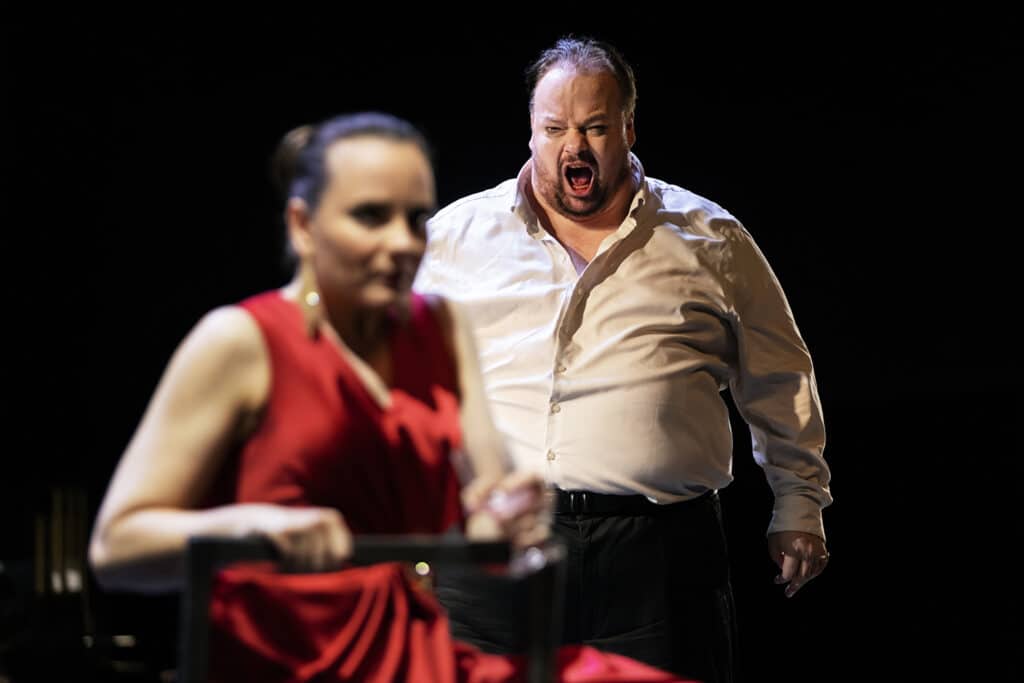
Photo: Elin Berge
Act III
On the roof of Castel Sant’Angelo
, Cavaradossi awaits his execution. He asks the prison guard to let him write a farewell note to his beloved.
Tosca arrives and reveals that she has killed Scarpia. She explains that the execution will be a staged charade and shows the pass that will take them away from Rome toward a future life of freedom.
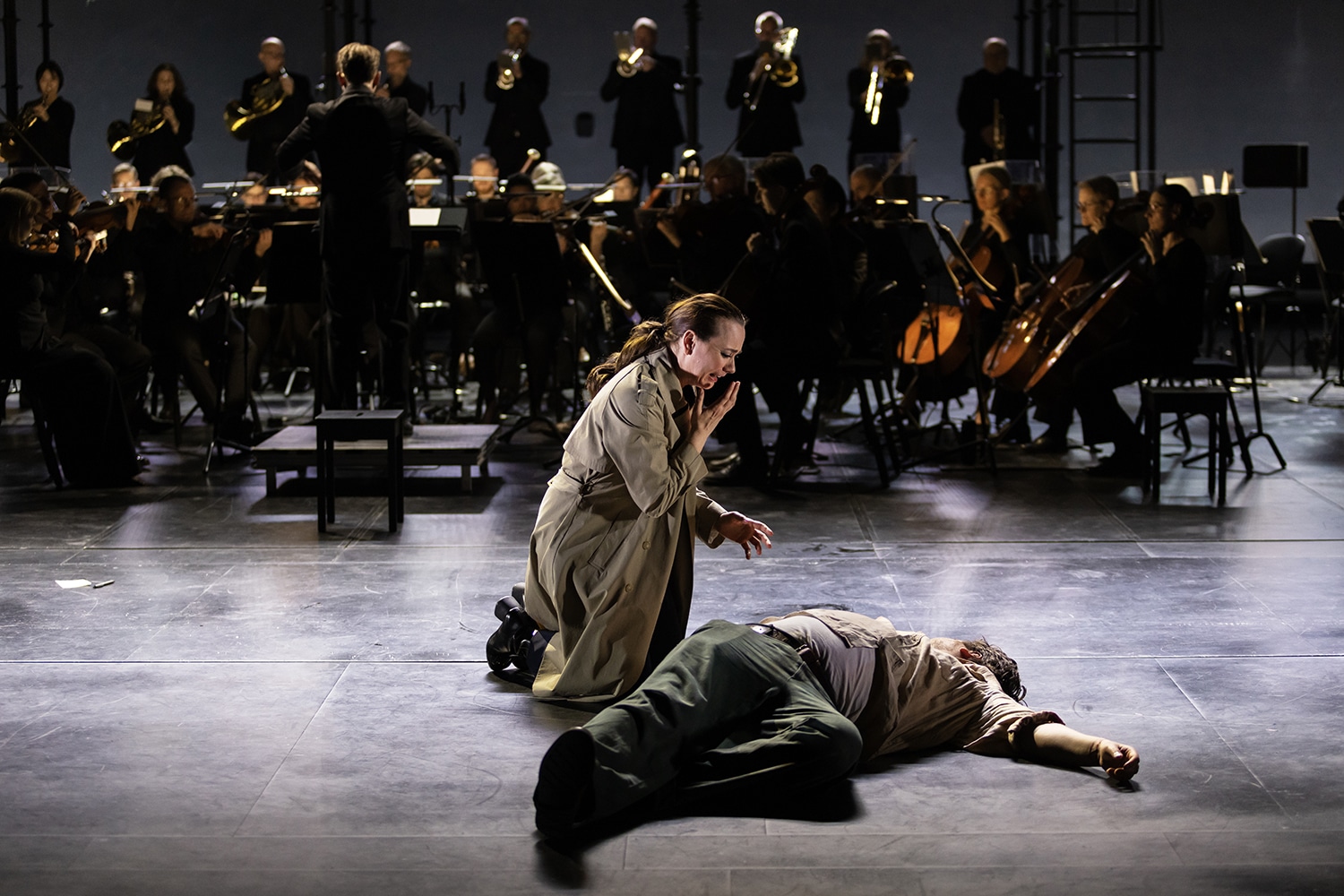
When the soldiers fire their rifles, it becomes clear that Scarpia has not kept his promise. Cavaradossi is shot to death. Police officers arrive to arrest Tosca for the murder of Scarpia.
The opera ends on a dramatic E-flat minor.
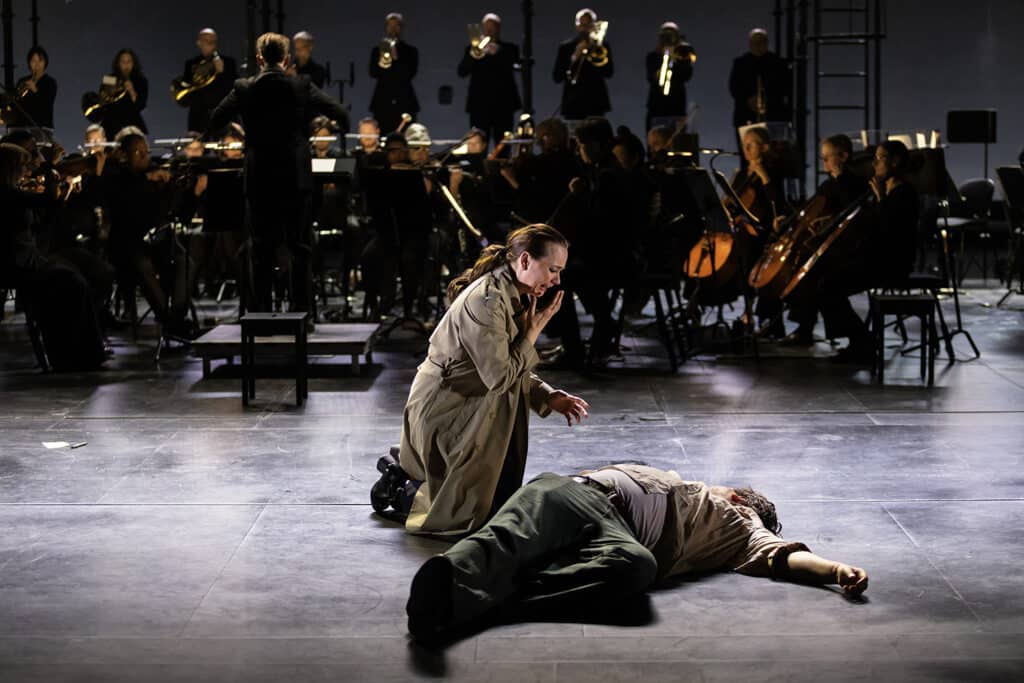
Photo: Elin Berge
A Conversation with Director Eirik Stubø
“Having the orchestra on stage adds a lot.”
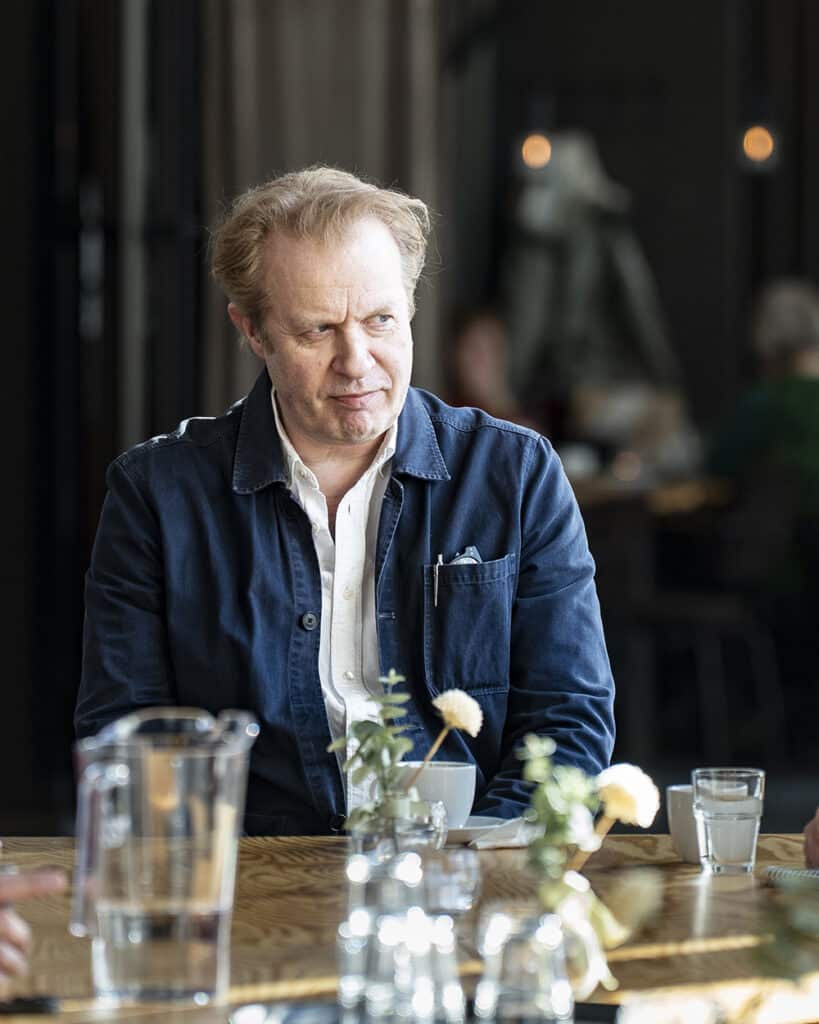
Photo: Peter Hållsten
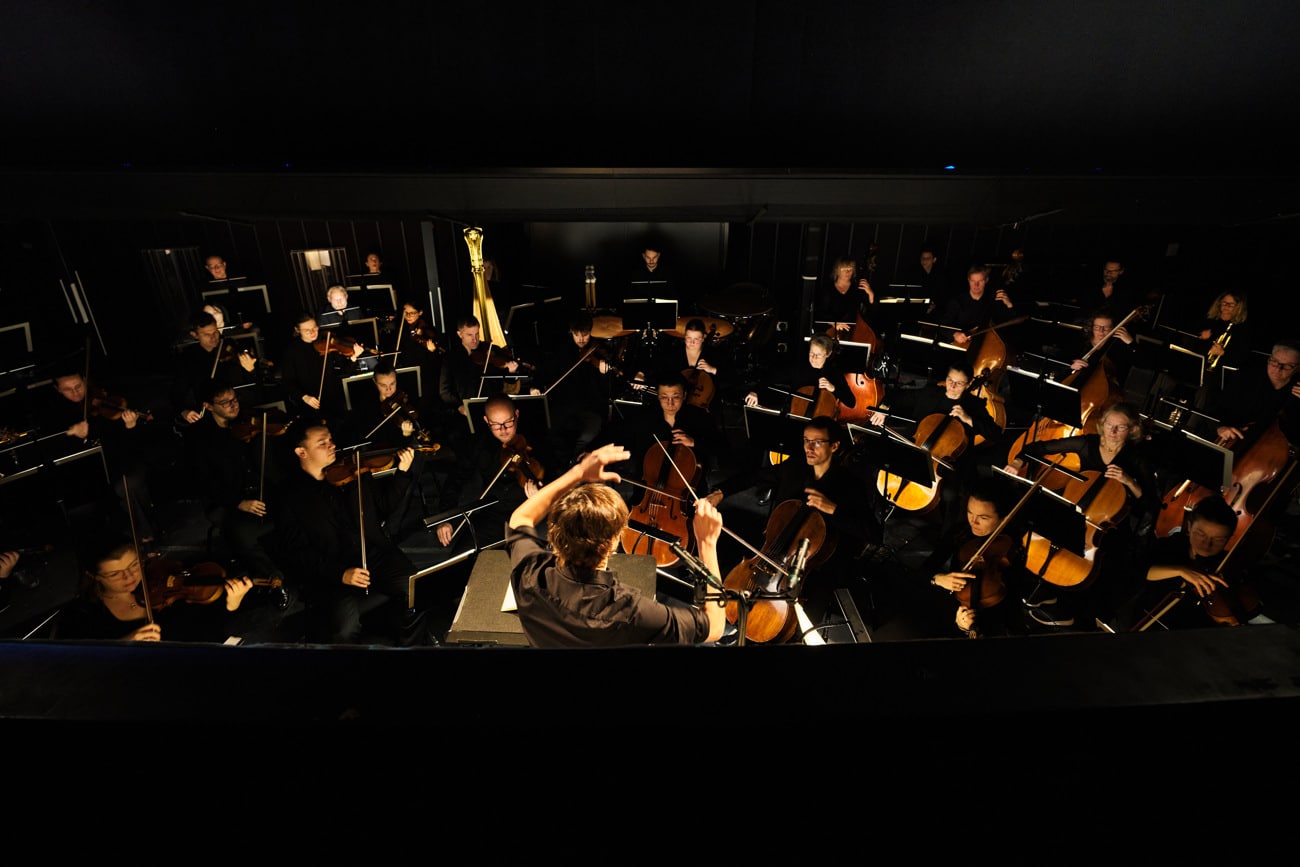
Following a critically acclaimed run at Folkoperan, it is finally Norrlandsoperan’s turn to present *Tosca*. And when director Eirik Stubø’s version of the beloved Puccini opera takes the stage in Umeå, it is the strings that set the tone.
By: Jonas Pekkari
In a nutshell: What is *Tosca* about?
– Tosca is an explosive mix of art, love, erotic obsession, and wonderful music by a brilliant composer.
Is it possible to pick a favorite moment in the performance?
– It’s almost like asking, “Which of your children do you love the most?”—you don’t even want to think about it. But Tosca somehow culminates with everything coming together in “Vissi d’arte, ” the famous aria at the end of the second act. That’s where all the threads of the play come together.
It’s a co-production between Folkoperan and Norrlandsoperan, but does the production differ in any way between the two opera houses?
– Musically speaking, there was no string section at Folkoperan. There, Henrik Schaefer created a fantastic arrangement for wind instruments. Here at Norrlandsoperan, a string section has been added, and it’s really fun to experience the music as fully as we do here—a wonderful orchestra! But there are more differences; Folkoperan and Norrlandsoperan are two very different venues.
How does that come across in the performance?
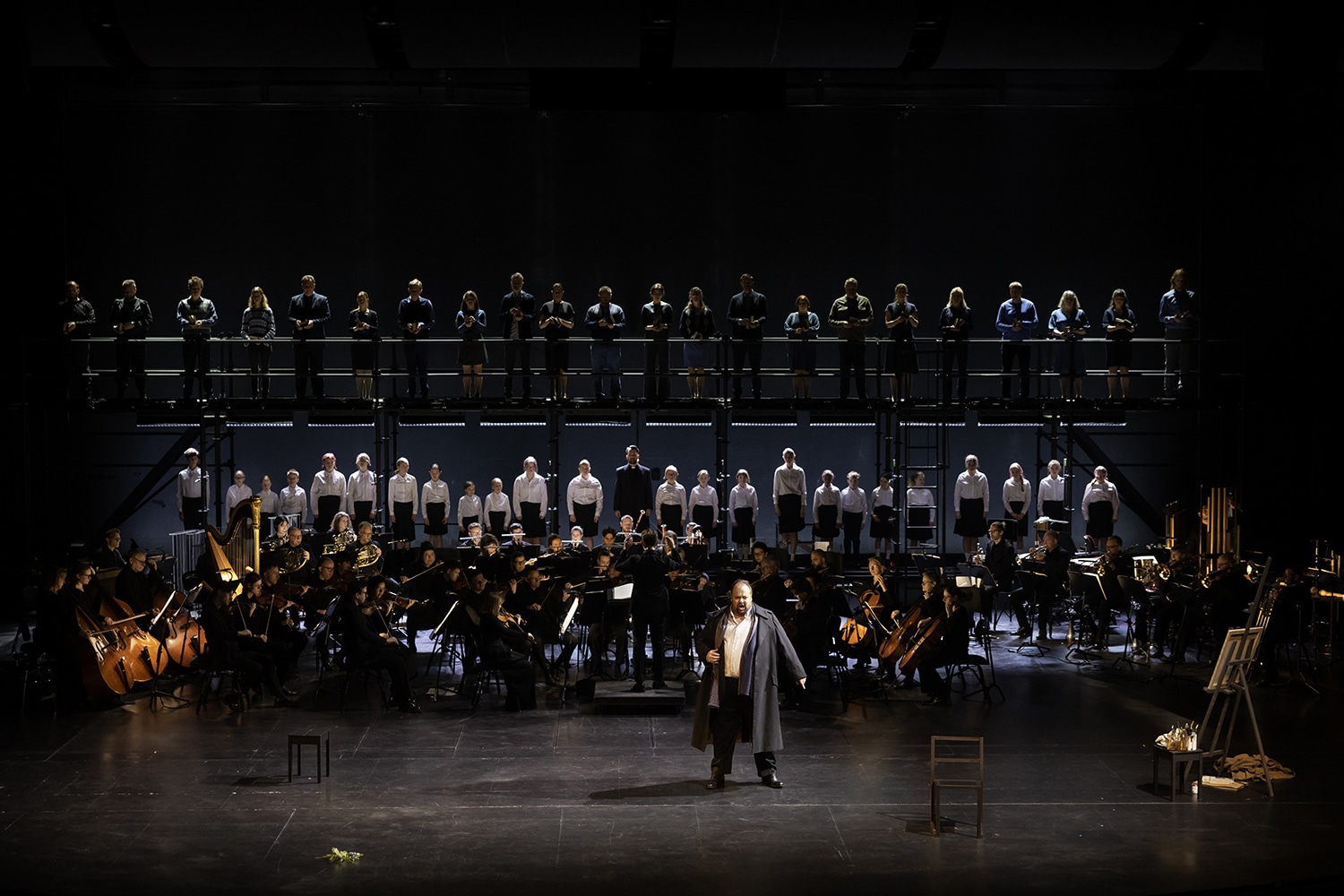
– At Folkoperan, there’s no orchestra pit, so the orchestra has to be on stage. If the production had started here at Norrlandsoperan, the orchestra would most likely have been in the orchestra pit—but now we had to find another solution. It turned out very well, and we carried that basic idea forward and adapted it to the conditions at Norrlandsoperan. Having the orchestra on stage adds so much to the performance.
In what way?
– That element of live music becomes so palpable when the orchestra is gathered on stage. It’s a constant reminder that this isn’t naturalism—it’s something else: a ritual, a way of telling a story through music and acting, where everything is on the same level.
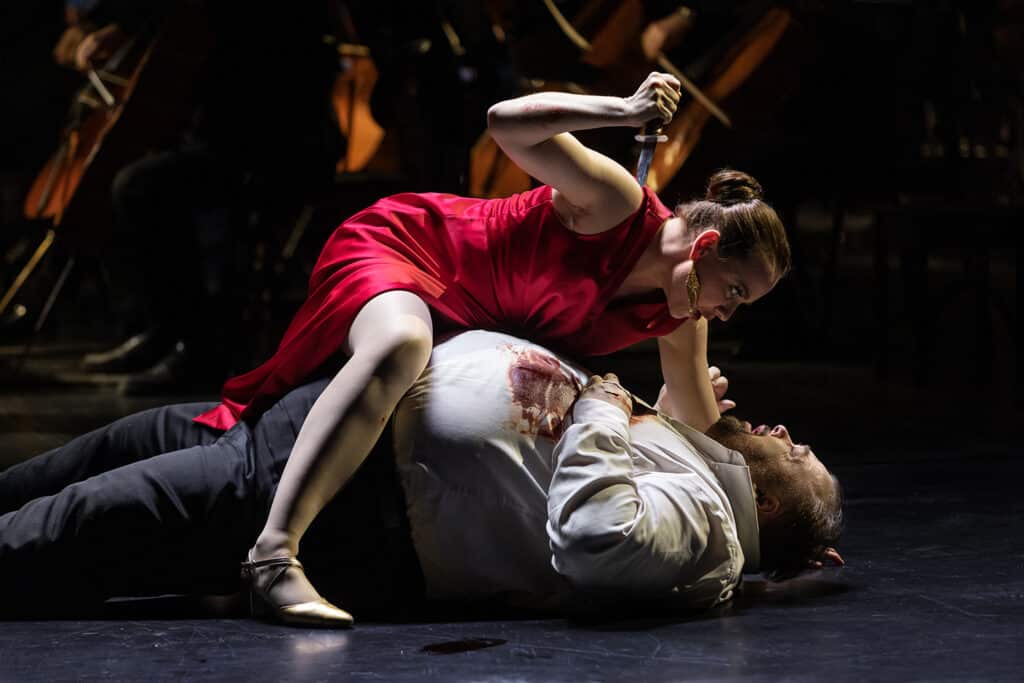
Photo: Elin Berge
Tosca in the Stormy Winds of History
by Cecilia Düringer
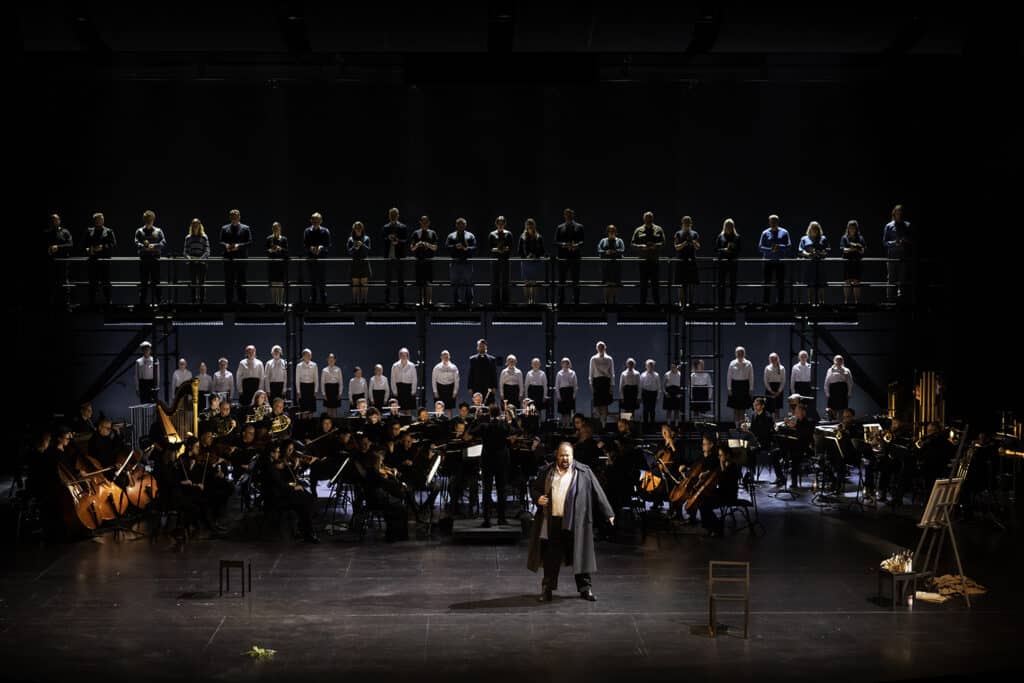
Photo: Elin Berge
Things are really chaotic. Yes, in *Tosca*, of course, but there’s also widespread turmoil in the world surrounding the opera’s plot. A struggle for the future is in full swing. The setting for Tosca is Rome, a city we tend to associate more with the past than with looking toward the future. History echoes around every corner of the Eternal City. A stroller who pricks up their ears can hear two-thousand-year-old whispers about the mighty Roman Empire, listen to the beating heart of the Catholic Church, and sense the long cavalcade of celebrities who have made the city their home.
In the year 1800, things are looking grim. The Roman Republic has just fallen—and after a statement like that, maybe someone who actually paid attention in history class will perk up, raise their hand, and ask in astonishment, “Huh?” “The Roman Republic—what does that have to do with the 1800s? That’s ancient history! Right?”
Yes, that’s right. The First Roman Republic was part of the ancient world for several hundred years. Around the beginning of our era, however, it was gradually worn down by power-hungry men like Julius Caesar, Augustus, and Tiberius and transformed into an empire. Although, of course, that’s not that the Roman Republic, which is floundering in Toscas periphery, but rather another, of a significantly more modern nature. Much may have changed between the days of antiquity and the early 19th century. But one thing remains the same: the power struggles. And to understand the historical background of Puccini’s opera, one needs to take a closer look at the political turmoil that characterized much of Europe at this time—and get to know at least one power-hungry man.
In the year 1800, it had not been long since the great revolution—with liberty, equality, and fraternity on the agenda—had shaken France. In the upheaval that was to sweep away the old world, the heads of royalty rolled. These shocking developments caused monarchs across Europe to 1. tremble with fear in their palaces and 2. take up arms against the strange new order in France and the radical ideas that had been part of the great upheaval. The ideas of the Enlightenment, that is. Philosophical and political visions of ways to govern other than through royal autocracy, of freedom of speech, and of being allowed to find happiness in one’s own way. These were the ideas that renowned authors such as Jean-Jacques Rousseau, Voltaire, Olympe de Gouges, and Mary Wollstonecraft had thoroughly explored in their writings.
As the 18th century draws to a close and the new century begins, the French Revolution is, for the time being, over. Amid the chaos that, after several turbulent years, eventually degenerated into a reign of terror, a gentleman from Corsica had worked his way up, built a military career, and established himself at the pinnacle of politics. He is a member of the lower nobility, perhaps not much to look at, but a brilliant strategist and commander. It will still be a while before he proclaims himself emperor, but by 1800, the military genius Napoleon Bonaparte is, in all but name, the leader of France. And if you were to ask him yourself, you might get the answer that he is also the strongman of all of Europe.
Napoleon’s armies have achieved great successes in Toscas a world that would one day become Italy but which, at that time, was a patchwork of various small principalities. A few years earlier, the French had marched into the region, and Napoleon conquered vast territories with astonishing efficiency. Among other places, Naples and Rome came under French control—and were subjected to a new order. Out went the old, conservative, and repressive autocracy, and in came a modern form of government guided by the ideas of the Enlightenment. Voilà: the Roman Republic was born. It pursued the fugitive in Tosca, Cesare Angelotti, was one of its consuls. Mario Cavaradossi, who in the opera gives his life to protect Angelotti, is also a friend of the New World. The beautiful-voiced Floria Tosca herself seems more inclined to side with the conservative camp due to her deep devotion to the Church, but with a firm grip on a fruit knife, she will show that love ultimately trumps any political sympathies.
France is one of the major political players in Tosca’s world. Another is the Austrian Empire, which rules over certain Italian states and is allied with others. The Austrians have, aside from the obvious geopolitical reasons, many reasons to want to put the French in their place. For example, there is the tragic story of Marie Antoinette, the Austrian princess who became Queen of France and met her end at the guillotine. Marie Antoinette belonged to the Habsburg imperial dynasty, and it is still her close relatives who rule in Austria and its vassal states.
In addition to the great powers, there is a third power: the Catholic Church and the Pope. By the year 1800, Rome had been the Papal States for over a thousand years—an independent kingdom with its own laws and armies. The head of the Papal States, is the Pope. A man who by no means welcomed the French Revolution or the ideas of the Enlightenment. One of the revolutionaries’ first moves was to tighten their grip on the Church and the clergy in the country, and it’s probably not too far-fetched to assume that the leader of Catholicism absolutely did not want to see such a development spread. But with the wars that followed the Revolution—and which later came to be waged under Napoleon’s command—the papal nightmare risked becoming a reality. And that was not all. God’s foremost emissary on earth was thus ousted from his spiritual and temporal seat when the French occupied Rome in 1798 and the emblem of the Papal States was replaced by the tricolor.
While the then-elderly pope was forced to end both his career and his life in French captivity, Rome was transformed from an outdated theocracy into a modern republic. But the republic was short-lived, and in 1800, when Tosca In the story, the Church’s loyalists have regained power with the help of Austria and its allies. There is no pope in place yet, but society has been thrown back into reactionary religious rule—indeed, almost a police state, with strict control over the population. Being an Enlightenment thinker and reading Voltaire is once again fraught with great danger. Anyone who has also associated with the French—or worse still, like Angelotti, held positions in the fallen Roman Republic—is branded an enemy of the state by the heavy-handed regime and its henchmen. People like the sadistic police chief Scarpia.
Yeah, like I said: it’s a mess. And it’s only going to get more complicated. Before Tosca’s Once this intense action is over, the dice must be rolled once more and the game board reset. In the opera’s first act, we hear about the Battle of Marengo in northwestern Italy, where French troops clash with Austrian forces. Napoleon Bonaparte has put his men through a veritable ordeal, marching them across the Alps. When the exhausted soldiers arrive in Italy, the Austrian general Michael von Melas seizes the opportunity to launch an attack—and the French don’t stand a chance. They are driven back so decisively that the Austrians undoubtedly emerge as the victors. News is quickly sent to Rome, causing conservative forces to rejoice that the wretched Bonaparte’s forces have been virtually annihilated. But as we all know, you shouldn’t count your chickens before they’re hatched. In the opera’s second act, new news arrives. At Marengo, General Melas gets a real wake-up call when Napoleon’s troops are unexpectedly reinforced by fresh soldiers. With a shock and a crash, the balance of power shifts, and the next courier setting off for Rome carries a message entirely different from the first—namely, that the Battle of Marengo, which was thought to have been won, has in fact been lost. The Austrian garrison that had guaranteed Rome’s security had fallen, and at any moment Napoleon’s soldiers were likely to march in and restore the republic—much to the horror of the conservatives, but to the delight of the republicans.
However, that is not exactly how it turns out. No new Roman Republic is proclaimed. Instead, weapons are exchanged for diplomacy, and Rome remains under the rule of the Papal States, though it must accept that Napoleon and the French dictate certain terms. Men like Scarpia can no longer rule through terror, and the city’s Enlightenment enthusiasts and republicans can, at least in private circles, speak and think freely. Perhaps not quite the dream that Angelotti cherished and died for, but still a step forward in the small state dominated by perhaps the world’s most reactionary leader.
Does this mean that calm can now settle over Rome and the Italian states? No, one cannot say that. Fifteen years later, Napoleon finally falls at Waterloo, and after that, Austria advances its positions once again. Italy remains, as before, a motley mosaic of different states, populated by ordinary Italians who do not yet call themselves or identify as Italians, and who are by no means in agreement on the best path forward. There is certainly no consensus on the Apennine Peninsula. The various small states all have their own governments, their own jurisdictions, and their own economies. They are linked to some extent by religion, but culturally, the divides are vast. The same is true linguistically. The dialects spoken in the various states or regions can be so different from one another that they are practically distinct languages. Communicating across borders is therefore difficult, which does not exactly bode well for joint political projects.
Yet, just seven decades later, through long and tortuous struggles and processes, the country would be forged into a unified state. The patchwork quilt was unstitched and sewn together to form the Kingdom of Italy through the so-called Il Risorgimento, the unification of Italy, completed in 1870. And it is in the wake of this unification that the play *La Tosca* written by the French playwright Victorien Sardou. It was panned by critics but became a huge box-office hit, starring superstar Sarah Bernhardt as Floria Tosca. The play was then adapted into Puccini’s opera and premiered shortly after New Year’s Day 1900, in a Rome where calm was still conspicuous by its absence. The premiere was dramatically postponed until the following day when the opera house, the Teatro Costanzi, received a bomb threat from anarchists. For, as everyone knows, the political turmoil in Europe did not end with the 19th century. All the historical turmoil that forms the backdrop to both the opera’s plot and its premiere carries over into the 20th century, and continues to make itself felt all the way into our own, equally turbulent times. Which means that “Tosca ” remains relevant. Power struggles, passion, and dreams of freedom are things we humans can always relate to—and will probably never tire of.
The Music
Giacomo Puccini (1858–1924) was one of the leading Italian opera composers of the late 19th and early 20th centuries. Puccini’s operas are characterized by a romantic and melodic style, filled with lyrical arias and dramatic moments. His music reflects the Italian operatic tradition’s focus on characters, emotions, and visual effects. Puccini is considered one of the foremost representatives of late Italian Romantic opera, and *Tosca* remains one of the most beloved operas of all time.
In addition to Tosca, some of Puccini’s best-known works include La Bohème, Madame Butterfly, and his final masterpiece: Turandot.
Puccini’s collaboration with the librettists Luigi Illica and Giuseppe Giacosa was one of the most successful in the entire history of Italian opera. Although Illica and Giacosa are primarily remembered for their work with Puccini, each of them also had an active career in his own right. The libretto for *Tosca* is based on the 1887 play *La Tosca *.
Tuvalisa Rangström is a prominent Swedish translator. She has translated a large number of librettos, novels, short stories, and poetry by authors such as Margaret Atwood, Alice Munro, Haruki Murakami, and Marguerite Duras. Rangström is known for her skillful and lyrical translations that capture the style and tone of the original work—a skill that was put to the test in her translation of the libretto for the opera *Tosca* from the original Italian into Swedish.
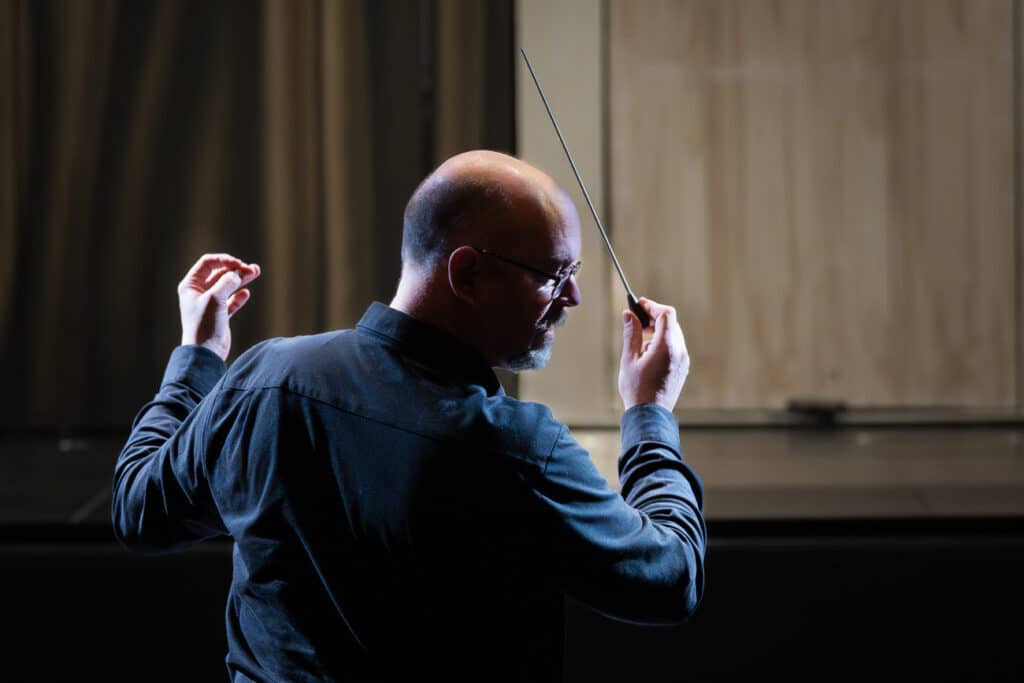
David Björkman is a prominent conductor, born in Skellefteå in 1973, who studied violin at the Gothenburg Academy of Music. Before switching to conducting in 1999, he worked as a violinist with the Gothenburg Symphony Orchestra and as concertmaster here at the Norrlands Opera. He studied conducting for five years at the Royal College of Music under the world-renowned Professor Jorma Panula and took private lessons with Esa-Pekka Salonen, as well as with Maestro Sixten Ehrling in New York. As chief conductor of the Life Guard’s Dragoon Band (2016–20), he has recorded numerous significant Swedish works over the years. David has devoted a large part of his career to contemporary art music. He has been responsible for nearly fifty world premieres, including orchestral works as well as ballets and music dramas. Among the latter are world premieres by Sven-David Sandström, Paula af Malmborg Ward, Daniel Nelson, Ming Tsao, Marie Samuelsson, Johan Ullén, and Moto Osada.
Artistic Team
Henrik Schaefer is the music director of Folkoperan Stockholm and the principal guest conductor and artistic advisor to the Danish Philharmonic Orchestra. He is a regular guest conductor at opera houses and with symphony orchestras around the world, where he has proven himself to be a dedicated partner with strong musical ideas. He began his conducting career as an assistant to Claudio Abbado with the Berlin Philharmonic and served as music director of the Gothenburg Opera from 2013 to 2020.
Henrik Schaefer also holds the position of associate professor of orchestral conducting at the Royal College of Music in Stockholm.
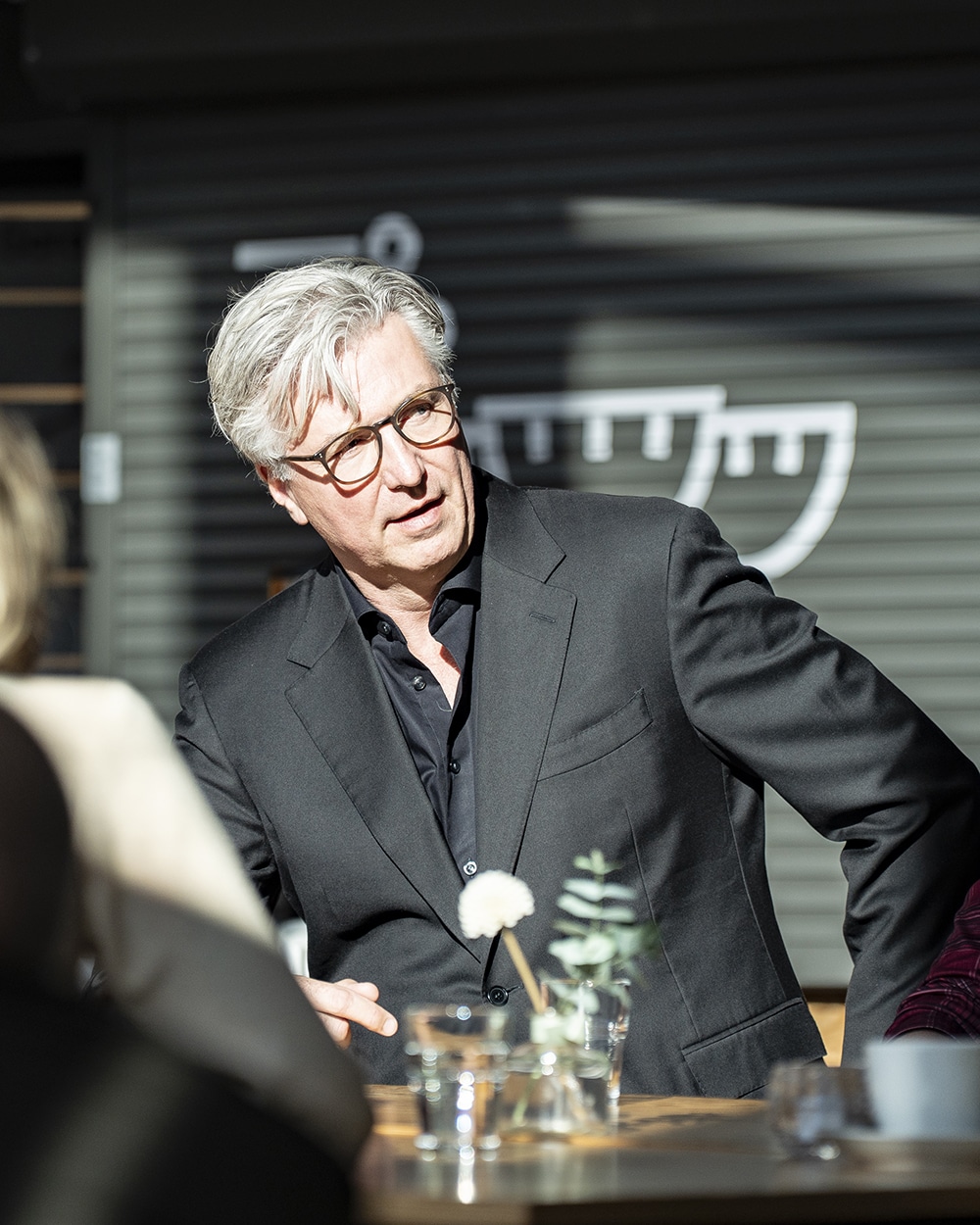
Martin Thorell began his studies in orchestral conducting in 2022 at the Royal College of Music in Stockholm, where his primary teachers have been Henrik Schaefer and B. Tommy Andersson. As part of his education, he has conducted several prominent orchestras, including the Gävle Symphony Orchestra, the Norrköping Symphony Orchestra, the Västerås Sinfonietta, and the Norrlandsoperan Symphony Orchestra. He has also held professional conducting engagements with ensembles such as the Swedish Navy Band, the Stockholm Wind Symphony, the Östgöta Wind Symphony, and the Stockholm Youth Symphony Orchestra (SUSO). This spring, he will join Henrik Schaefer as a conductor in both the Norrlandsoperan and Folkoperan productions of *Tosca*.
In addition to his career as a conductor, Martin is an established trumpeter. He began his studies in 2012 at the Malmö Academy of Music under Professor Håkan Hardenberger and has since performed with many of Sweden’s leading symphony orchestras. In addition to his commitment to opera and the symphonic repertoire, he has a special interest in military music and has been employed since 2019 as a trumpeter with the Life Guard’s Dragoon Band, one of the Swedish Armed Forces’ three professional wind ensembles.
In 2025, Martin Thorell was awarded the Royal Swedish Academy of Music’s National Scholarship for Orchestral Conductors.
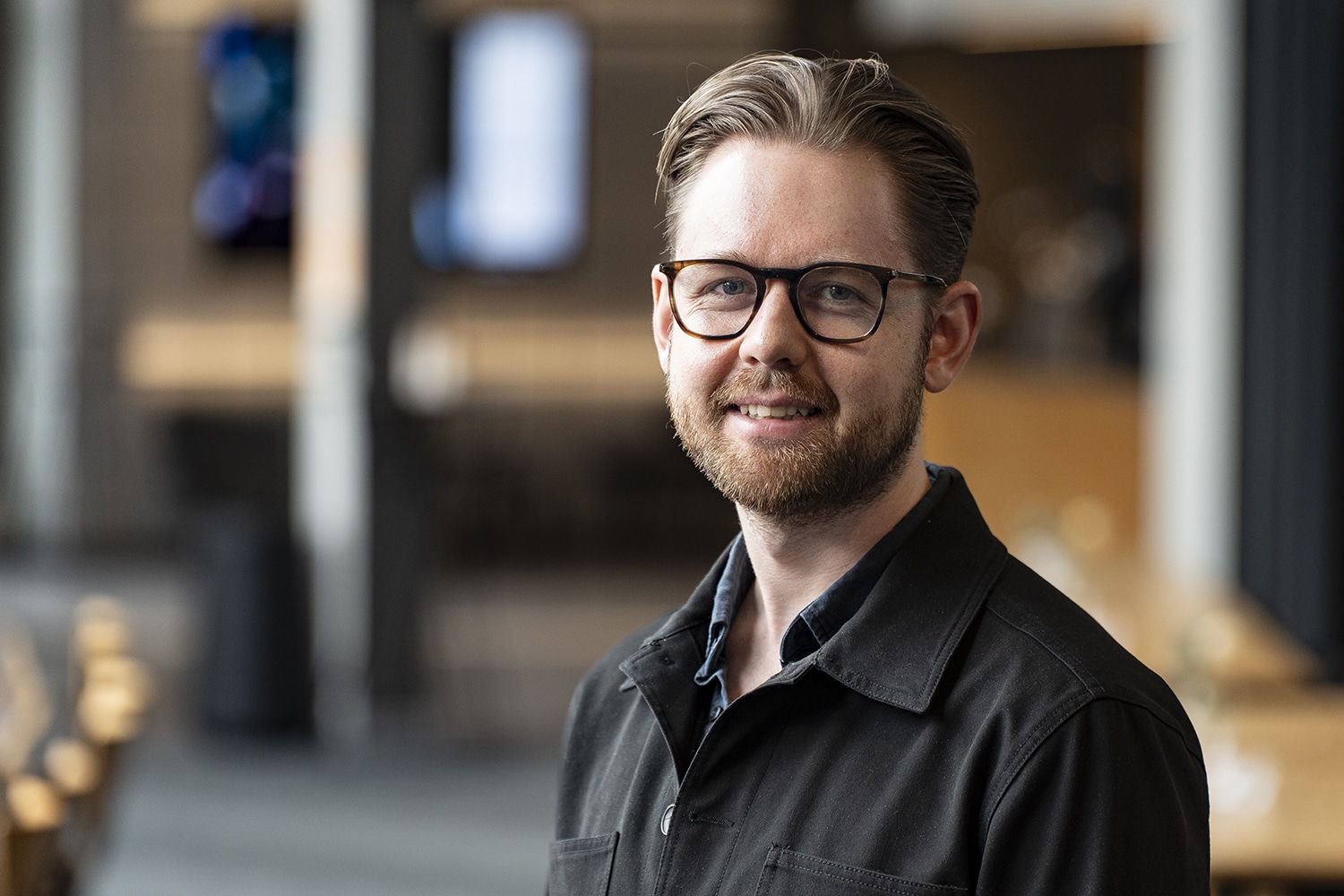
Martin Thorell, photo by Peter Hållsten
Erik Stubø is a theater and opera director who has made a name for himself with his innovative and thought-provoking productions. He has directed numerous productions at leading theaters in the Nordic region, including the National Theater in Oslo, the Royal Opera in Stockholm, and Dramaten in Stockholm. He made his debut in Sweden as an opera director with Bellini’s *Norma* at the Folkoperan in 2022, a debut production that was praised by both audiences and critics.
In addition to his work as a director, Stubø is also active as a teacher and lecturer. He has taught directing at several universities and conservatories in the Nordic countries. Stubø is considered one of the leading Norwegian performing artists of our time.
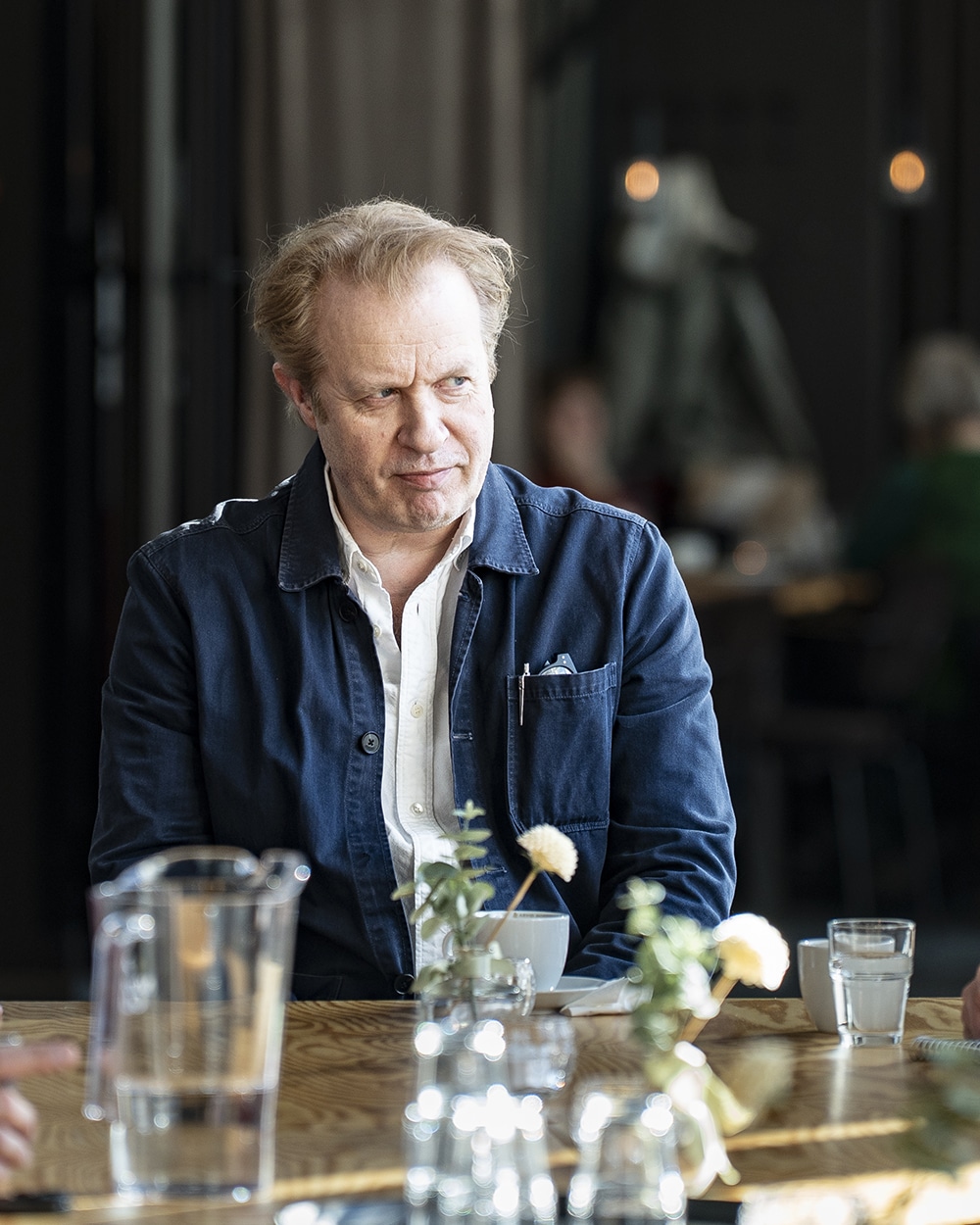
Magdalena Åberg is a set and costume designer working in theater, opera, dance, and circus. She has worked at several of the Nordic region’s leading performing arts institutions, including the Royal Swedish Opera, Dramaten, Malmö Opera, Folkoperan, and Det Norske Teatret in Oslo. She trained at the Stockholm Academy of Dramatic Arts.
In the field of opera, she has designed sets and costumes for *La traviata*, *Aida*, *Stiffelio*, *Un ballo in maschera*, *Idomeneo*, *Sweeney Todd*, and *A Midsummer Night’s Dream* at the Royal Swedish Opera, as well as *Madame Butterfly* and *Così fan tutte* at Opera Hedeland in Denmark. At Malmö Opera, she has designed sets and costumes for *Salome*, *Eugene Onegin*, and *Cirkus Days and Nights*. Notable productions also include *Norma* and *Tosca*, directed by Eirik Stubö at Folkoperan, and *Herr Arnes Penningar*, directed by Tobias Theorell. She has collaborated repeatedly with director Tobias Theorell on *Bortbytingen* at Dramaten, where she has also designed sets and costumes for productions including *Arv*, *De oroliga*, *Det blåser på månen*, and *Påklädaren*. At Kulturhuset Stadsteatern in Stockholm, she has designed sets and costumes for *Monstrens tid*, *Orosdanser*, *Tre systrar*, and others.
In the field of dance, Åberg has collaborated with Mats Ek on the ballet *Julia & Romeo* at the Royal Swedish Opera, which has toured around the world, and with Örjan Andersson on *Arches of Frost* for the Compañía Nacional de Danza in Madrid.
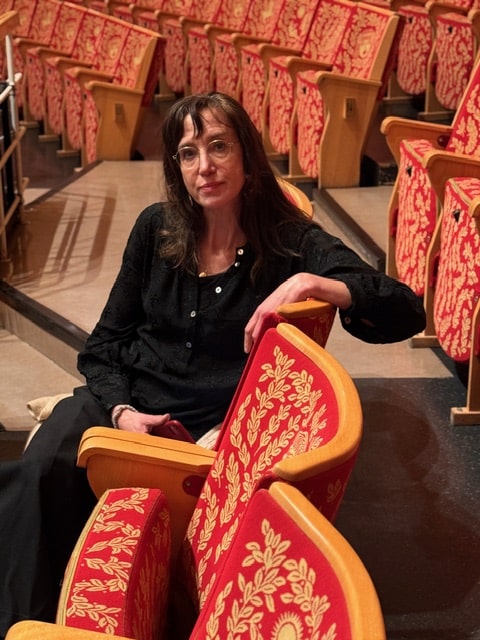
Ellen Ruge is a lighting designer specializing in the performing arts, with 40 years of experience working on some 100 productions in opera, theater, and dance—both in Sweden and abroad. She was awarded the 2020 Swedish Theater Critics’ Award for lighting design for Norrlandsoperan’s *Don Giovanni*, Malmö City Theater’s *Halva månen *, and the productions *Överbord* and *Röde Orm*. Ellen Ruge received the Norwegian HEDDA Theater Award for Best Lighting Design in 2009 and His Majesty the King’s Medal with a Royal Blue Ribbon for outstanding achievements in lighting design. She regularly collaborates with director Eirik Stubø on opera and theater productions throughout Sweden.
Learn more about Ellen RugeAnders Lundström is a singer and chorus master at the Norrlands Opera. He studied at the Piteå School of Music and the Stockholm Opera Academy. He made his debut in 1991 at the Folkoperan in Stockholm and has since performed at opera houses in Sweden and on stages abroad. In 2017, Anders Lundström took on the role of chorus master and singer at the Norrlands Opera, where he has appeared in a number of productions, including the role of Gastone in *La Traviata*.
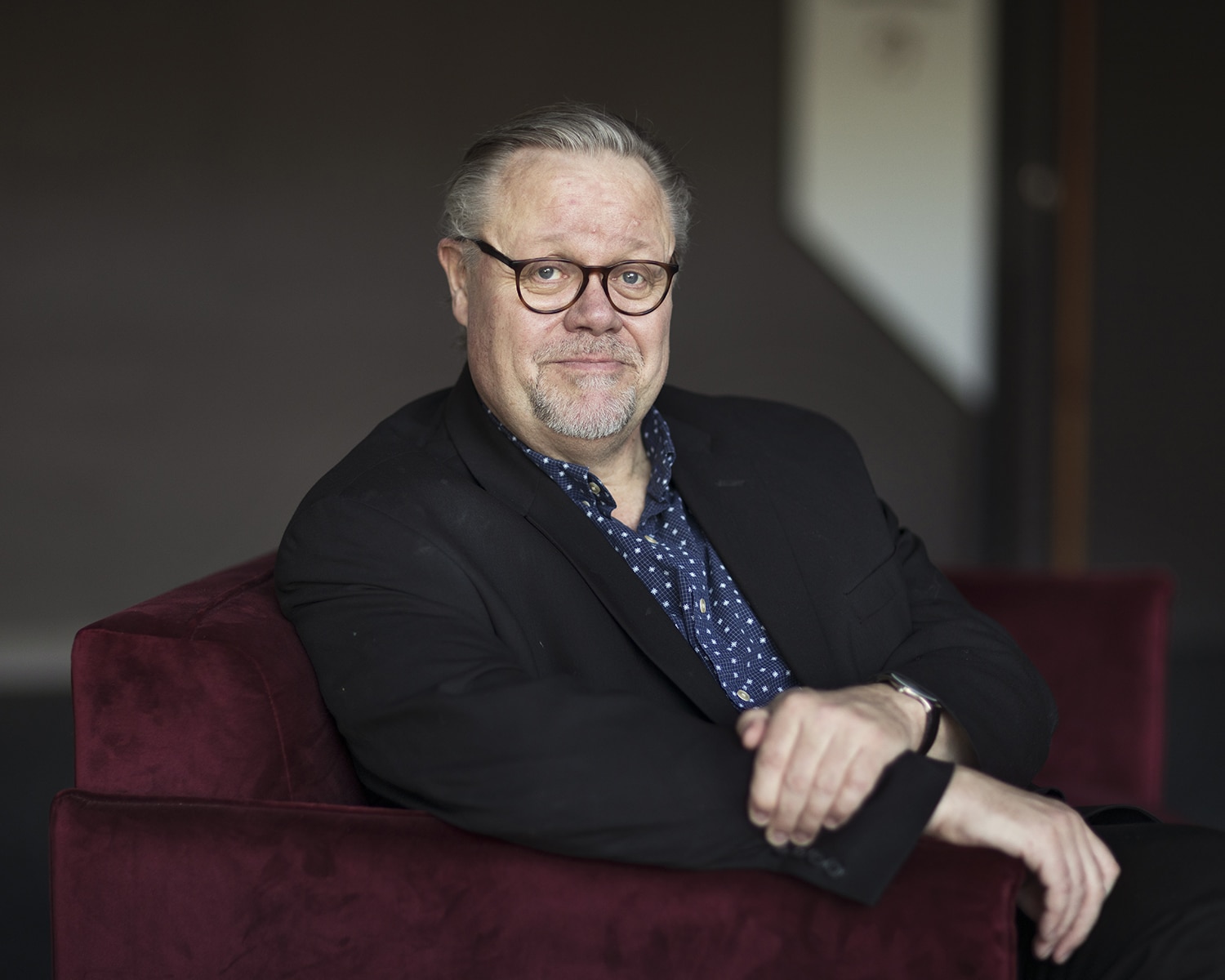
Lotta holds degrees from the Academy of Music in Gothenburg and Opera Studio 67 in Stockholm. Since 2011, Lotta has been the choir director for the Norrlandsoperan Children’s Choir, where she is responsible for the choir’s vocal development and artistic quality. Lotta conceived and founded the choir, which has since participated in a number of opera productions and concerts.
Ensemble
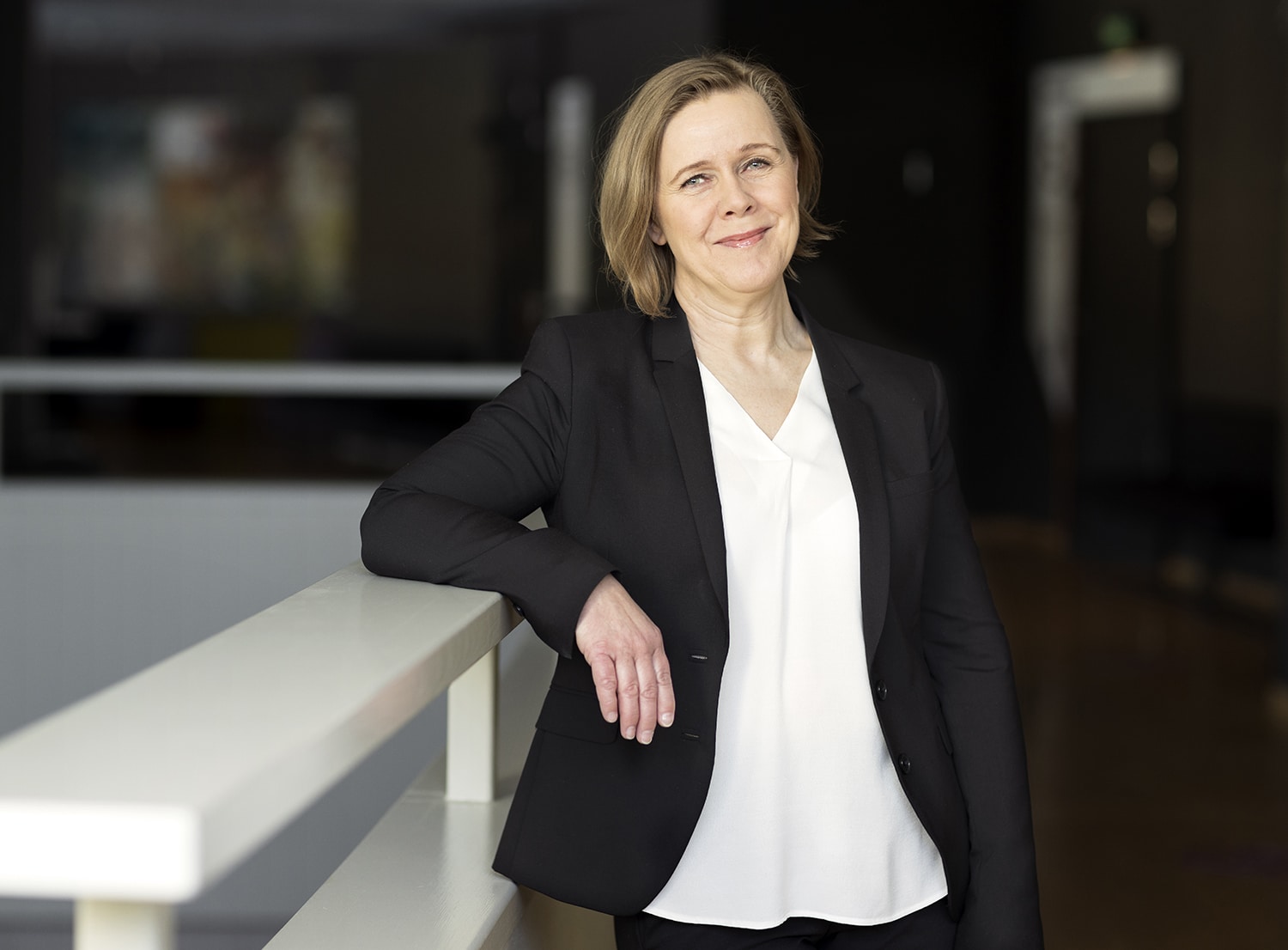
Danish star soprano Dénise Beck began her career in Vienna in 2009 after completing her studies at the University of Music and Performing Arts. In 2011, she graduated from the soloist class at the Royal Danish Academy of Music in Copenhagen.
Since then, she has appeared in a succession of roles in opera productions at many of the world’s leading opera houses, including the Oslo Opera, the Berlin State Opera, Opera City Tokyo, the Concertgebouw in Amsterdam, the Royal Swedish Opera in Stockholm, the Teatro Nacional Cláudio Santoro in Brazil, and many others. In 2021, Dénise Beck was knighted by Queen Margrethe II.
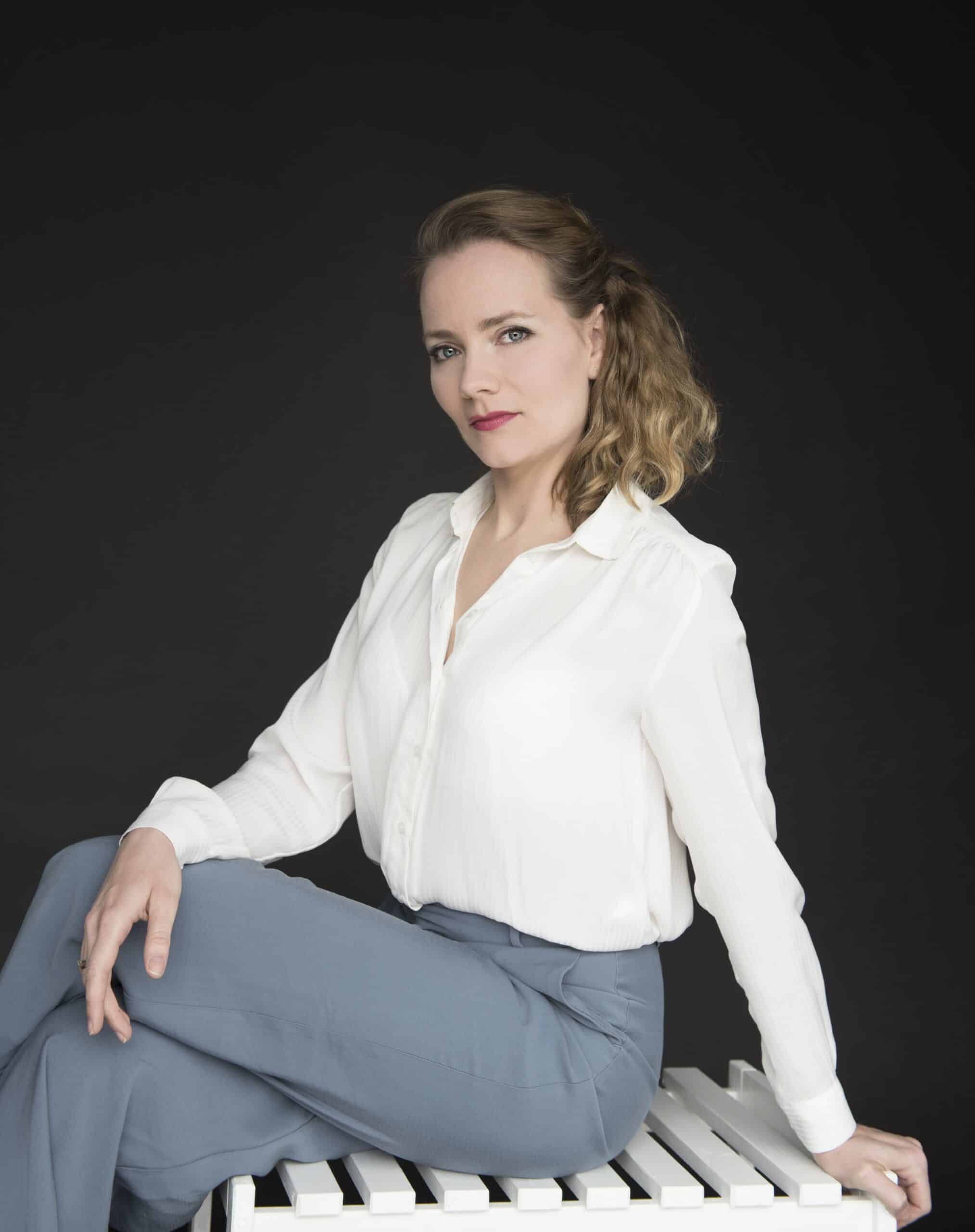
Tenor Per Lindström studied at the Kapellsberg Opera Studio and the Academy of Music and Drama in Gothenburg. Even while still a student, he performed roles such as Don José in *Carmen*, the title role in *The Tales of Hoffmann*, Tamino in *The Magic Flute*, Don Ottavio in *Don Giovanni*, and Gabriel von Eisenstein in *Die Fledermaus*.
His previous roles also include a number of productions at the Norrlands Opera, such as Alfredo in *La Traviata*, Valère/The Young Lover in *Tartuffe*, and Molqi in *The Death of Klinghoffer*.
Learn more about Per Lindström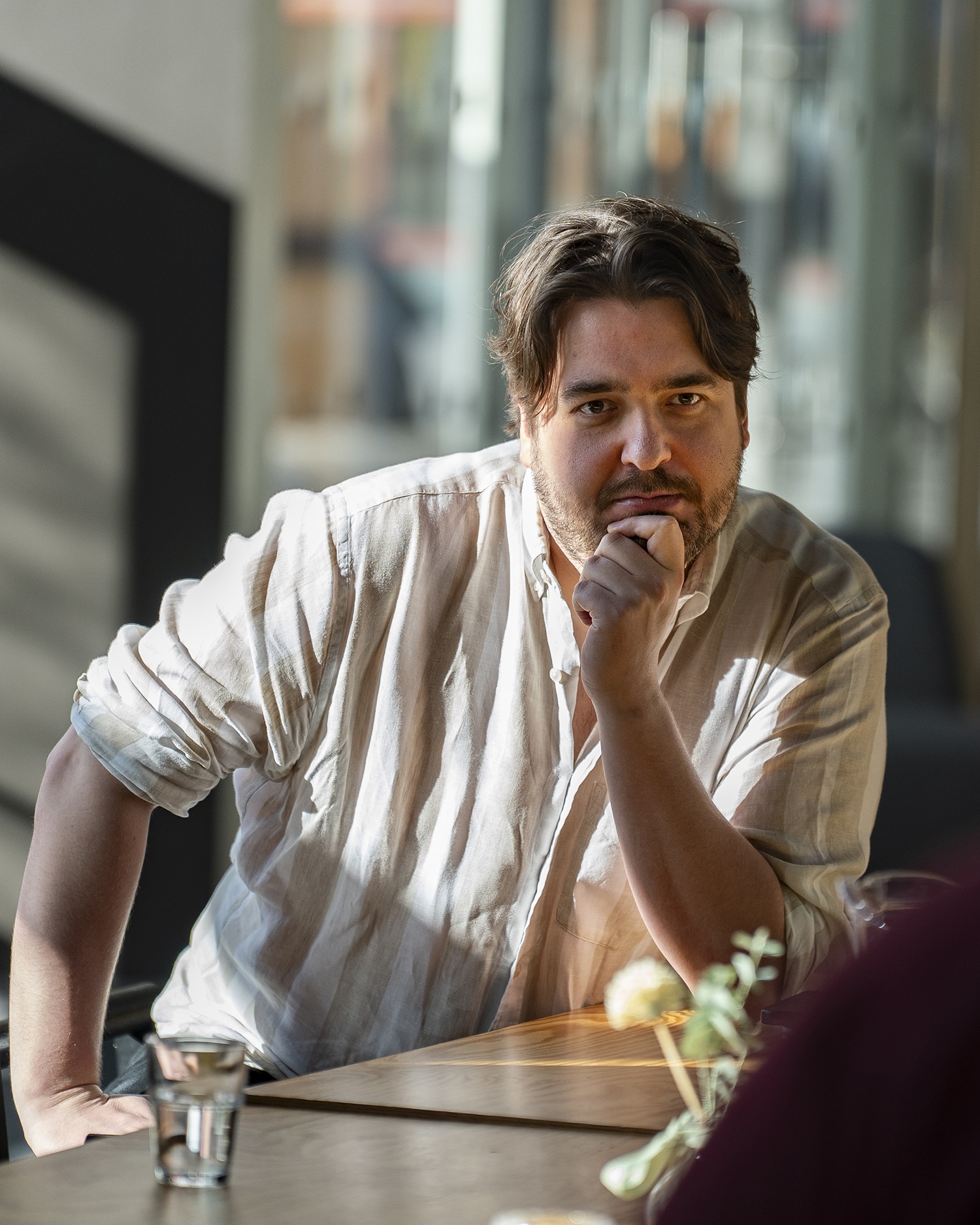
Marcus Jupither is one of Sweden’s most sought-after singers of the past thirty years, with some 70 roles in his repertoire. He was born and raised in Stockholm and became captivated by opera at an early age
Marcus Jupither has appeared on the Norrlandsoperan stage several times before, including in the role of Leporello in *Don Giovanni* in 2020. His previous roles also include the title role in *The Flying Dutchman*, Alberich and Gunther in *The Ring of the Nibelung*, Klingsor in *Parsifal*, Barak in *Die Frau ohne Schatten*, Orest in *Elektra*, Scarpia in *Tosca*, the title role in *Rigoletto*, and Macbeth. Marcus made a highly acclaimed guest appearance in the spring of 2011 when—on very short notice—he stepped in as Alberich in *Siegfried* at L’Opéra Bastille in Paris.
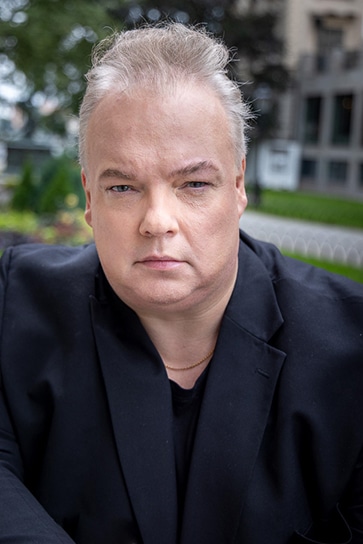
Gustav Johansson is a bass who trained at the Opera Academy in Copenhagen, the Sibelius Academy in Helsinki, the Royal Danish Academy of Music, and Vadstena Folk High School. During the 2025–26 season, he is part of Folkoperan’s Talent Program, where he will sing the roles of Angelotti and the Prison Guard in Giacomo Puccini’s *Tosca* at Folkoperan and Norrlandsoperan.
Gustav has appeared in a number of acclaimed productions throughout Scandinavia, including as a soloist in Mozart’s Requiem, as Talbot in Verdi’s *Giovanna d’Arco* , as the Second Soldier in Strauss’s *Salome* , and as “ ” in Bruckner’s *Te Deum* at the Malmö Opera. He has also performed at the Royal Danish Theater in Copenhagen in the opera *The Nose* and appeared in the Vadstena Academy’s productions of *Andefabriken* by Daniel Nelson, *Breaking the Waves* by Missy Mazzoli, and *Gluntarne*by Gunnar Wennerberg.
Learn more about Gustav Johansson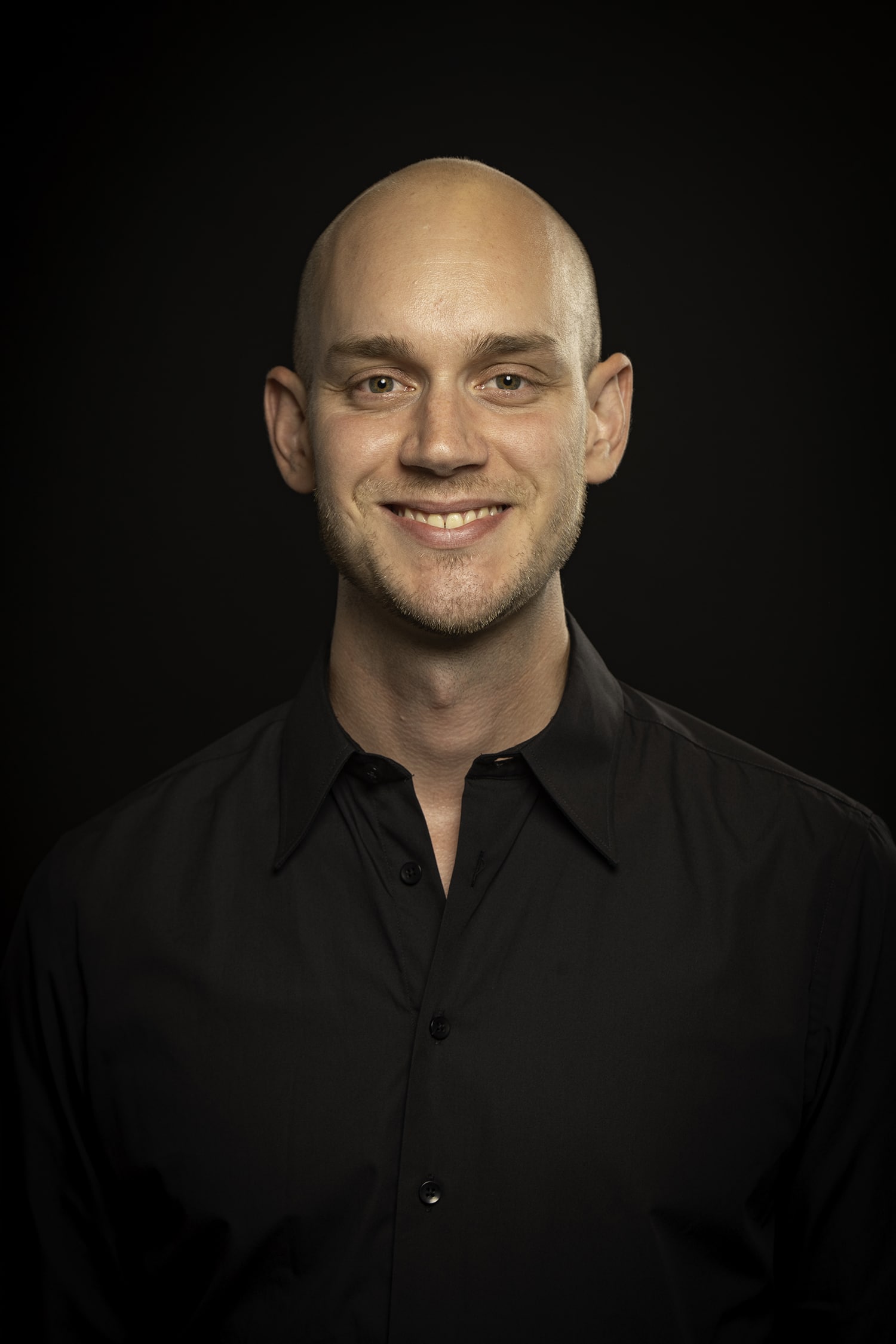
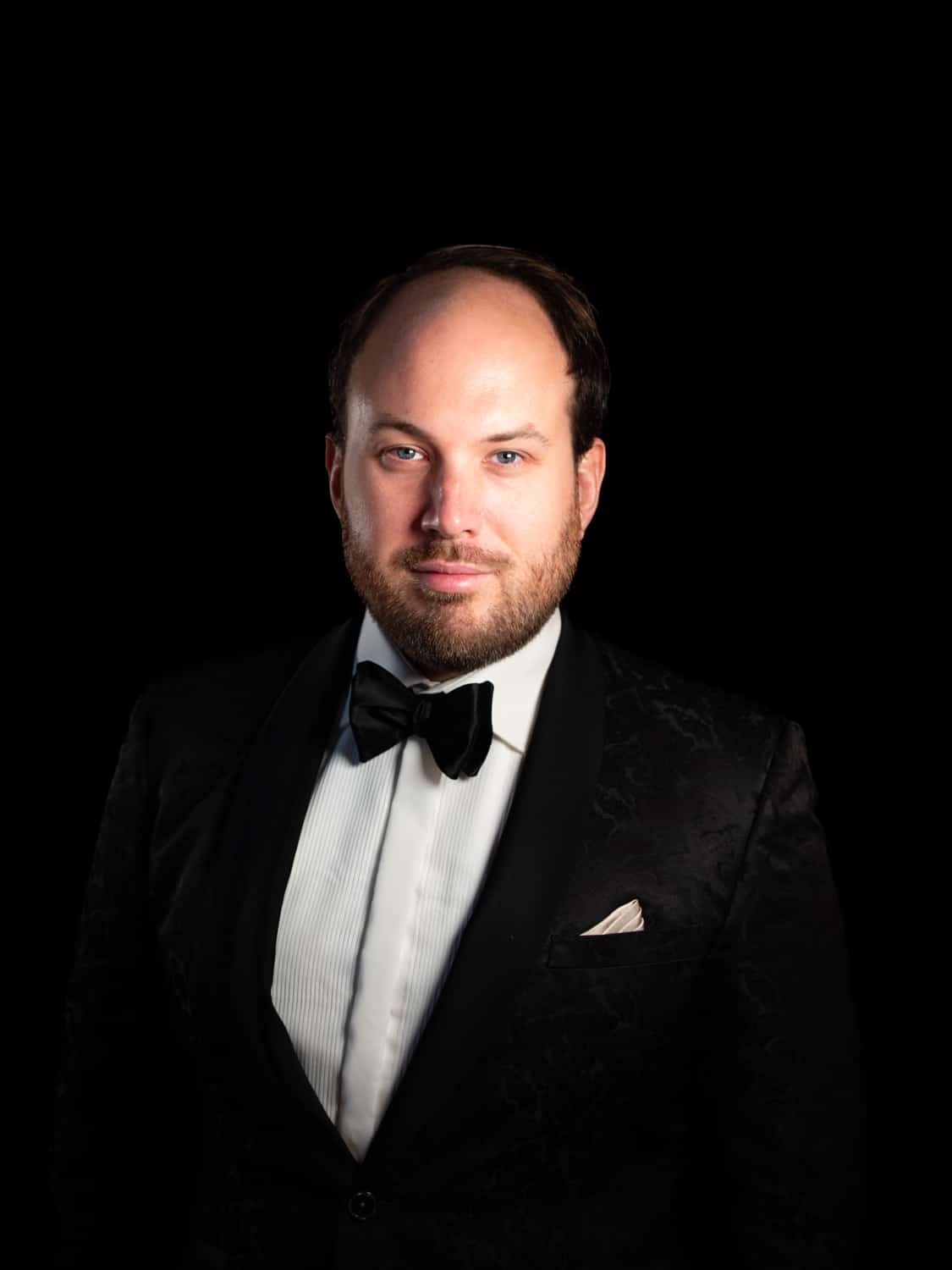
Nicklas Bjärnhall Prytz is a singer from Uppsala who has been praised for his “warm, lyrical tenor.” In addition to his recently completed studies at the Stockholm Opera Academy, he has appeared in several professional productions. In June 2023, he appeared in a concert performance of the national opera *Gustaf Wasa* at the Stockholm Concert Hall, where he played the role of Sten Sture’s shadow. He later played Arturo in *Lucia di Lammermoor* at the Skånska Opera in the summer of 2024. In the spring of 2025, he portrayed the First Guard in *The Magic Flute* at the Folkoperan.
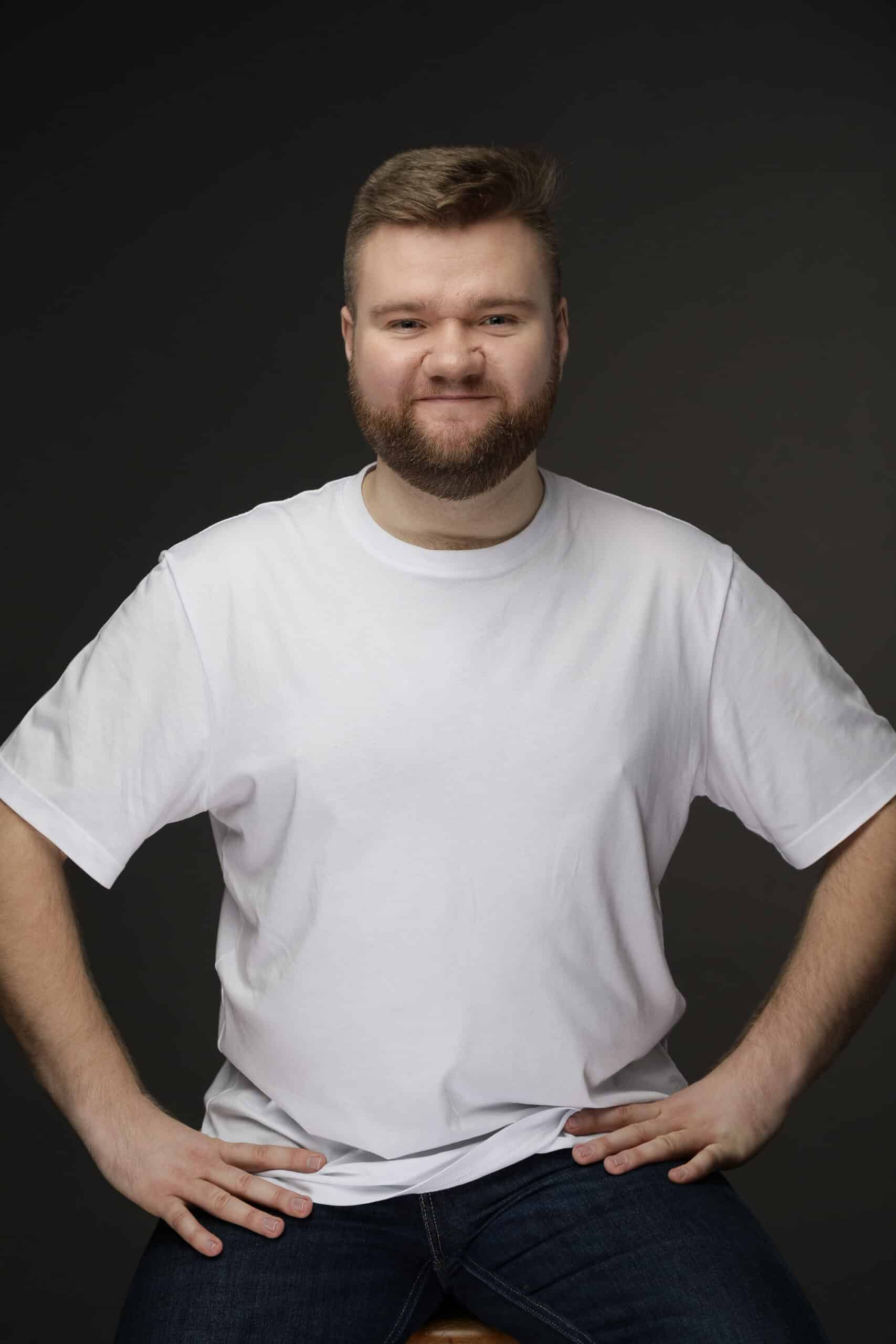
Johan is a lyric baritone from southern Dalarna. He graduated from the Stockholm Opera Academy this past spring, and prior to that studied at the Falun Conservatory of Music. Among other things, he has appeared in Folkoperan’s production of *The Magic Flute* in the spring of 2025, as well as Läckö Castle Opera’s production of *Fantasio* in the summer of 2025. He was named the winner of the Dalasolist competition and has received scholarships such as the Seth Karlsson Scholarship and the Hillevi Martinpelto Scholarship.
Marcus Bartoletti graduated from the Academy of Music and Drama in Gothenburg in 2023. He is a familiar face at the Norrlandsoperan; as early as 2021, he completed an internship there during the production of *The Emperor’s New Clothes*, and since then, Bartoletti has returned to Umeå in the role of Marcello in *La Bohème* and is now back on stage in *Tosca*.
In the summer of 2022, he appeared in Opera på Skärets production of Verdi’s *Un ballo in maschera* in the role of Cristiano/Silvano. Marcus Bartoletti has, among other roles, played Bonzo/Prince Yamadori in *Madama Butterfly* and the Bailiff in *Werther* at Opera på Österbybruk, as well as Mercurio-Littore in *L’incoronazione di Poppea* at Vattnäs Konsertlada. In 2026, we will see Marcus Bartoletti in the newly written opera *Anders & Emma Zorn* at Vattnäs Konsertlada.
Learn more about Marcus Bartoletti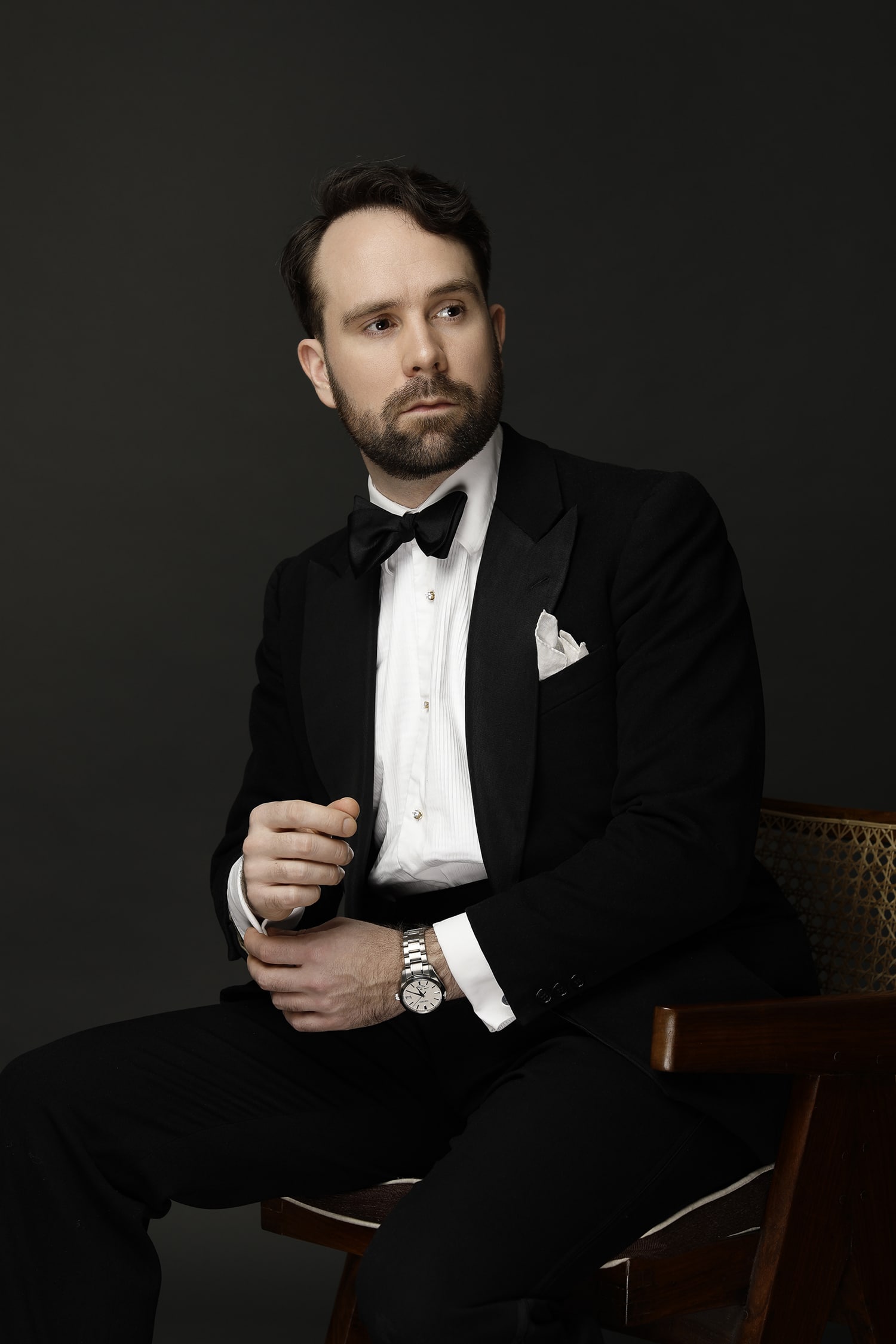
Anna Bergendahl, Helena Karlsson, Josefine Gellwar Madsen, Anna Risberg, Karin Lundholm, Kristina Sturk, Malin Söderlund, Margareta Moritz, Sonja Marklund, Ulrika Sturk-Hedlund, Viola Martinsson, Ella Vahtras
Anders Lundström, Gustaf Bergendahl, Hans Erik Carlborg, Jan Lennartsson, Joakim Widell, Jonas Fahlgren, Anton Karlsson, Nils Langum
Agnes Wallsten, Alice Viberg, Alva Lundström, Aria Charlotte Bartel, Astrid Simm, Eira Kyösti Eriksson, Elisabeth Hillborg, Elliot Widinghoff, Elsa Gunnarsson, Enerie Lejon, Henny Brolin, Ingrid Bergelin, Lena Lynöe, Leo Lindholm, Minou Eriksson, My Björk, Nova Lander, Othilia Isaksson, Ronja Orrebo, Signe Hasslöv, Smilla Nyström, Sofia Rosendal, Stella Gröndahl, Tove Björnehall, Ulisse Kuenen Trotto.
The Norrlands Opera Symphony Orchestra
First Concertmaster
Anders Hjortvall
1st Alternate Concertmaster
Miguel Chamorro
Violin I
Anders Hjortvall, Kanerva Mannermaa, Miguel Chamorro, Isaac Bachs Viñuela, Matias Malmqvist, Kitiara Braune, Per-Erik Andersson, Andreas Olsson
Violin II
Pontus Björk, Clara Bjerhag, Amandus Lind, EvaBritt Molander, Mikhail Zatin, Felicia Möller, Kersti Wilhelmsson
Viola
Jakob Ruthberg, Ester Forsberg, Pablo Muñoz Salido, Anfisa Troitskaia, Åsa Hjelm
Cello
Josef Alin, Bekhbat Tsagaanchuluun, Kristina Tereschatov, Kerstin Isaksson, Karin Bjurman
Double bass
Jan-Emil Kuisma, Charlotte Petersson, Josefin Landmér
Flute
Ebba Wallén, Björg Brjansdottir
Oboe
Emmanuel Rolland-Bezem, Sara Zuchelli
Clarinet
Tania Villasuso Couceiro, Jonas Losciale, Jonas Olsson Hakelind
Bassoon
Peter Bolton, Maria Kindell
Horn
Orvar Johansson, Yerang Ko, Edna Fernandes, Anders Kjellberg
Trumpet
Malin Silbo-Ohlsson, Andreas Carlsson Walleng
Trombone
Peter Nygren, Lina Nyström, Mathias Petersson
Tuba
Linus Mattsson
Pukor
Ian Piniés
Percussion
Maximiliano Polo
Harpa
Tanne Harder
Celesta & organ
Jonas Olsson
Learn more about the Norrlandsoperan Symphony Orchestra here: norrlandsoperan.se/norrlandsoperans-symfoniorkester
Production Team
Assistant Director: Caroline Gentele
Rehearsal Coach I: Jonas Olsson
Chorus Master: Anders Lundström
Producer: Robert Dahl Norsten
Production Assistant: Susanna Levonen
Prompter: Ludvig Nitzler
Associate Producer: Britta Amft
Children’s Chorus Master: Charlotte Kuisma
Stage Manager: Tarja Ylinen
Production Manager: Britta Amft
Artistic Director, Opera: Dan Turdén
Conductor: Anna Sjödin
Assistant Conductor: Pär Freij
Orchestra Producer: Gene Kindell
Stage Manager: Stefan Sjödin Sandgren
Production Manager, Stage/Sound: Stefan Sjödin Sandgren
Lighting Designers: Rebecca Wilhelmsson, Jessika Flodell, Paul Damade
Production Manager, Lighting/Video: Rebecca Wilhelmsson
Stage Technicians: Sebastian Larsson, Samuel Björö
Prop Maker/Props Manager: Catharina Carlsson, Linnea Öhrlund
Set Designer: Maja Johansson
Production Manager, Costumes: Maria Öhgren-Hedberg
Sound Technician: Anders Nyberg
Production Props Manager: Linnea Öhrlund
Technical Director: Håkan Brohlin
Orchestra Technician: Jerry Ericsson
Production Manager, Props: Linnea Öhrlund, Catharina Carlsson
Production Manager, Workshop: Peter Lundmark
Production Manager, Painting/Wallpapering: Maja Johansson
Head of Makeup/Wigs: Amelia Cazorla Lozano
Costume Technicians: Kitty Grenholm, Anna Eliasson, Fanny Sallinen
Head of Costume Technology: Anna Eliasson
Head Carpenter: Fredrik Larsson
Costume Supervisors: Maria Öhgren-Hedberg, Susanne Lidgren, Sandra Wahlström, Mysan Adaméc, Emma Thor Domeij
Makeup Artist: Amelia Cazorla Lozano
TOSCA
Opera by Giacomo Puccini
Based on the play *La Tosca* by Victorien Sardou.
Libretto by Luigi Illica and Giuseppe Giacosa, translated into Swedish by Tuvalisa Rangström
Program
Photos: Elin Berge and the Norrlandsoperan Communications and Marketing Department
Texts by the Norrlandsoperan Communications and Marketing Department
A co-production between Norrlandsoperan and Folkoperan
Pursuant to
Norrlandsoperan is 60% owned by Region Västerbotten and 40% by the City of Umeå. We receive grants from the Swedish Arts Council.
Many thanks to all our donors and partners.