Between visual art and music
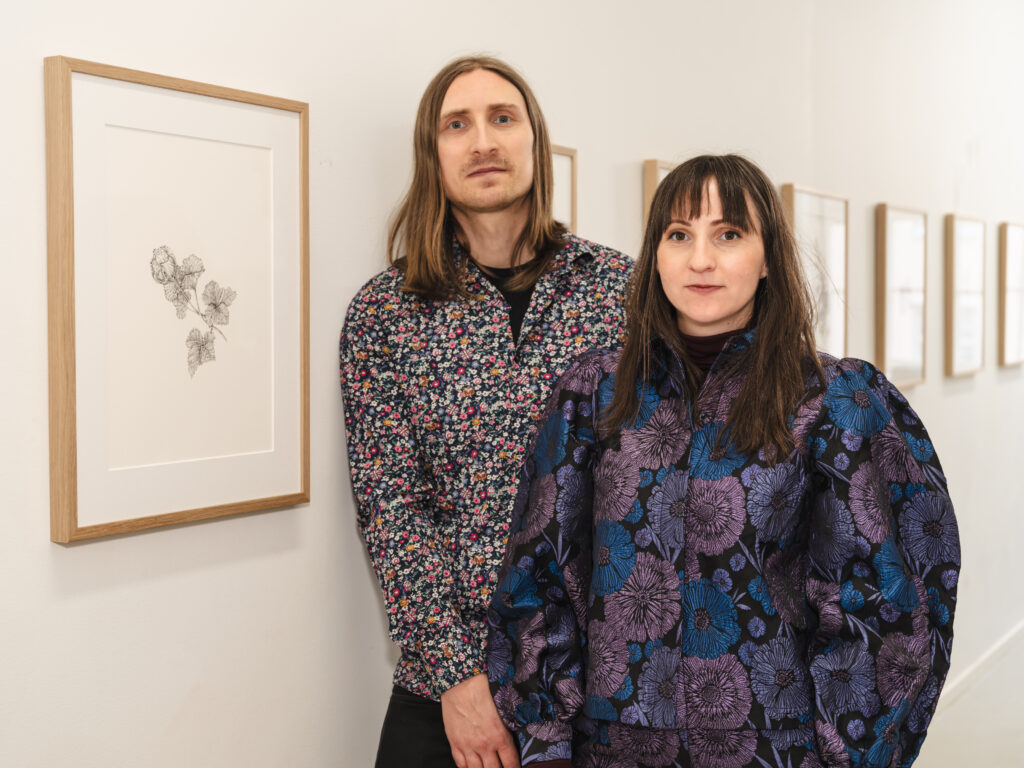
The plant itself is a center, located at the intersection of the physical elements: the earth and the sky, the closed and the open, darkness and light, the humidity of the earth and the dryness of the fresh air. Although the plant is a sessile creature, it constantly explores its surroundings and consists of various internal and external networks that intertwine it with its environment. The philosopher Michael Marder calls plants “virtuosos of the in-between space”, and their intelligence thrives in the gap between biological kingdoms and the elements. Lerin/Hystad consists of Simon Torssell Lerin and Bettina Hvidevold Hystad. Since 2010, they have worked together in a borderland between visual art and experimental music.
The duo’s practice rests on the principle of ecological interconnection and assumes that there are more worlds than those of humans. Lerin connects sensors to the plants that Hystad so carefully draws in the wild. These sensors then sense all the electrical impulses caused by the plants’ own biological rhythm and form communication networks together with animals, bacteria and fungi. Through sonification, the electrical impulses are converted into sound, where the plants themselves decide, tones, melodies and rhythms in the music. In the spring of 2025, Lerin/Hystad published the book Electronic flora through the publisher Art&Theory Publishing. Through drawing, text and music, it collects the duo’s encounters with a hundred different plants. The book also contains ten unique essays from artists, philosophers, art historians and biologists who, with different perspectives, contribute new approaches to the duo’s artwork and plant beings.
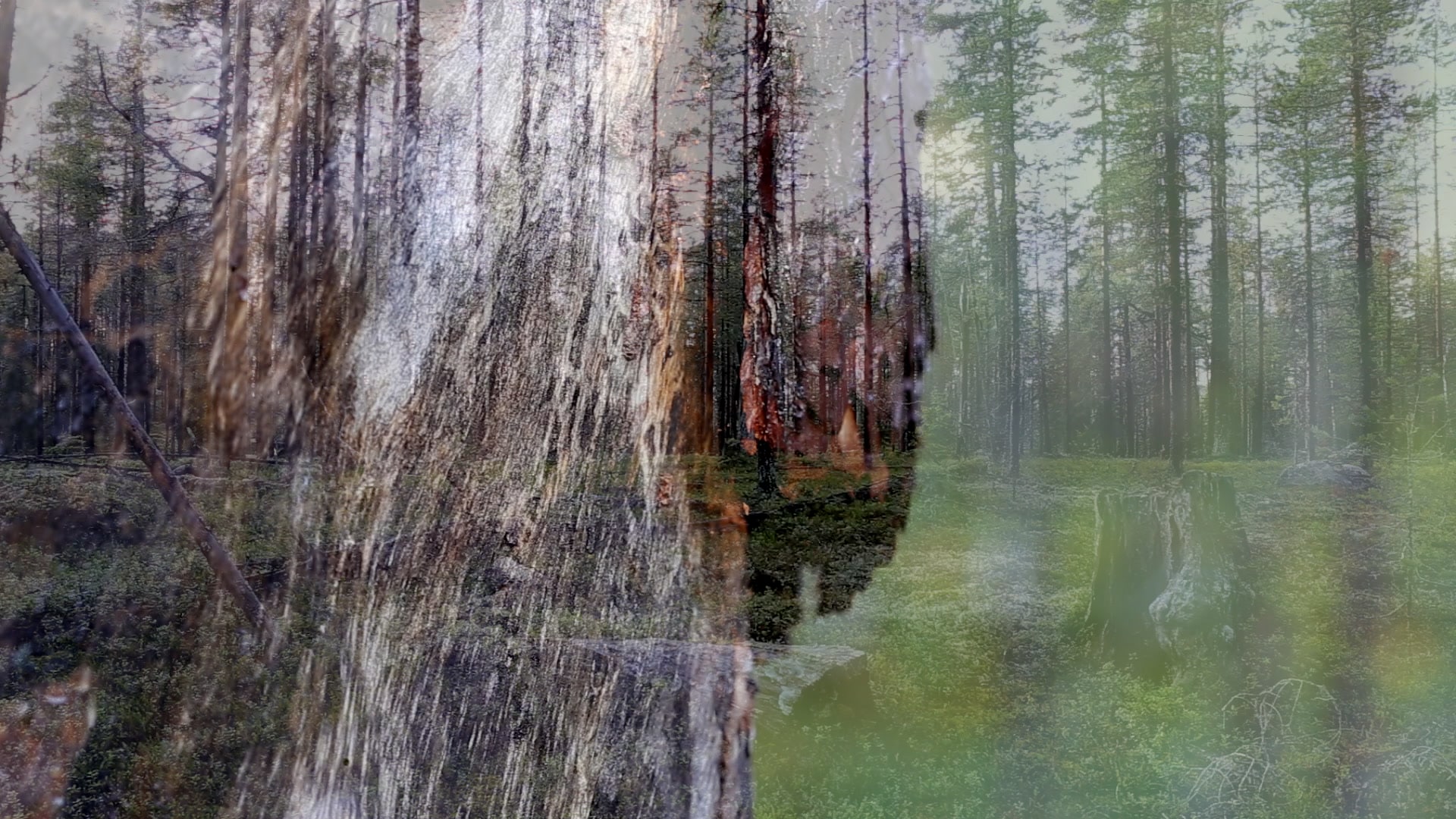
A few miles northeast of Jokkmokk over the forest mountain Guohtsakoajvve, past Sörkullen and Norrkullen in the forest by Lake Dijlak lies the Tilak nature reserve. Here, the forest meets the marsh and conifers mix with deciduous trees such as aspen and willow. Between the tree trunks, in the damp moss, the crowberries have ripened. And behind the deep blue berries, the moisture makes the cod lichen shine bright green. On the stones, the lichens draw gnarled maps. On the heath, pine grows, the oldest of which is believed to be over six hundred years old. The old trees testify to the fact that several fires have taken place in the forest. Dry trees, silver pines, fire sounds and charred stumps. Time has scarred the powerful trunks, one pine bears traces of having survived at least four fires. We meet rare, red-listed species. Ring lichen, branch lichen, and tender cartilaginous lichen. Biologist Lynn Margulis describes lichens as a striking example of how innovation arises from partnerships. Lichens are wondrous creatures that have puzzled scientists since the 1800s and that still make us question where one organism ends and another begins. The English biologist Merlin Sheldrake describes lichens as cosmopolitan entities, places where life meets.
In the exhibition at the White Cube, the duo shows a series of pencil drawings and a video where recordings of electrical impulses from Tilak’s pines and lichens are transformed into music. At the opening, the duo will also play an impromptu concert with plants, sensors, synths and guitar. As well as present their new book Electronic flora.
English
English version will be added shortly.
About Lerin/Hystad
Lerin/Hystad are both educated at Konstfack and the Royal Institute of Art in Stockholm, as well as at the Bergen Academy of Fine Arts in Norway. In the spring of 2024, they were studio grant recipients at IASPIS Konstnärsnämnden in Stockholm. The duo’s work has recently been shown at Färgfabriken (Stockholm, 2025), Österängens Konsthall (Jönköping, 2025), Atletika Gallery (Vilnius, 2024), Konsthall C (Stockholm, 2024), and at Härke Konstcentrum (Östersund, 2023). The duo is represented at Värmlands Museum, Kristinehamns Konstmuseum, Nord-Trøndelag Kunstmuseum, and Region Värmland, among others. Lerin/Hystad are also active musicians and have toured in Europe, China and Japan.
More information