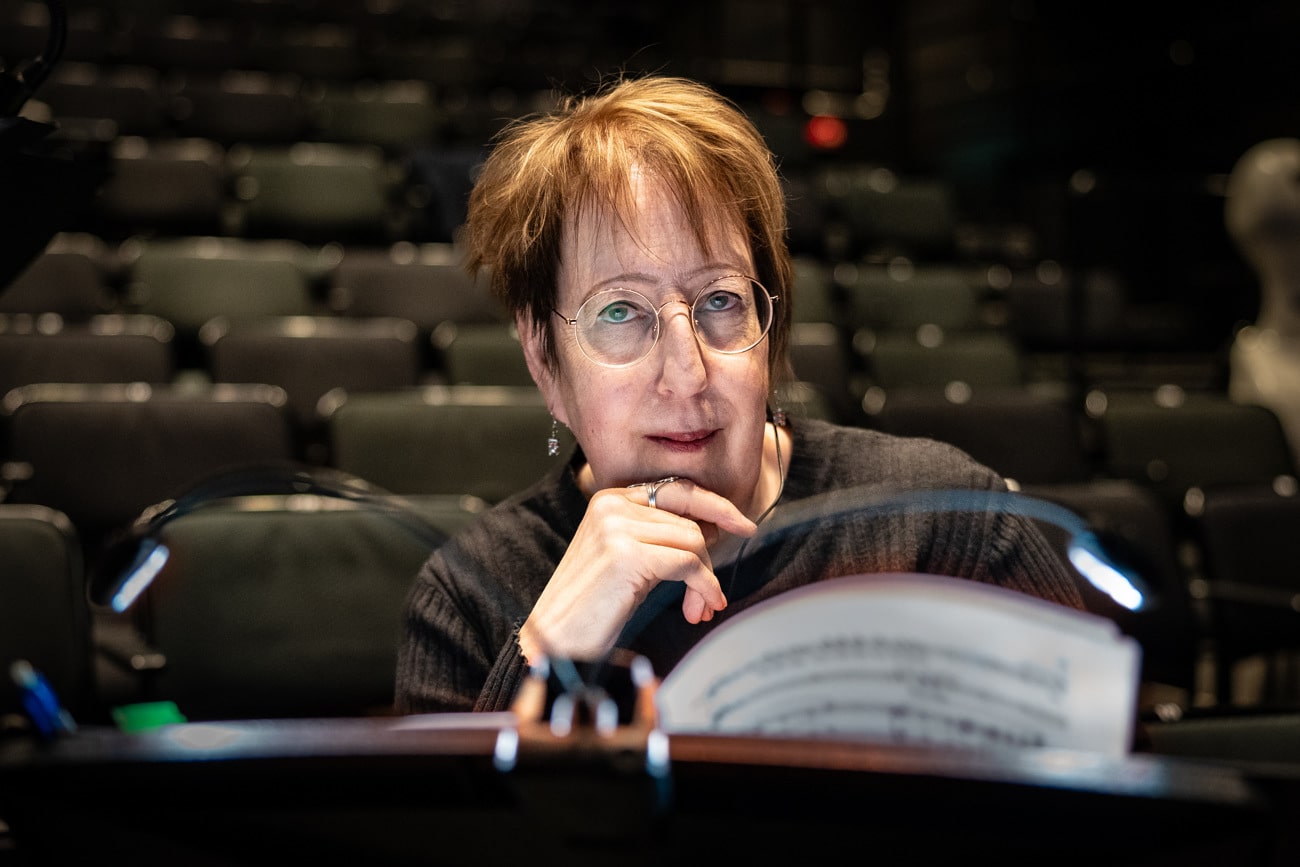
When did you start working at the Norrlands Opera?
– My journey at the Norrlands Opera began, of all things, because of unemployment in the ’90s. I started out as an archaeologist, but during an economic downturn, I ended up in job training programs. I had some connections here at the Norrlands Opera through my interest in theater, so I wrote to them saying, “You can have me for free for half a year—I’ll do anything.” I started out selling programs and interacting with the audience, and then I snuck into rehearsals. The following year, I was asked to fill in for the stage manager at the time. I said, “What? Are you out of your minds?!” because he was like a demigod to me. But they believed in me, so I walked alongside him during a performance, and then I started filling in for productions. In 1999, I worked on my first production as stage manager, and when we inaugurated the main stage in 2001, I became a full-time employee.
What attracted you to opera?
– My interest in opera developed gradually. I was a member of the amateur theater group Grotteatern, which was very large at the time. In 1992, we collaborated with the Norrlands Opera on a massive amateur production, *Fiddler on the Roof*. Then Norrlandsoperan staged a massive production of *Carmen* on its own, and those of us who had been part of the earlier project got the chance to join the chorus—without having to audition. Of course I jumped at the chance! It was so much fun, and that’s when I began to understand opera. For me, it took works like these—classic masterpieces—to really get a feel for the art form.
So my understanding of this art form has come gradually, and I still find myself questioning certain aspects of opera. Sometimes I feel that, while the singing is beautiful and goes on for a very long time, it doesn’t really advance the story at that moment. Sometimes I think the dramaturgy could be improved. Over time, we’ve become a bit bolder in editing operas. A good example of this was our production of *Macbeth*, which was shortened—partly due to the pandemic—by cutting out chorus scenes and the like. I thought it was absolutely fantastic!
What does an opera stage manager do?
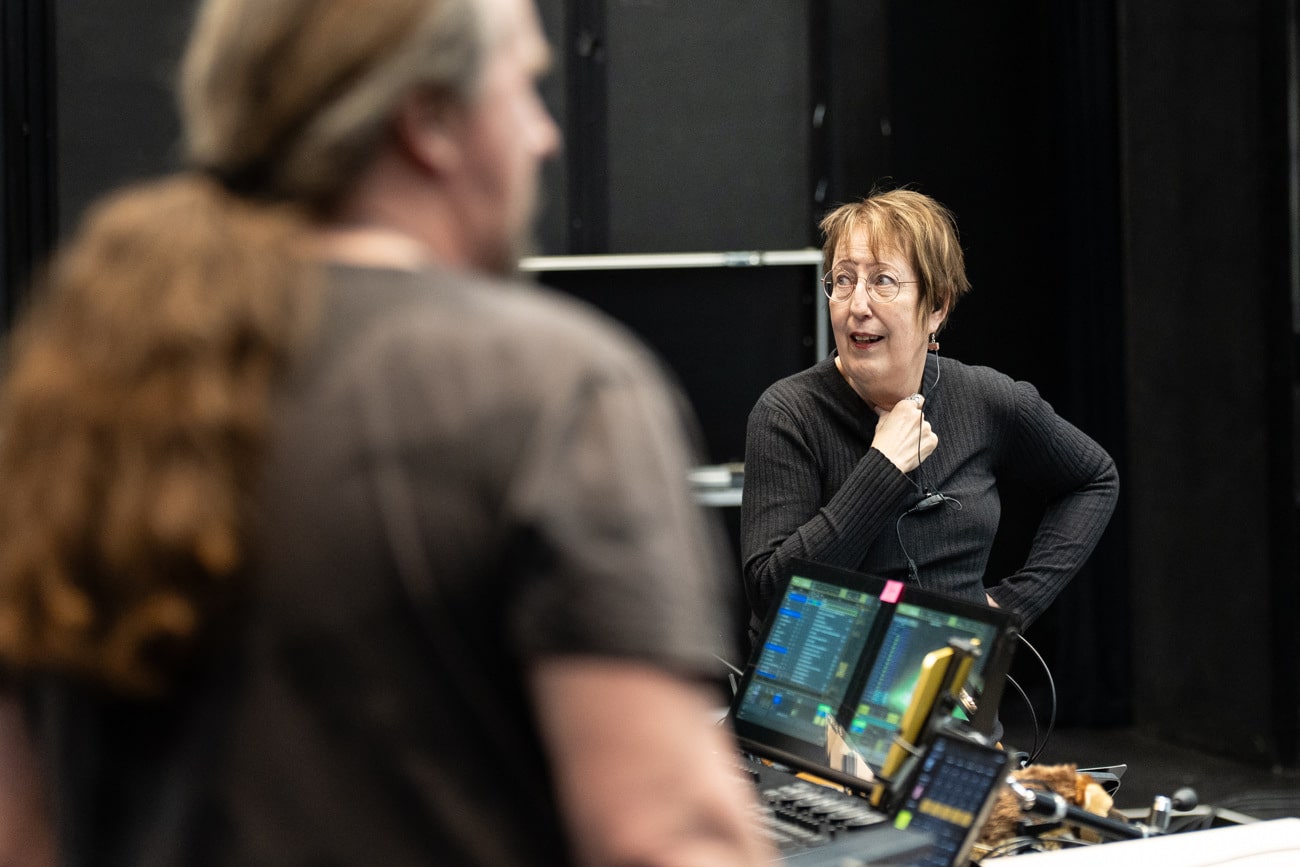
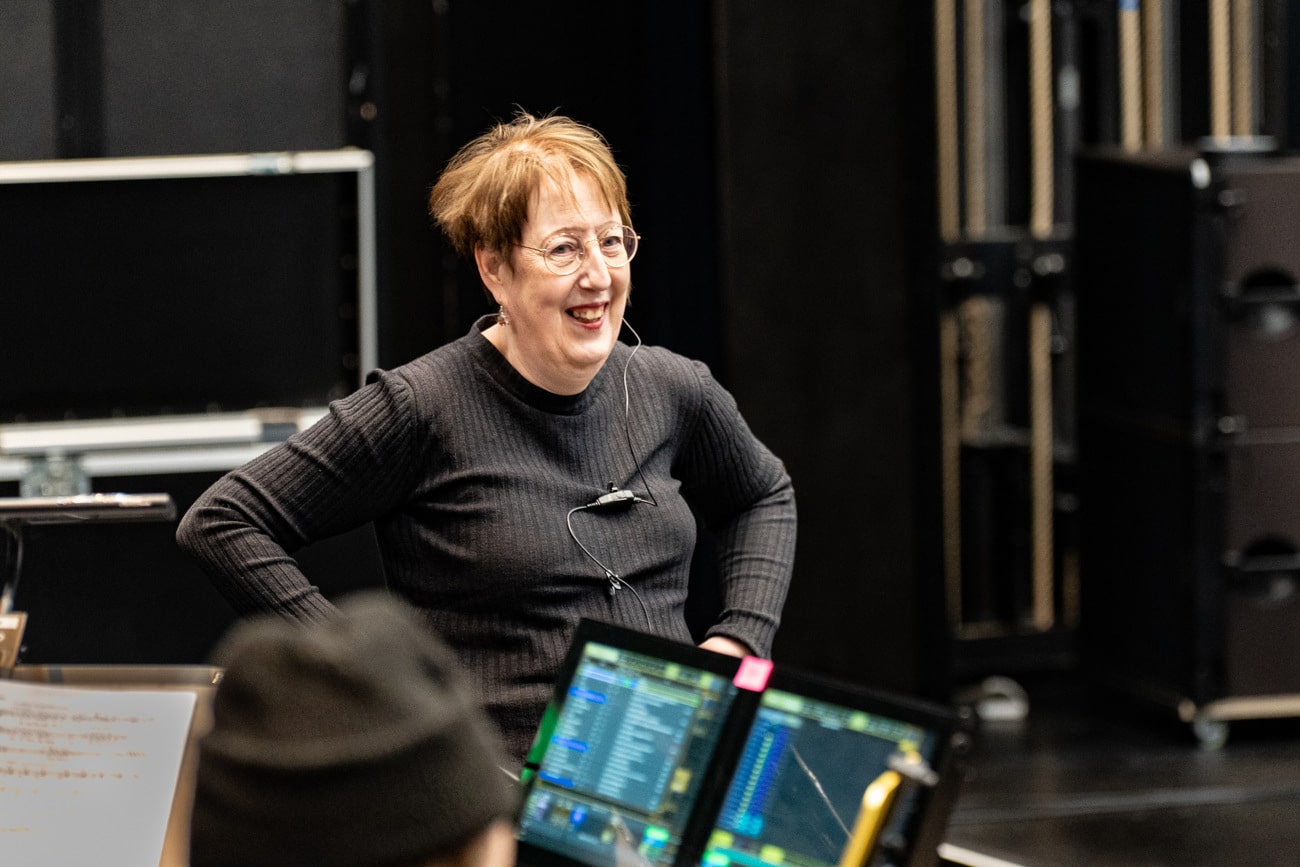
– The short version is that during rehearsals, I’m the class monitor, and during performances, I’m the stage manager. I’m like a link between the artistic and the technical sides. Everyone working on the shows knows what they’re supposed to do, and I know when it needs to be done, because I’m the one with the cue cards and I’m in charge of overseeing everything. The word “stage manager” has the same roots as “inspect”—it means keeping track of things.
During the performance, I’m in contact with everyone in “black,” as they say—that is, lighting, sound, props, makeup, and costume technicians. Everyone wears a radio so we can communicate. For example, I’ll say over the radio: “Stand by. Scene change. Go!” or that there are three minutes left until a quick costume change. Some larger theaters have different signaling systems with lights and such, but we traditionally use radios here.
What qualities does a good opera stage manager have?
– Able to handle stress, or at least not let it show! A sense of order—being able to stay steady when things are blowing in different directions. These are qualities I didn’t naturally possess, but which I’ve had to work on. I’ve been doing this for so long now that I’m actually pretty good at it! But I’ve certainly taken my share of hits along the way.
Then, being able to think ahead when the artistic team has ideas. For example, asking if they’ve thought through whether they’ll have time for certain things based on the length of the music. I’m pretty unafraid to ask those kinds of questions if I do a run-through beforehand. Then I form a team with the entire production crew. I create what’s called a “run-through list,” which is really a living document that lists, in sequential order, the events that take place during a performance—as I see them from an outsider’s perspective. So I write down what happens in chronological order, then people get to work fitting their own timing into it, and I can help determine how much time should elapse between one event and the next.
What is a typical workday like on performance days?
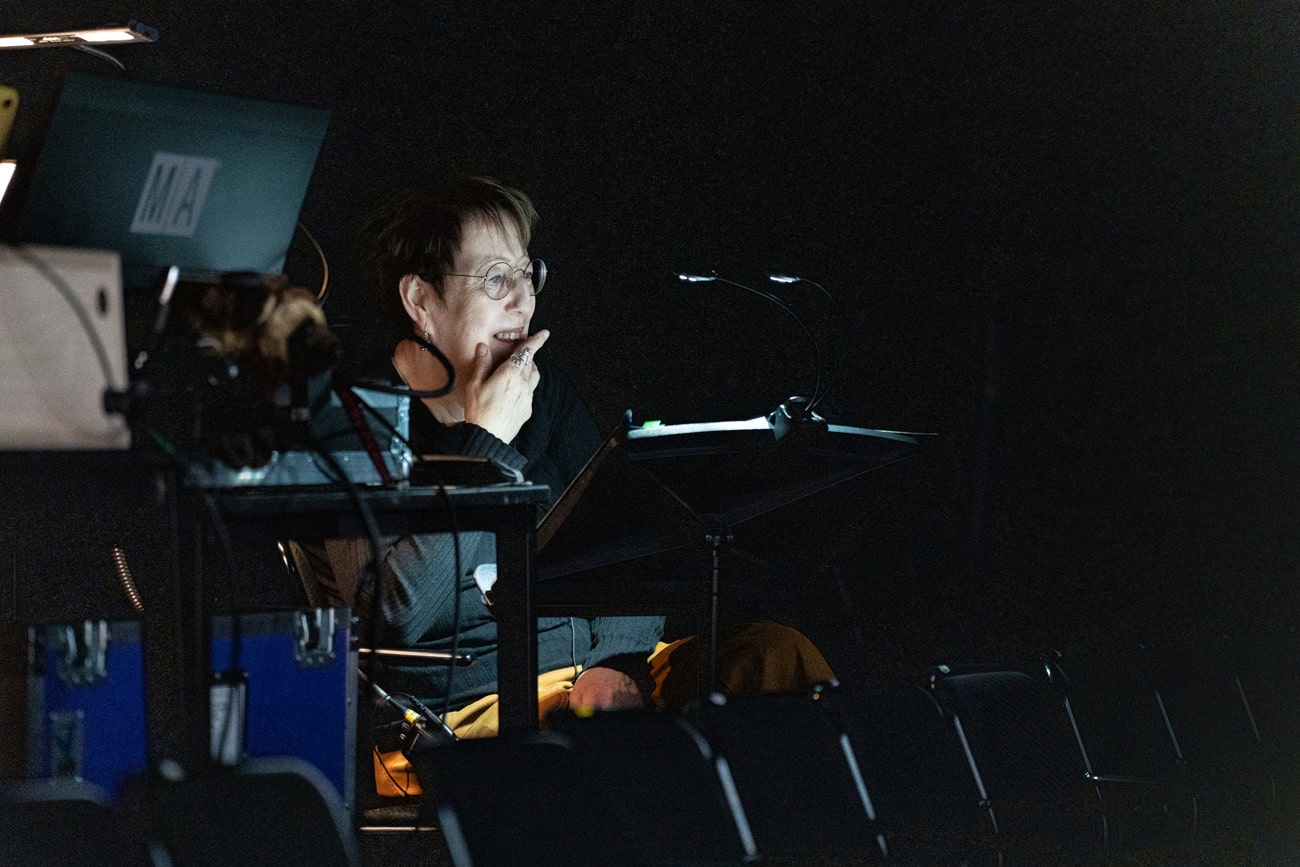
– Yes, it starts early in the day when we need to do a functional check on everything. In the morning, I go to my booth, which is right next to the stage, and make sure the monitors, sound, and everything else are working. Then we have a briefing with everyone involved in the production, where we briefly go over what happened last time, if there’s anything we can fix, if there are any special circumstances for tonight, and where everyone gets a chance to speak up. It’s to keep our routines on point. It’s so easy after the premiere to start resting on your laurels, but you really have to stay vigilant and be a bit self-critical. A lot of it is about identifying systemic issues. Is there any equipment that tends not to work, or mistakes that happen because someone is overworked, for example? I write a report after every performance for that reason.
What’s the best part of the job?
I guess it’s that feeling you get when you’ve worked hard—which is exactly what we’ve done with our latest production, *The Mistresses*. The premiere is a little nerve-wracking, of course, but there’s still that feeling of, “I’ve got this!” My heart’s racing a bit, but I know what I’m doing—it’s simply a matter of being in control. Because a production isn’t really finished until the premiere—there are always minor adjustments. There’s a sense of pride in that. It’s not us who are up there accepting the flowers, but we still feel a sense of pride in our work—that we’re making this all come together.
There’s been some talk around here that you have a special connection to *La Bohème* in particular?
Yes, it’s one of my favorite operas! It’s accessible and has incredibly beautiful music! As a composer, I think Puccini is very good at conveying emotions through his music without it becoming maudlin. I can get really moved by his music, and I also think he handles the stories effectively. So far, I haven’t seen a single Puccini opera where I’ve felt there was any dead time—where someone is just standing there singing for the sake of singing. There’s always a purpose to it. La Bohème is, after all, a fairly simple story about love among young people and their somewhat aimless lives. I feel like you really connect with them. I understand those feelings—I can relate and think, “Yes, that’s exactly how it is!” It’s very human. And this is the third time during my tenure that *La Bohème* has been on the program—so I know it well!
What makes *La Bohème* so special?
– It starts with the music just kicking off, and then there’s a rapid exchange of lines between Rodolphe. Now we’re diving right into their world! And it doesn’t slow down much, except when Mimì and Rodolphe fall in love—the music just keeps flowing, and then things start happening! I think it’s absolutely fantastic; with the background I had before I started working with opera, it’s like stepping right into a movie, all of a sudden! You get swept up in it, even though that whole group of guys teases each other a lot, jokes around, and messes with each other—but you buy into it because that’s just who they are. It’s mostly about how we’re going to pay the rent—or get out of paying it. How do we get food and heat? Pretty irresponsible.
What’s your favorite part of the opera?
– I’ve been rehearsing it again, and every time I get to the final scenes, it really tugs at my heartstrings! There’s a piece of music there that isn’t really emotional but rather fateful—when Mimì knows she’s going to die even though she doesn’t talk about it, and you know this is all going to go to hell. It’s really tough every single time. The whole group of friends scrambles to raise money for medicine and a doctor, and then they leave her alone for a while. Then she just fades away, and Rodolphe doesn’t even notice she’s died. Suddenly, he hears spoken lines that aren’t in the opera at all: “Why are you all so quiet? What are you doing?” Then he realizes what’s happening, and he lets out that tenor scream: “Mimì!” It’s powerful how the opera form is suddenly abandoned in that moment.
How is *La Bohème* as a chamber opera?
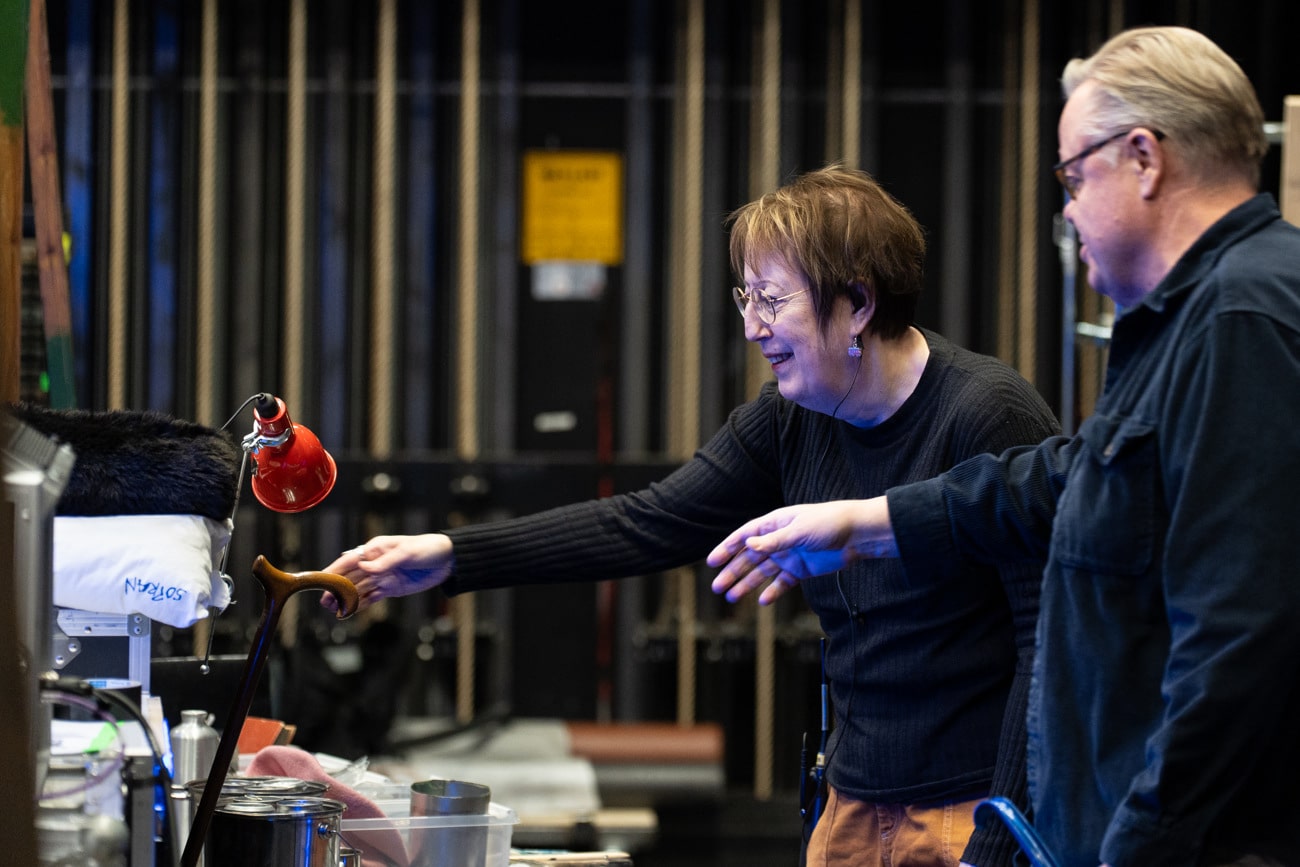
– I think this version, as originally staged by Malmö Opera, works really well! They capture the essence of it! There are only a few musicians, and what’s been cut out are parts of the large choral scenes. The way the singers are directed still gives you the feeling that they’re in the bustling streets of Paris, sitting in that restaurant. Large choruses are sometimes just there to fill space, so there are many operas that can be adapted to a chamber format. I think it’s great to actually do that, because then you can perform on fairly small stages, and it doesn’t make for a worse experience at all! This production was designed from the start to be in this format.
Experience Tarja’s favorite opera La Bohème as it tours Norrland in April–May 2025.
Read more and book tickets for La Bohème here: norrlandsoperan.se/forestallningar/la-boheme-pa-turne/