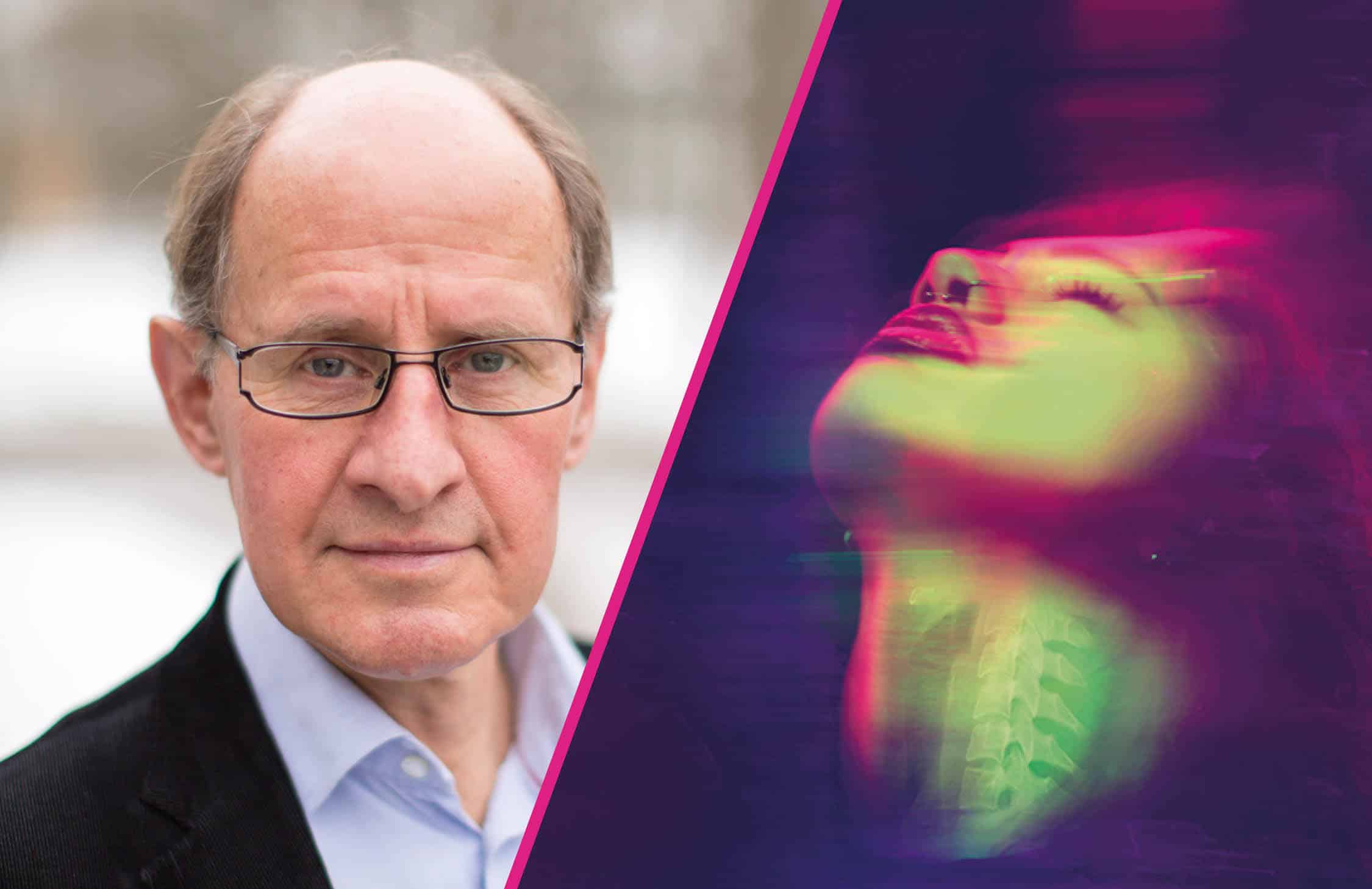
It’s summer, and Mats G. Hansson spends most of his time at his summer home in the Stockholm archipelago. It’ s the same place where, a few years ago, he fell off the roof and broke a rib. At the hospital, he was prescribed OxyContin for the pain.
OxyContin is the addictive drug that was aggressively marketed in the United States in the 1990s. General practitioners prescribed it for back pain and other common ailments. When patients could no longer obtain it, many of them turned to heroin and fentanyl. Between 1999 and 2019, more than 500,000 Americans lost their lives to opioid overdoses.
Did Mats take his pills?
“Of course, it’s a very effective drug. It’s not the drug itself that’s the problem,” he says.
No matter what medications or treatment methods we’re talking about, we have to weigh the pros and cons against each other, he says. There are no medications without side effects. But the hope for a simple solution can blind us—as in *The Galloping Cure*, when the townspeople encourage one another to try the intoxicating carousel horses.
“There are no medications without side effects”
Mats, who has served as director of the Center for Research and Bioethics (CRB) at Uppsala University, is well acquainted with many of the challenges we face in healthcare. With his interdisciplinary research team, he has, among other things, examined ethical dilemmas surrounding new genetic tests from every angle. For example, should we inform new parents about the diseases their children may face later in life?
While writing the opera *The Galloping Cure*, he and Susanne Lundin, professor emerita of ethnology at Lund University, had the pleasure of discussing similar issues with composer Missy Mazzoli and librettist Royce Vavrek.
The group was brought together by the Riksbank’s Jubilee Fund and Dan Turdén, artistic director of the Norrlands Opera. Together, they discussed word choices and their broader significance in the reality that the researchers had encountered in their studies.
Mats G. Hansson believes the opera’s theme of “trendy medicine” in the form of horses is well-chosen, as the same phenomenon keeps recurring. Most recently, this has been seen with Ozempic, which has become a popular weight-loss drug in the Western world. He cannot comment on what consequences this might have, but he has taken note of the intense marketing.
– When it comes to weight and health, there are lifestyle factors to consider. Perhaps we should change our lifestyle rather than start taking medication?
“Maybe we should change our lifestyle instead of starting to take medication?”
Last fall, the two professors traveled to Glasgow to participate in a workshop with director Tom Morris and the soloists. The group had a good laugh when Mats pointed out that there’s a certain difference between “shit doctor” and “shitty doctor.” The former sounds like a harsher judgment, while the latter is more of a general complaint.
Teresa Hart, the opera’s doctor—is she a “shitty doctor”?
Well, Mats G. Hansson prefers to avoid jumping to conclusions.
– The question of blame is often complex. When it comes to the opioid crisis in the U.S., it’s very easy to paint the pharmaceutical companies as the villains. But the Public Health Agency did play a part, after all, when it declared that lower back pain is a public health problem that can be treated with medication. And we must remember that a situation like this is only possible when we go along with it ourselves.
Text: Hanna Kangassalo
“The Galloping Cure” will be performed in Umeå from September 12 to 23.
Learn more about The Galloping Cure hereSusanne Lundin and Mats G. Hansson will give lectures on the research that influenced *The Galloping Cure* on two occasions during the opening week. Read more here.
Read more about the Performance Lecture hereThis collaboration with Susanne Lundin and Mats G. Hansson was made possible by the Riksbank Jubilee Fund—RJ Art and Culture, which also funded the Norrlandsoperan’s contribution to the co-production.