– I close my eyes and remind myself how lucky I am to be able to do this.
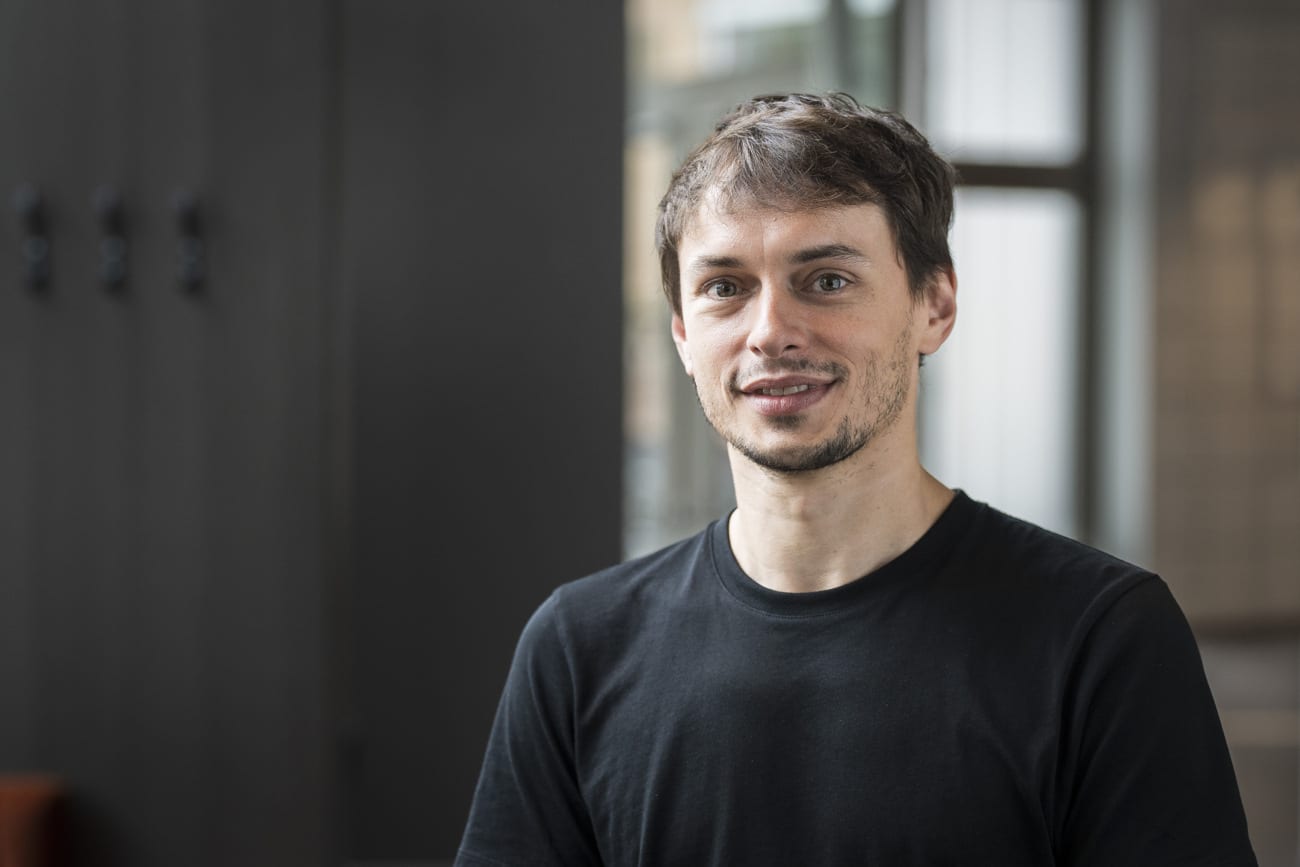
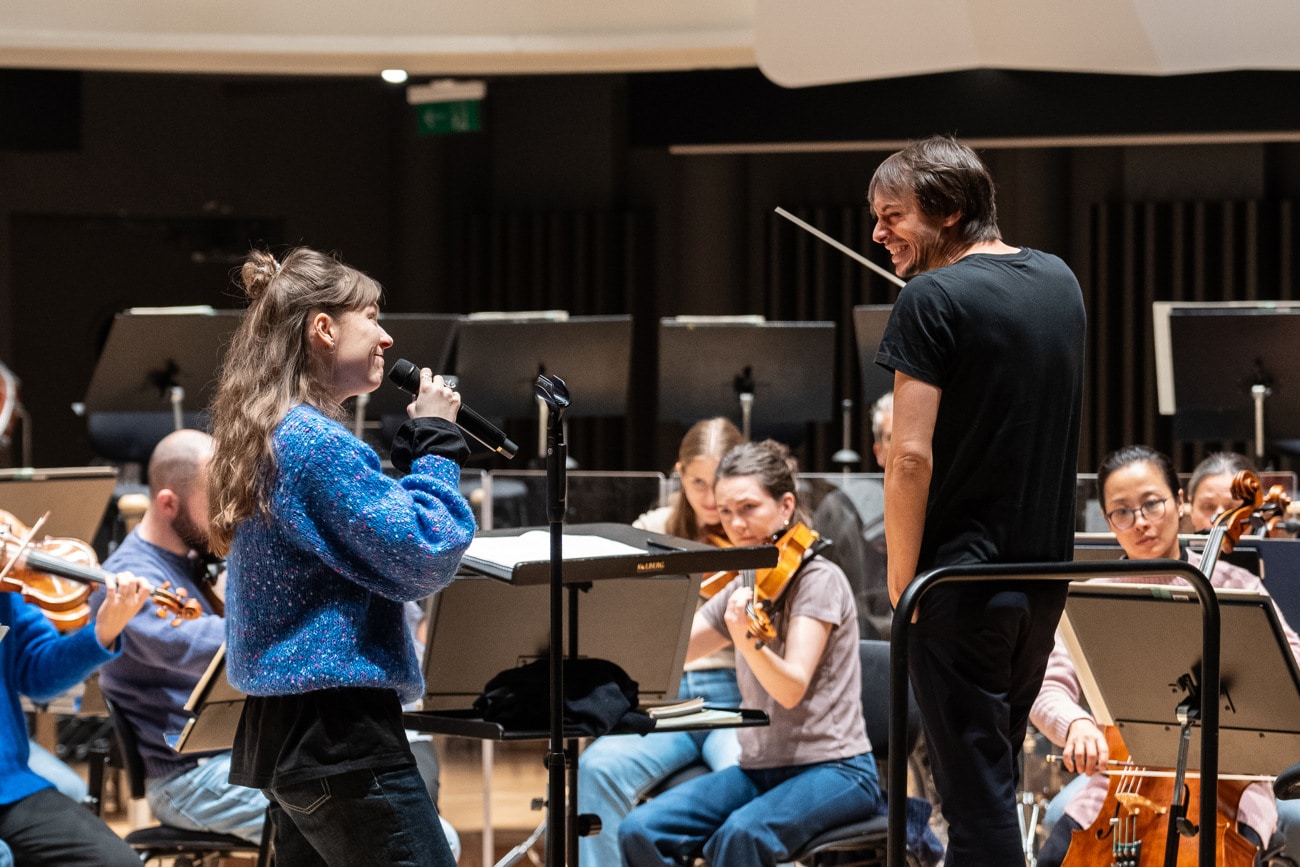
Right now, he’s sitting in the Norrlandsoperan lobby with a neat carry-on bag next to him. Outside, two tour buses are parked—large enough to carry an entire symphony orchestra to Luleå’s cultural center and beyond. Singer and songwriter Katarina Barruk is strolling around the snow-covered Operaplan and taking a selfie while waiting for departure. The review, later published in *Norrbottens-Kuriren*, states that the concert featured “notes as high as mountain peaks and as powerful as mountain ranges.”
Absorbed by the music
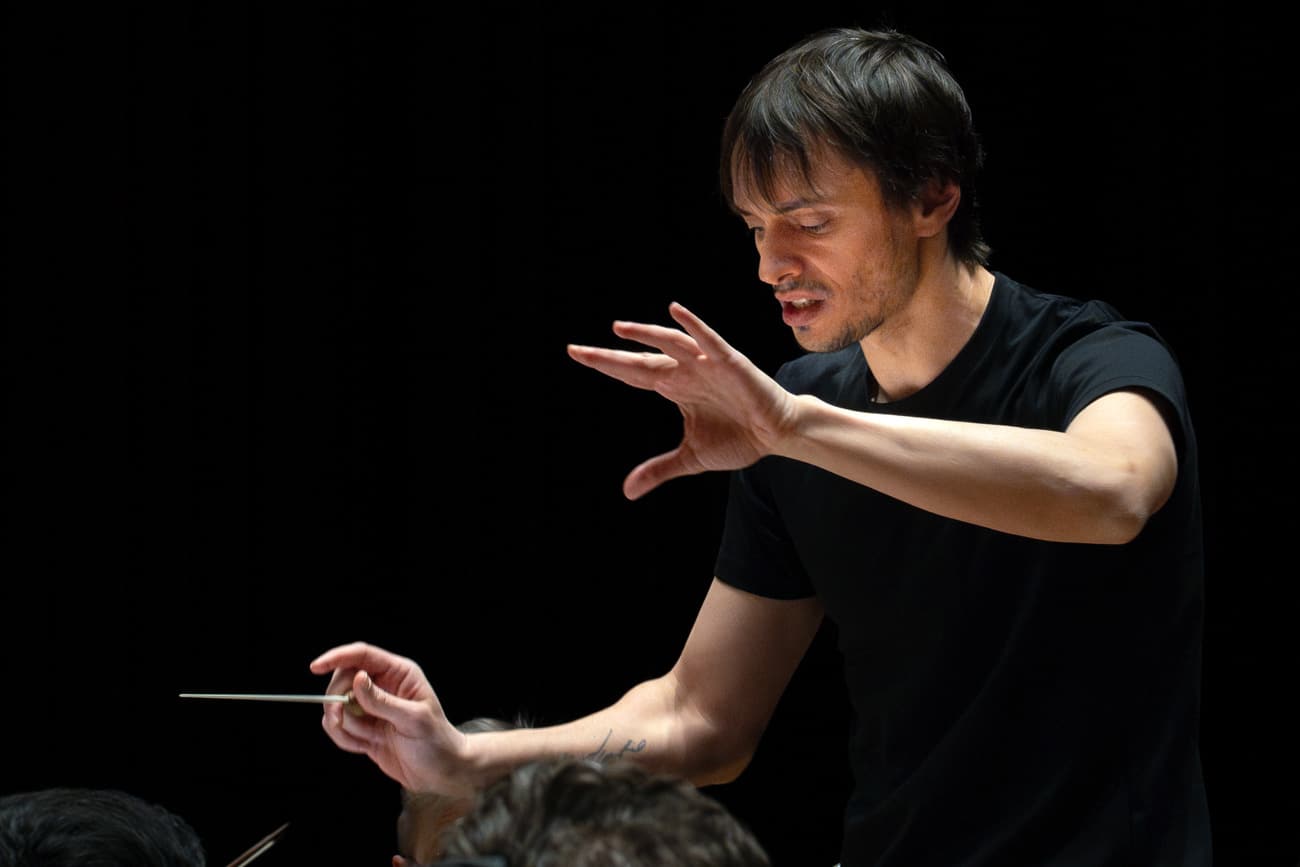
Barruk and Strausser have quite a lot in common, even though they grew up far apart—Katarina in Storuman and Eduardo in the Brazilian metropolis of São Paulo. On stage, they’re both physically expressive and intensely present, completely absorbed in the music. Eduardo describes it as building, together with musicians and soloists, a cathedral of moods and sounds—or an abstract sculpture that the audience can interpret through their emotions.
Lives in Berlin
For over a decade, he has worked with leading orchestras and opera houses around the world. Today, he lives with his family in Berlin and spends about half his time traveling.
What have you learned about humanity from traveling so much?
– I’ve thought about this a lot, and it might sound trite, but my experience is that we’re all the same. Deep down, all people have the same worries, the same sources of joy, and the same needs.
“I was lucky”
What sets them apart are their circumstances. Eduardo credits his good fortune to having been born in 1985, just as Brazil was beginning to transition to democracy after many years of military dictatorship. His parents were delighted by the opportunity to expose their children to more culture.
“I’m a living example of how children’s concerts can make a big difference,” he says.
His parents also supported his studies in violin and piano, without being able to foresee where that would lead. After all, they weren’t musicians themselves.
Eduardo says time and again that he has been very lucky. Lucky enough to have had skilled teachers, for example.
“After the collapse of the Soviet Union, many musicians left Eastern Europe, and many of them also came to Brazil. They were fantastic, hard-working musicians who passed on their mindset to us. “I didn’t know any better and thought that’s just how things were done,” he says with a laugh.
The Soul of Opera
Of course, it has taken determination and hard work to get where he is today. He draws his strength from music and the sense of camaraderie he feels after a concert.
Since the fall of 2024, he has been the chief conductor of the Norrlandsoperan Symphony Orchestra. Together with the musicians, he aims to offer the audience an exciting program of musical excellence.
“The orchestra is the soul of the opera,” he points out. “I want the musicians to feel that, and for us to come together around a shared goal—to constantly move forward.”
Where do you think you’ll be in three years?
“I can’t possibly answer that. There’s no end point; what’s important is that we constantly strive to realize our potential,” he says, referencing the moral philosopher Baruch Spinoza, who is something of a guiding light for the conductor.
Eduardo believes that music has many roles to play.
– For me, it’s above all a source of moral support. Life is hard, but through the beauty of art, we can glimpse solutions and feel hope.
And once again, he emphasizes how important it is for children and young people to be exposed to music.
The Cultural Promise in Umeå
He nods enthusiastically when he hears about the “Kulturlöftet” program, which will be introduced in the municipality of Umeå in 2025 and will ensure that all children have regular exposure to culture throughout their school years.
– That’s great.
– Albert Einstein once said that a brain that is given the chance to expand never returns to its former size. That’s what we do with music, just as we do with math and geography.
What advice would you like to give young readers—is there a piece of music you can recommend?
– These days, it’s pointless to give young people advice on what to listen to—they have access to everything and can find what they need. My only advice is this: Be curious. When we ask good questions, the world opens up. And our job as adults is to encourage that curiosity.
A small farewell committee has gathered in the lobby as the musicians begin to board the buses. Eduardo, with his small carry-on bag, turns toward us in the entrance hall. He smiles broadly and waves.
See you again!
Text: Hanna Kangassalo
Experience Eduardo Strausser in action! In the spring of 2025, he will conduct Jenny Wilson’s first opera The Mistresses, March 8–29. He will also conduct the concerts Berio and Beethovenon March 20 and Haydn and Camille Pepin, June 12.
Read more and book tickets for *The Mistresses* here: https://norrlandsoperan.se/forestallningar/alskarinnorna/