Tell us about yourself and how you ended up at the Norrlands Opera and on the tour of *La Bohème*?
– I’m from Norrköping, and I took music classes there starting when I was about ten years old. I played the violin and sang, and at the arts school there, I had a singing teacher who introduced me to classical singing and opera. You could say that was the starting point! Then I continued through high school and folk high school, and I earned my bachelor’s degree at the Opera Academy in Gothenburg in 2011. And now here I am, having completed the Norrlandsoperan Opera Studio (ONO)! But my start and my path into this field began at the municipal music school in Norrköping.
When did you start pursuing a career as a professional singer?
– I started this project a few years after I graduated from high school; I’d been attending a folk high school for a while, but then I felt I needed a break from music and school—which I’d been doing my whole life. I took a six-month break, living in Umeå and working at Kulturbageriet. I got to experience what it was like to live without being involved in music, which turned out to be super boring, so after half a year I was tired of it, came back to school, and that’s when I knew I wanted to go for it. That’s when it became real.
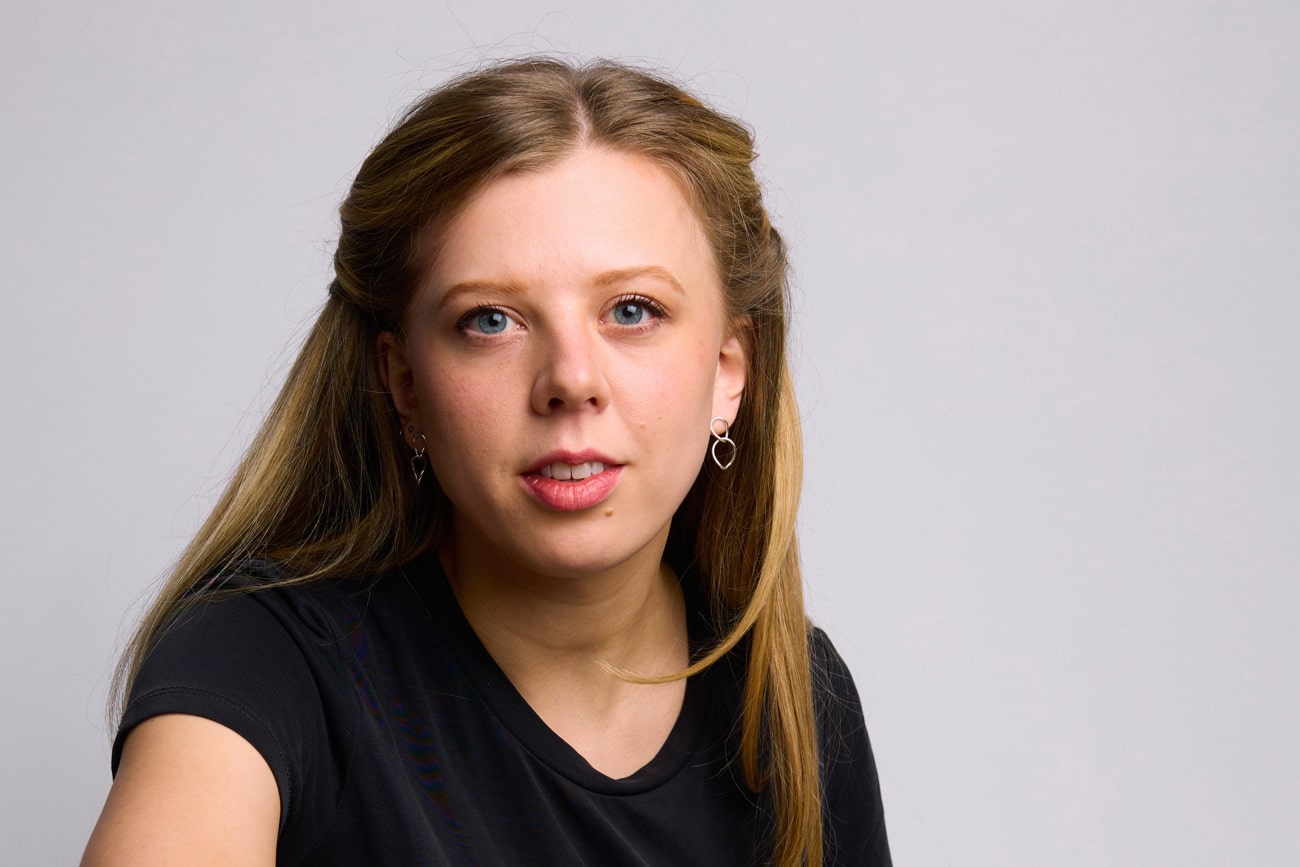
Jenny Viklund was one of the first students in the Norrlandsoperan Opera Studio. Photo: Press photo
How would you describe the Norrlandsoperan Opera Studio (ONO)?
– ONO is a bit like an apprenticeship program; I’ve been taken under the wing of the Norrlands Opera. I’ve had the opportunity to develop over the course of a year, bridging the gap between student and professional, leading up to the production of *La Bohème*, where I participated fully as a professional. The educational purpose of the program is to bridge the gap between education and work and to maintain ongoing contact with an opera house.
During the academic year, I have been commuting to the music college in Piteå (which is the other part of the ONO collaboration), where I have met with instructor Katherine Osborne and participated in various projects for educational purposes. This has included vocal lessons and various sessions with international guest instructors to hone my skills.
In addition, I’ve also traveled to the Norrlandsoperan for mentoring sessions with Susanna Levonen and for audition training with Susanna, Dan Turdén (artistic director of opera), and Anders Lundgren (choirmaster). The audition situation is very unique, so it’s been incredibly valuable to have them as a sounding board!
What is your connection to Umeå and the Norrlands Opera?
– I’ve always had a special connection to the Norrlands Opera! When I moved out of my parents’ house, I attended Birka Folk High School in Östersund and later the Kapellsberg Opera Studio in Härnösand. Both of those cities are places the Norrlands Opera frequently visits, so during my early college years, I saw everything I could that the Norrlands Opera performed.
I had a wonderful experience during the tour of *La Bohème* when we performed at the Storsjöteatern in Östersund. It struck me that when I was walking there myself at age 19, the Norrlandsoperan was performing *The Marriage of Figaro* on that very same stage, and I remember thinking: “I want to do that one day!” And now, with *La Bohème*, I was standing there and the circle was complete: “I’m actually doing it!”
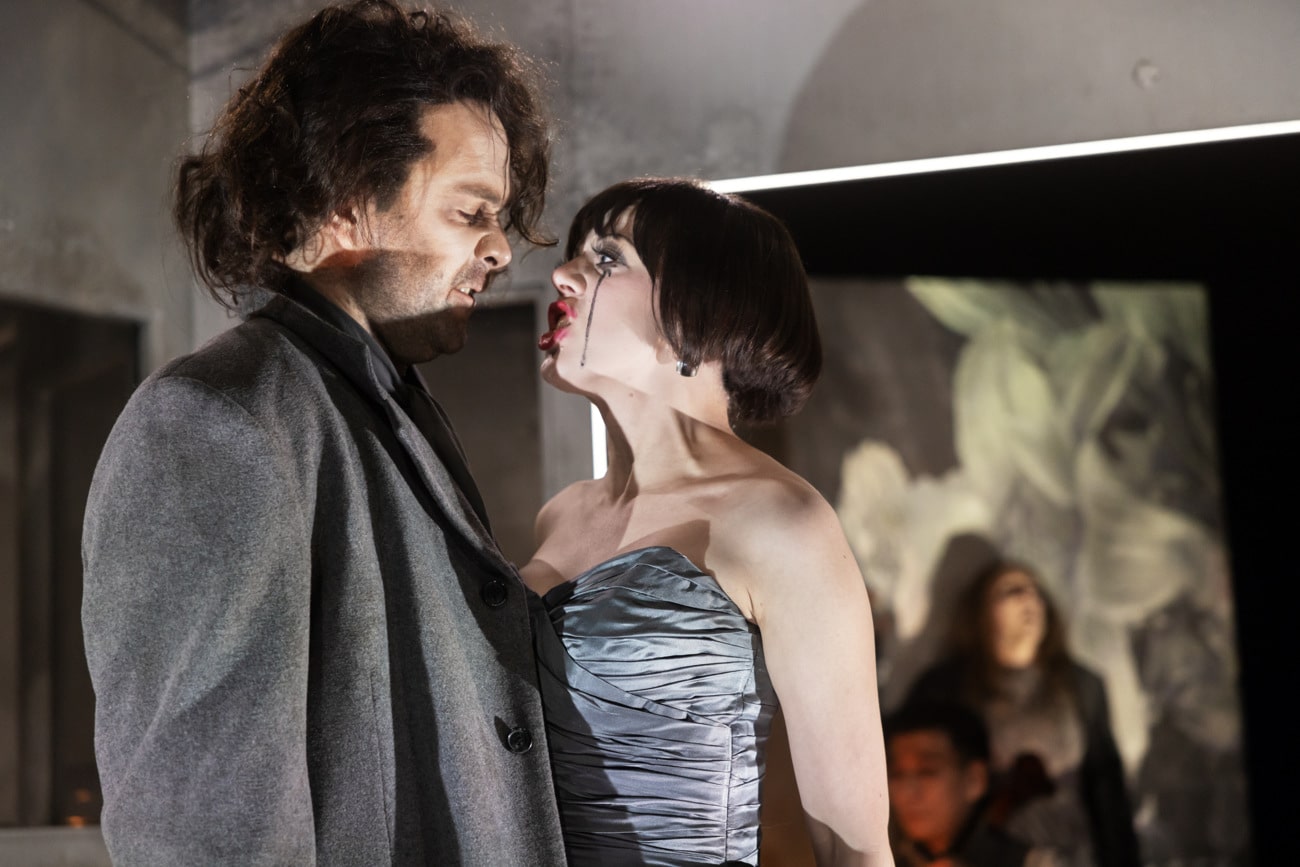
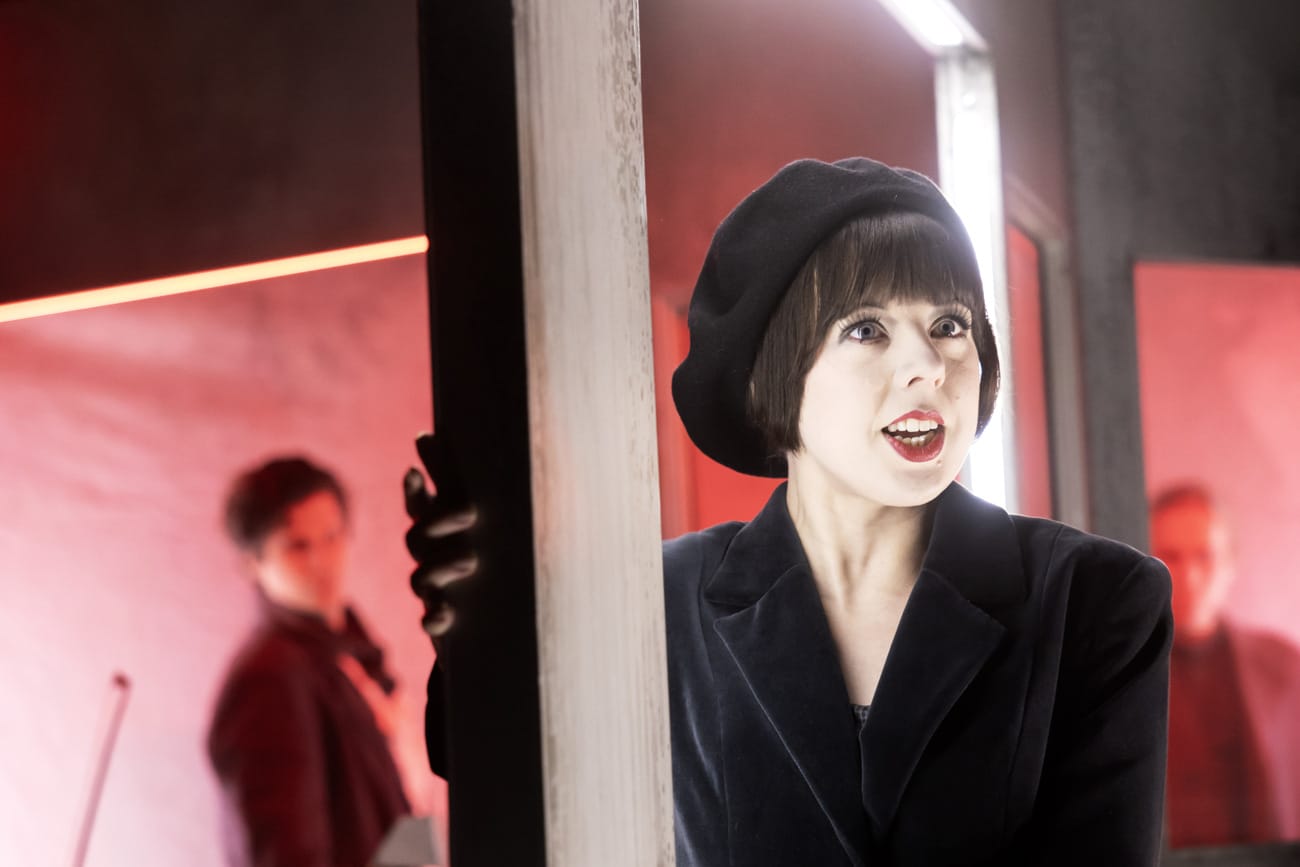
Marcus Bartoletti (Marcel) and Jenny Viklund (Musette) during rehearsals for *La Bohème*. Photo: Elin Berge
What would you say sets the Norrlandsoperan apart as an opera house?
– It’s really nice that everything is under one roof—there’s a concert hall, opera on the main stage, dance—and that makes being in the building feel very welcoming. For me, it’s also great that the Norrlandsoperan goes on major tours with the entire orchestra and performs in places like Östersund and Härnösand—it truly is the cultural center for the entire Norrland region. It’s a very large area, and I’d say that’s what sets it apart; it’s such an important factor for culture in such a vast region, and something they handle very well.
If you live in southern Sweden, you never really realize just how vast these regions actually are. The circumstances are very different when you go on tour with the Norrlandsoperan. Culture shouldn’t be limited to those who have more money or live in bigger cities—it should be accessible to everyone! And doing these slightly more compact tours, like *La Bohème*, is such a great initiative—it lets us reach even the small towns! I think it’s really wonderful and an honorable mission.
What is a typical workday like for an opera singer?
– It depends, of course, on whether you’re in rehearsals or the performance season! During rehearsals, you go in, warm up your voice, and then you rehearse from maybe 10:00 a.m. to 6:00 p.m. The schedule is pretty regular, but what you rehearse—both musically and scenically—changes every day.
On a performance day, my workday starts pretty late. I have the morning to myself—maybe I’ll grab some lunch—and then I always start by warming up my body and then my voice in my hotel room or at home, depending on where I am. Then it’s off to the theater, where I check out the space and see where I’ll be performing that day; maybe I’ll warm up a second time and have a cup of coffee. During the tour, we had a soundcheck an hour before the show. After that, I sit down for makeup, perform the show, and then take off my makeup, go home, and go to sleep around 10:30 p.m.
You always have to adjust your day based on what needs to be done that day. On tour, it’s especially true since you’re always performing in new venues with different practical conditions. Preparations also vary depending on which role you’re playing; Musette demanded a lot from me, so how I feel on any given day becomes more important. I had to adjust my warm-up to ensure I performed at the same level every show.
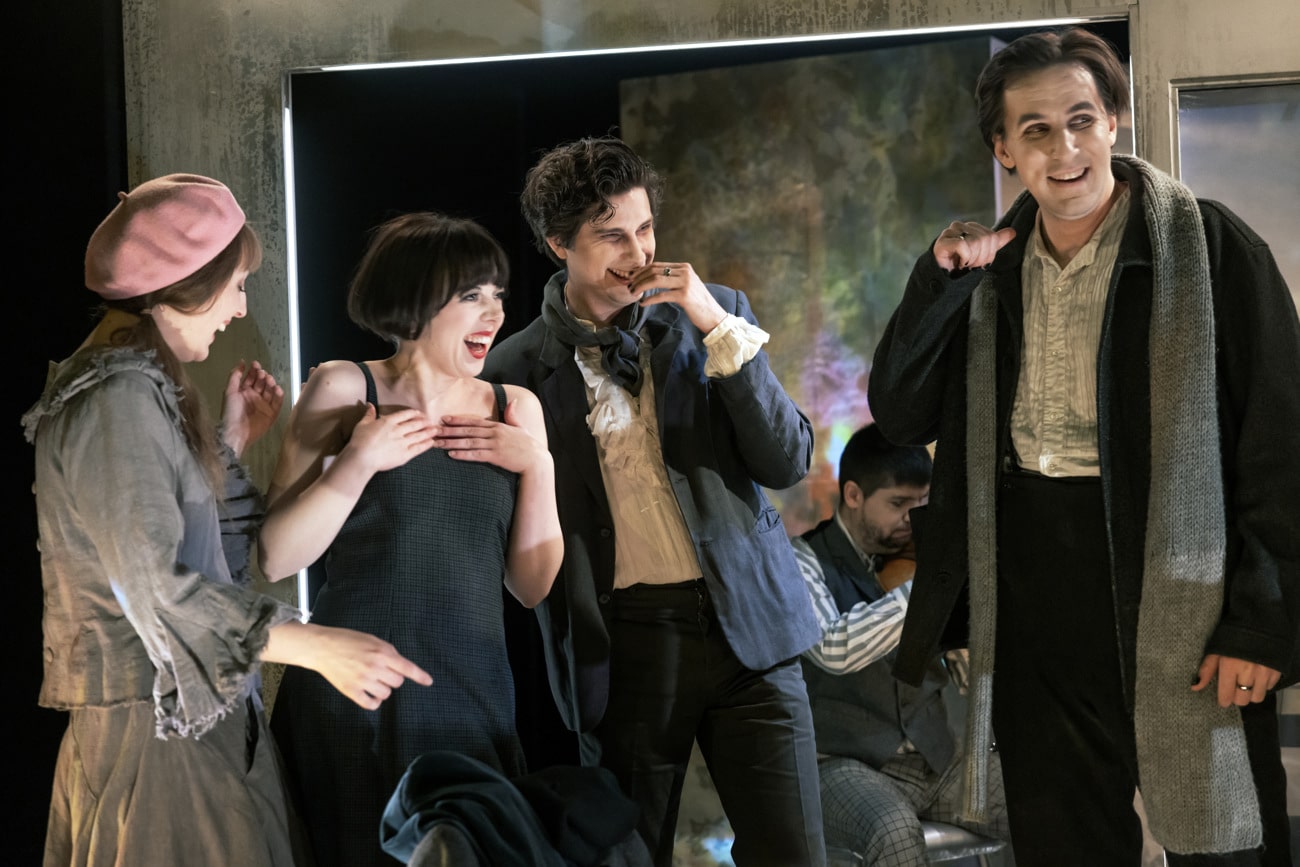
Elin Eriksson (Mimì), Jenny Viklund (Musette), Sebastian Durán (Schaunard), and Clifford Lewis (Rodolphe) are rehearsing for the *La Bohème* tour. Photo: Elin Berge
What’s the best thing about being a singer?
I guess it’s that my everyday life consists of music, creativity, and getting to make music and do theater with amazing colleagues. It changes every day—you never get bored!
I love the appeal of conveying the music, the story, and the messages. Being able to do that together in a production is very important to me. The tough part of the job is all those hours alone in a rehearsal room, and those hours are necessary and have to be put in to make the fun parts possible! But the best part is when you just get to be in the process—rehearsing, being creative, and sharing what you’ve created together.
What are your future goals and dreams now that ONO and *La Bohème* are over?
– I guess it’s all about really getting my freelance career off the ground! I have my first project after graduation now at Folkoperan, so it’s exciting to be back there. Then it’s time to do auditions and hope things really take off! Off to the next project. Most of all, I hope to come back to Norrlandsoperan and work there again.
Linnea will be back this fall as a soloist in the mini-opera *Brundibár* during the “Krása and Copland” concert evening on November 27, as part of the celebrations marking 250 years of Jewish life in Sweden.
Here you can see which performances Norrlandsoperan is currently touring with: norrlandsoperan.se/forestallningar/pa-turne/
Read more about the Norrlandsoperan Opera Studio (ONO) here: norrlandsoperan.se/projekt/operastudio-norrlandsoperan-ono/